Your Crafting Supplier Goes Out of Business. What do you do?

Many of us have recently learned that a major crafting retailer is going out of business for good, nationwide. And many of us wonder, what to do? Here are tips.

Here we go again: another round of business closings, and this time it affects our beloved hobbies of knitting, sewing, crocheting, jewelry making, and many other crafts. Those of us using these hobbies to keep our sanity, calm down, express creativity, or just make something nice for ourselves or loved ones might wonder how we get the basic supplies for these crafts.

We’ve been here before. During the pandemic, ALL of the online retailers supplying my yarns for knitting eventually went out of business. And reader, I got some huge bargains on top quality yarns, which I’m still using and expect to use for many years to come. Here’s what I learned:

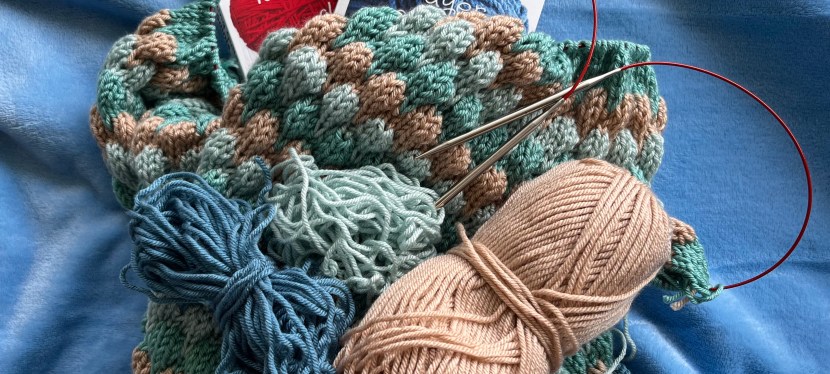
  • Don’t fret about where to buy your next yarn stashes just yet. Nature abhors a vacuum. Supply markets naturally fill gaps when they arise. If you don’t have a nice place to buy crafting materials in the near future, again, Patience! Work through your stash. If you have indeed bought plenty of yarns or other materials from the big going-out-of-business sales, you’ll have plenty to do. If you must, order online or visit a locally owned shop. At some point, if there’s demand, another business will snatch up the market for reasonably priced crafting materials!
  • Deep Clearance Sales WILL Happen. You’re about to scoop up some deals on crafting supplies, but you may need to be patient. Businesses handle these closure sales different ways. One retailer suddenly had huge sales BEFORE announcing a closure. If you see this, read the red flags and move! On the other hand, other businesses may keep trying to sell merchandise they think they can squeeze more money out of before they are finally forced to go to deep discounts. If you KNOW a business is closing and still has vast quantities of yarns or other craft supplies on hand, wait. Then, when those discounts finally happen, pounce!
  • Buy plenty of yarn or other supplies you absolutely know you will use. If you knit sweaters or blankets, there will be no way to get more skeins if you run out. Buy at least as much as you think you’ll need for a project, plus extra. (You can always make something small, like a cowl or coasters, with the spare materials after you finish your big project.)
  • On the other hand, DON’T buy yarn you know deep in your heart you’ll never use. Just because something is 90% off doesn’t mean it’s a great deal for you. Only buy yarns you would have bought or strongly considered buying if not on sale. If you see something at 75-90% off that you think you might want to try for a small project, go ahead if you have the spare cash. Otherwise, don’t buy something that will be sitting in a closet ten years from now.
  • Think about storage and future plans. During the pandemic, I bought huge amounts of all-wool yarns in my favorite colors and weights. I was also in the process of moving and downsizing. Given that I will (and already have) put these yarns to good use at some point, I ended up re-purposing a china cabinet for these yarns. I ditched a bunch of things that cabinet used to hold – items I never used. Before you buy huge amounts of yarn or other crafting supplies, think: where will I store it, what can I get rid of to free up storage, and do my future plans allow for this? (Pssst…you might get storage bins on sale, too, if you have room for them.)
  • If you’re buying wool yarns, think about preservation. Moths just love wool. They love to eat it, especially if hidden away in quiet, dark places. So if your yarn-buying spree involves wool or other such yarns, be prepared to seal up your purchases in large plastic bags. Save yourself future heartbreak.

In the meantime, happy retail therapy at bargain prices!!! Cindy

Cynthia Coe is the author of The Prayer Shawl Chronicles, a collection of interrelated short stories about knitters and those they meet through knitting and sharing prayer shawls. 

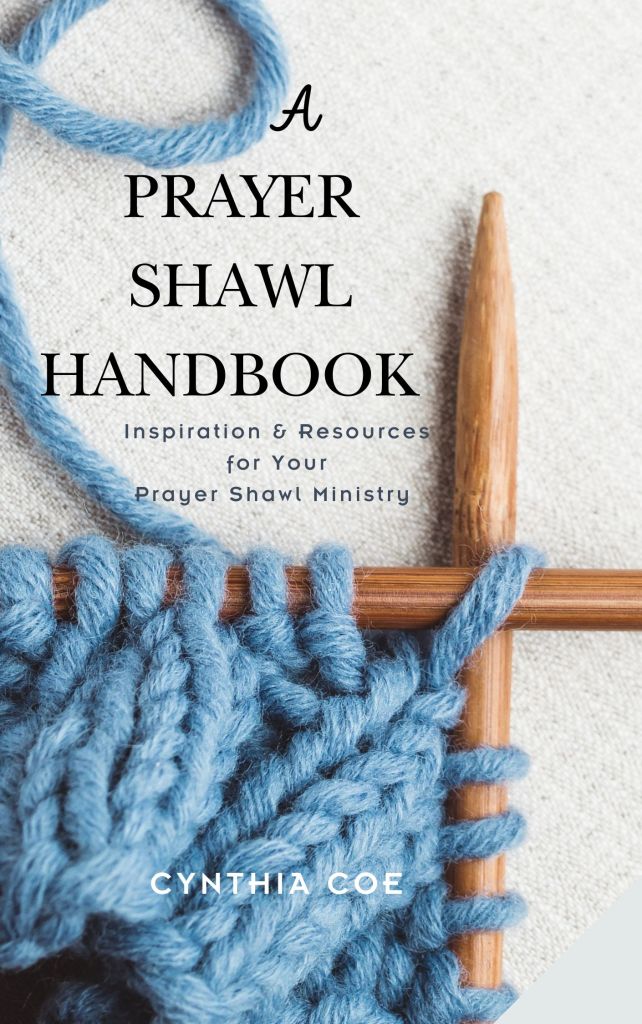
Be sure to check out my newly published A Prayer Shawl Handbook: Inspiration and Resources for Your Prayer Shawl Ministry, now available in paperback and e-book editions and included in Kindle Unlimited.

Cynthia Coe is a writer, book reviewer, and avid knitter. Her books and blog posts can be found on her Amazon Author Page

Looking for the Perfect Travel Project to Knit?

The Perfect Travel Companion: A Shawl Knitting Project

Planning a long trip and wondering what knitting project to take along? A simple shawl is the perfect choice!

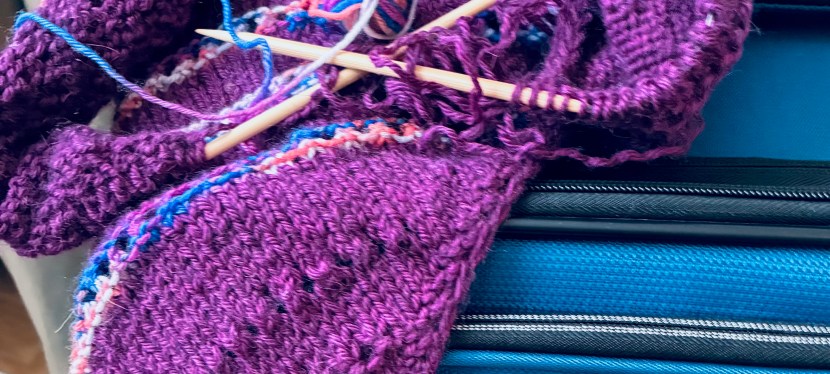
Why a shawl project? Because it’s stress-free, portable, and endlessly adaptable. No need to memorize a complicated pattern or keep track of stitch counts—just cast on and knit. You can use your favorite yarn and continue until you run out or until your shawl reaches the perfect size. It’s an easy, meditative project that keeps your hands busy while you relax and enjoy the journey.

Best of all, your finished shawl might come in handy on the flight home, keeping you cozy in a chilly airplane cabin. Another bonus? If you stop by a local yarn shop and find some “souvenir yarn,” you can start a new project right away! Just remember to pack a pair of knitting needles or pick up a pair that suits your new yarn.

A travel shawl project is all about simplicity, creativity, and making memories—one stitch at a time. Happy knitting and safe travels!

(And to answer the question, “are knitting needles allowed on airplanes?” Absolutely, Yes! I’ve never had a problem. You may be asked to put them up for take-off and landing, but that’s only reasonable and no big deal.)

Here’s my simple go-to shawl pattern:

Simple Travel Shawl Knitting Pattern

This easy-to-knit shawl is perfect for travel—no complicated pattern to memorize, just relaxing, meditative knitting. Use any yarn you love and knit until you reach your desired size or run out of yarn.

Materials:

  • Any weight yarn (choose your favorite!)
  • A pair of knitting needles suitable for your yarn (circular needles recommended for larger shawls)
  • Scissors
  • Tapestry needle for weaving in ends

Instructions:

Cast on: 7 stitches.

Set-up: Knit 2 rows.

Increase pattern:

  • Right Side (RS): Knit 1, increase 1(KFB or your preferred increase). Knit to the next to the last stitch, decrease 1, knit the last stitch.
  • Wrong Side (WS): Knit to the next to the last stitch, increase 1, knit the last stitch

Repeat these two rows until your shawl is the desired size or you run out of yarn.

Customize Your Shawl

You can work the entire shawl in garter stitch (knit every row) for a squishy, textured fabric, or in stockinette stitch (knit RS, purl WS) for a smooth look. Want something unique? Feel free to mix and match any of your favorite memorized stitch patterns to create a one-of-a-kind piece!

Bind off loosely and weave in ends.

Optional: Block your shawl for a more polished finish.

Now you have a cozy, handmade piece—perfect to wear on the journey home!

Happy Travels! Cindy

Cynthia Coe is the author of The Prayer Shawl Chronicles, a collection of interrelated short stories about knitters and those they meet through knitting and sharing prayer shawls. 

Be sure to check out my newly published A Prayer Shawl Handbook: Inspiration and Resources for Your Prayer Shawl Ministry, now available in paperback and e-book editions and included in Kindle Unlimited.

xr:d:DAFrvfJwOOQ:44,j:7117223354181397058,t:23112222

What is Nalbinding, and What Does It Have to do with Knitting?

At some point in history, humans learned to make fabric by forming loops with yarn or whatever fiber they had on hand. But this wasn’t knitting; it wasn’t crochet. It was an ancient craft called nalbinding

Apparently, humans first learned to make fabric by sewing together animal hides, using crude needles made of wood or bone. For “thread,” they used animal fibers (wool) they rolled together to form a crude yarn. At some point, some clever person figured out how to make a stretchy fabric by winding loops of this yarn around her fingers, making a chain of loops with her bone or wood “needle.” That became the ancient craft of nalbinding. 

Nalbinding in one form or another was done by humans all over the world. Forms of nalbinding have been discovered in the Middle East, Europe, Africa, the Asian Pacific islands, and among the indigenous peoples of the Americas. Apparently, the urge and need to make fabric out of a bone or piece of wood with a hole in the end of it, using a length of string of some sort was once a basic means of providing warmth, décor, and protection to a woman’s loved ones.

But how did knitting come out of this long history of nalbinding? No one knows. In my new book, Knitting Through Time, I make a stab at suggesting how this might have happened. We know that knitting was first done in the Middle East, so I came up with a plausible story of how someone with lots of time on her hands came up with knitting out of necessity, then spread this new craft far and wide. Is this “true”? You’ll have to read the book and decide for yourself! 

However knitting came to be part of our cultures, I think we can assume that this craft was passed woman to woman, mother to daughter, friend to friend – just like many of us still learn to knit or learn more advanced knitting techniques. Last evening, in preparing to write this blog post, I sat down with a nalbinding needle, wool yarn, and numerous videos demonstrating the craft of nalbinding. Reader, I was an abject failure. Why? I needed a real person to show me how to hold the yarn, correct my obvious mistakes, and to guide my hopelessly untrained fingers. Sadly, I have no one to show me, in person, what I was doing wrong.

We pass on our cultures, our crafts, and the very essence of ourselves to our loved ones and to others in our communities through small moments of one-on-one demonstrations and conversations. I sincerely hope we all will keep knitting and other crafts alive through this long history of sharing our crafts, our knowledge, and our time.

Blessings, Cindy

Recommended Resources:

Nalbinding: What in the World is That? by Ulrike Classen-Buttner, available in English on Amazon at https://amzn.to/3Lkg3FT.

Bone Nalbinding Needle by Hearth and Bone, available at https://amzn.to/464uJCS.

Cynthia Coe is the author of The Prayer Shawl Chronicles, a series of fictional stories woven together by the theme of human connections made through prayer shawls and the craft of knitting. Her newest book is her first historical novel, Knitting Through Time: Stories of How We Learned to Knit. Learn more by visiting her Author Page at this link

Patterns in Nature, Patterns in Fiber Arts

Why do some knitting patterns just “look right”? Where could you find inspiration for designing your next fiber arts project?

Look no further than Mother Nature herself! Certain patterns are found time and time again in nature. Intuitively, we are already hard-wired and attuned to recognizing these patterns. So if you find yourself stumped for design ideas or a pattern that’s sure to please, here are design elements found in nature and their knitting or other fiber arts equivalents.

The Wave: This pattern lends itself easily to the inherently linear nature of knitting. Most knitting patterns are done in rows, and rows are akin to long, thin waves. These waves can have crests and dips, interruptions and smooth sections – just like many knitting or crochet rows.  If you’re knitting in any kind of garter stitch pattern or with other repetitive lines, you’ve got your wave.

A pattern in nature related to the Wave includes the Meander pattern. Think a pathway, river, or snake. Though our finished products in knitting and other fiber arts usually no longer meander, our yarns certainly meander from our skeins to our needles as we’re working!

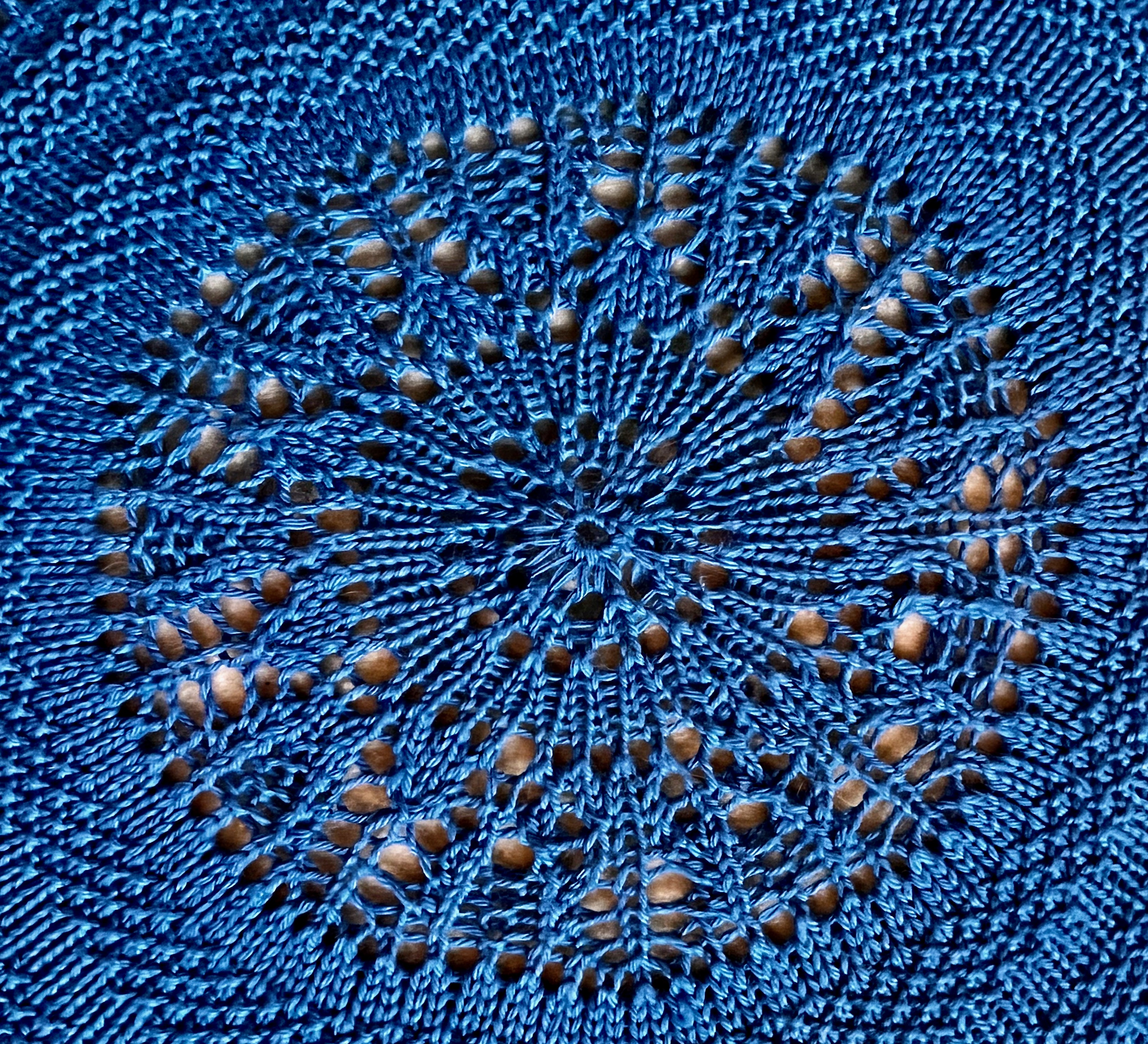
The Burst: Think of the iconic photograph of a drop of milk making a round, crown shaped pattern. Or the shape of a daisy or other flowers or plants “bursting” with a central point. This circular pattern is a bit trickier for knitters. Making a circular pattern with double pointed needles can be fiddly and, in my opinion, is a rather advanced skill. But if you want to knit to impress, this would be your “wow” pattern. This pattern is much easier in crochet, and many crochet patterns feature increasing numbers of stitches starting from a small space. 

The Spiral pattern is similar to the Burst pattern. Both are round patterns, with the spiral meandering around and around instead of making a round burst from a central point. Spirals are more often found in crochet patterns than knitting. 

Fractals: Think branches of a tree or other plant, fractals branch out from a central line, just as tree limbs or leaves branch out from a stem or trunk. We see a lot of fractals in embroidery and other fiber arts using decorative stitches. Many more advanced knitting stitches do feature fractals that mimic plant leaves. These are sure to give your design a nod to nature.

Cells and Bubbles: Cells are the building block of nature, so cell-like designs are often found in all finds of knitting, crochet, and other fiber arts. They may take the form of holes or spaces in our stitches, or we may make block-like patterns in our colorwork or stitching. Think moss stitch in knitting or even basketweave. Bubbles are similar to cell patterns and can give a pattern the feel of fun and joy. 

These patterns are all around us – in our own bodies, in plants, and in the heavens. We know these patterns; we recognize these patterns. Take a look at your favorite fiber arts patterns some time. What do you recognize from the natural world?

Enjoy Your Fiber Arts Designing…and Time in Nature! Cindy

Cynthia Coe is the author of The Prayer Shawl Chronicles, a collection of interrelated short stories about knitters and those they meet through knitting and sharing prayer shawls. 

Be sure to check out my newly published A Prayer Shawl Handbook: Inspiration and Resources for Your Prayer Shawl Ministry, now available in paperback and e-book editions and included in Kindle Unlimited.

It’s All About Color: Crafting Color Symbolism in Every Stitch

Exploring Symbolic Colors in Prayer Shawl Design

When you embark on the journey of creating a prayer shawl – or any other crafting project – the choice of colors goes beyond aesthetics; it can carry profound symbolism. Across various traditions, colors have played a significant role in conveying concepts and stories. Whether you’re crafting for spiritual or personal reasons, understanding the symbolism of colors can add a meaningful layer to your prayer shawl design.

Here’s list of common colors and traditional symbolism associated with each:

  • Red: Passion, Love, and Energy
  • Red symbolizes passion, love, energy, courage, warning, power, celebration, and attention, with its meanings varying across cultures and contexts.
  • White: Celebration and Renewal
  • White, representing celebration and renewal, symbolizes purity, a fresh start, and the illuminating power of light.
  • Purple: Rich Emotions
  • Purple can evoke both warmth and calmness.
  • Blue: Calmness and Spirituality
  • Blue brings a sense of calmness. It suggests elements of water, peace, and the expansive sky.
  • Green: Growth and Abundance
  • The color of growth, green is used after Pentecost. It signifies nature, abundance, and tranquility.
  • Yellow and Gold: Warmth and Cheerfulness
  • Yellow suggests cheerfulness and sunshine, while gold brings a sense of coziness and warmth.
  • Pink: Joy and Playfulness
  • Pink represents joy, youthfulness, and cheerfulness.
  • Brown: Earthy Humility
  • Brown symbolizes humility, reminiscent of monk’s robes. It brings warmth through its connection to nature and soil.
  • Beige: Calming Desert Tones
  • A calming color reminiscent of sand, beige can symbolize time spent in the desert or on the beach.

In moments of uncertainty, neutral tones such as beige, cream, grey, taupe, and sand always make for a beautiful prayer shawl. Consider the soothing, cozy, and comfortable feelings these colors can evoke. After all, your hand-crafted work aims to embrace someone with a heartfelt hug.

Whether you find inspiration in religious symbolism or personal preferences, let your prayer shawl be a reflection of warmth, comfort, and love.

Happy knitting!

Cindy

Cynthia Coe is the author of The Prayer Shawl Chronicles, a collection of interrelated short stories about knitters and those they meet through knitting and sharing prayer shawls. 

Be sure to check out my newly published A Prayer Shawl Handbook: Inspiration and Resources for Your Prayer Shawl Ministry, now available in paperback and e-book editions and included in Kindle Unlimited.

Write Your Own Knitting Patterns? Yes, You Can!

Inside: My story of how I wrote my first knitting patterns

You’ve made lovely hand-knitted sweaters and scarves. You have a go-to blanket pattern etched in your head. You constantly hear, “what pattern is that?” and you sheepishly say, “uh…I just made it up.” Then you hear, “no kidding? You should publish that!”

Yes, you should. And with a plethora of self-publishing and crafty platforms available to everyone, you absolutely can publish anything you want, including your own knitting patterns.

But how to get started?

Reader, I faced this problem just a couple of months ago. In writing my upcoming new book, “A Prayer Shawl Handbook,” I knew I had to provide some basic prayer shawl patterns for my readers to truly call this book a comprehensive handbook for this crafting ministry. 

A Sneak Preview of Cindy’s Upcoming New Book, “A Prayer Shawl Handbook”

I have several “go-to” prayer shawl patterns in my head – patterns I don’t even think about and can simply cast-on and knit. But write these down???? Gasp. I’m not a technical writer by any stretch of the imagination. Fiction writing and knitting pattern writing are not, in my poor little mind, in the same skill set. 

How to get started? Try. Sit yourself down, pull out a pencil and a blank sheet of paper, and take your first stab at it. 

What about formatting your pattern?

Fortunately, a new book called “The Knitting Pattern Handbook: How to Write Great Patterns That Knitters Will Love to Make” by Kristina McGrath and Sarah Walworth has just been published, and I was fortunate enough to be given an advance copy for review by the publisher.  What timing! I gulped down this little book and decided, yes, I could do this.

I cast on my favorite memorized patterns and took notes as I went along. I ripped out, re-figured, crumbled up and tossed some early drafts in the trash can. But I persevered until I got some basic prayer shawl patterns knocked out, along with three prayer patch patterns. 

Yes, there are formats you need to use and abbreviations you need to adhere to. You probably recognized them from your own knitting projects you’ve made from other people’s patterns. You just need to focus on these things and make sure you’re consistent.

My tip: don’t skip steps or assume the reader of the pattern knows everything there is to know about knitting. Especially if your patterns are geared towards beginners (which mine are), something you think is obvious may not be. 

Get friends to help proof and test your draft patterns

This is where it gets really terrifying, in my experience. You hand off your draft pattern to a trusted fellow knitter and see if they come up with what you came up with. They may say, “this makes no sense whatsoever.” They may say, “I just don’t understand what you mean by a yarn-over. What is that?” You go back to the drawing board and explain the details you thought you included but didn’t. 

The authors of the new Knitting Pattern Handbook suggest that you hire technical editors and pay them for proofing and revising your patterns. Did I do this? No. I’m just starting out, and I can’t justify shelling out a lot of money for some basic patterns. Friends who knit told me what I needed to know. If I get the notion to start designing intricate sweaters in five different sizes, I’ll certainly re-think and probably get professional help. But as a newbie knitting designer, that’s not where I am.

Everybody starts with the basics

Where I am as a knitting designer is at the beginning. I have some basic patterns that are great for beginners and for simple “meditative” knitting. These are patterns I’d like to share with my readers, so I will. 

If you, too, have some basic knitting patterns you’d like to at least share with friends, go for it! If you’d like to get into the knitting design business and make a few bucks (or a lot!), go for that, too! Every knitting designer starts somewhere, likely with a nice, basic design. And you can, too!

Blessings on your knitting designs, no matter how intricate or basic! Cindy

Cynthia Coe is the author of The Prayer Shawl Chronicles, interrelated short stories woven around those who make and receive handmade, prayerfully crafted gifts of prayer shawls. Click this link to order or for more information. 

Follow me and subscribe for news of my upcoming new books!

As an Amazon Associate and Author, I provide links to products (including books I have written) and earn a very small fee if you click on the links and buy something. There is no additional charge to you!

What To Do with Leftover Luxury Yarn?

I don’t play yarn chicken. Life is too short for that kind of teeth grinding, blood pressure elevating stress in my life. If I’m knitting a nice sweater out of all-wool, cashmere, alpaca, or some other luxury yarn, I make sure I have enough yarn to make the best sweater I can make. 

That leaves a happier problem than running out of yarn (i.e., losing at yarn chicken – frantically trying to finish your project before you run out of yarn). You’re left with a skein or two of really nice yarn you don’t want to just toss in your stash.

What do you make out of just a small amount of luxury yarn? I usually make a simple scarf to go with my newly handknit sweater. A scarf makes a nice accessory for any outfit, and it gives a matching sweater that “wow” factor. Store-bought sweaters almost certainly do not come with matching scarves – only we hand knitters get these lux perks. If this scarf turns out a little short, no problem. Just stitch the ends together, and voila, you have a matching cowl instead. 

Here’s some other items I sometimes make with leftover luxury yarn:

  • Table runners
  • Coasters
  • Placemats or fabrics to place under plants or office items (pencil box, stapler, phone, etc.)
  • Bathmats 
  • For a larger amount of yarn, a shawl or throw blanket

I don’t overthink the design of these handknit extras. In fact, here’s my Go-To Pattern for scarves and any other rectangle-shaped small fabric:

The Five by Five – a Simple Checkerboard pattern, pictured in this blog post.

  • Cast on 20 stitches (for larger items, cast on additional sets of 8 stitches)
  • Row 1: (K4, P4) x 2, K4
  • Row 2: (P4, K4) x 2, P4 
  • Rows 3 & 4: Repeat rows 1 & 2.
  • Row 5: (P4, K4) x 2, P4
  • Row 6: (K4, P4) x 2, K4
  • Rows 7 & 8: Repeat rows 5 & 6. 
  • Continue these 8 rows until you run out of yarn, cast off. 

For more simple patterns, follow me for news of my upcoming book, A Prayer Shawl Handbook, to be published in early December! 

What do YOU do with leftover yarn? Feel free to join the discussion by commenting on this blog or on my Facebook page! Share your great ideas!

Blessings, Cindy

Cynthia Coe is the author of The Prayer Shawl Chronicles, interrelated stories about knitters and those for whom they knit and love. The sequel to this book, The Knitting Guild of All Saints, has been released! Available in paperback and on Kindle, included in Kindle Unlimited. 

Copyright Cynthia Coe 2023. All Rights Reserved.

Writing Knitting Patterns – Is There Hope for a Creative “Pantser” Like Me?

Do you write knitting patterns? Do you love the process or – like me – feel your soul enter a state of utter dread when you even ponder such a thing?

As I prepare the final draft of a new book, I know I need to include at least a few knitting patterns in this book (it’s a non-fiction how-to book). I know this, but I have yet to put pattern to paper. And yes, this is supposed to be a “final” draft.

In writing terms, I’m a total “pantser.” This means I generally fly by the seat of my pants when I work on creative projects. This process works beautifully for some of us.( Just start typing and feel awe and wonder at what appears on the screen!!!) Other writers are “plotters.” They plan out every single step of their writing projects, complete with detailed outline (or so I’m told). 

As a knitting designer, I’m a “pantser” as well. People ask what I’m making, and I say, “a prayer shawl, I hope.” I cast on a hundred or so stitches and see what happens. I usually come up with an interesting pattern with texture, contrasting elements, whimsy – all that stuff. But if asked to duplicate what I’ve done…that’s a problem.

I’ve discerned that pattern writing and “pantsing” are not compatible. And yet, I really need to share my prayer shawl patterns. As I’ve recruited fellow church members to knit or crochet prayer shawls for our parish ministry, they inevitably ask, “got a pattern for me?” 

I got my hands on a soon-to-be published pattern writing handbook and eagerly jumped in, hoping for some inspiration. I felt filled with growing confidence for a couple of chapters. Then, the authors tell me I need to find “beta testers” and “tech editors.” Really???? Just for a simple prayer shawl pattern I could do in my sleep?

As I begin to work on my new book, I hear a song playing in the background. “Don’t worry about a thing,” the lyrics tell me. I proceed in hope.

Do you write knitting patterns? Tips or tricks? Feel free to drop them in the comments!

Be sure to check out The Knitting Pattern Writing Handbook, scheduled for publication on October 31 and available for pre-order. A great resource, especially for newbies and pattern-writing wanna be’s like me. 

Blessings, Cindy

Cynthia Coe is the author of The Prayer Shawl Chronicles, interrelated stories about knitters and those for whom they knit and love. The sequel to this book, The Knitting Guild of All Saints, has been released! Available in paperback and on Kindle, included in Kindle Unlimited. 

As an Amazon Associate and Author, I provide links to products (including books I have written) and earn a very small fee if you click on the links and buy something. There is no additional charge to you!

New Knitting & Crochet Books Coming Fall 2023

Hello Crafty Readers! I’m blogging for the first time in a while. I just finished the first draft of a new novel in The Prayer Shawl Chronicles series, so my head and heart have been preoccupied with that these past several months.

My new novel will probably come out some time in 2024, but in the meantime, there’s plenty of new knitting and crochet books to keep all of us occupied. 

I review books for NetGalley, and publishers kindly give me pre-publication peeks of their new books. Here’s what’s on tap for us crafty types (all available for pre-order; click the links for more info):

The Knitting Pattern Writing Handbook by Kristina McGrath and Sarah Walworth (Storey Publishing). Highly recommended if you write your own knitting patterns or plan to in the future. This little book tells you all you need to know to put your own patterns out into the world. Concise, plain language. Invaluable if you sell patterns online; helpful if you just want to share patterns with friends or understand what all those abbreviations mean. 

A Year of Knitting Stitches by Tabetha Hedrick (Globe Pequot, Stackpole Books). This is an excellent collection of knitting stitch patterns. I’ve used a couple in the past and always found several stitches that became “keepers.” This will definitely sit on my desk next year; the perfect gift for a knitter.

A Year of Crochet Stitches by Jill Wright (Globe Pequot, Stackpole Books). This is an equally excellent collection of crochet stitches for those of us who enjoy making up our own patterns or just want something different and all our own. In this collection, stitches are nicely organized by type of stitch (e.g. all kinds of bobble stitches). Perfect for the intermediate and advanced crocheter and an excellent gift idea.

Oversize Fashion Crochet by Salena Baca (Globe Pequot, Stackpole Books). This is a collection of only 6 patterns of oversized sweaters, a poncho, and other bulky garments. While this is a limited group of patterns, I found them all do-able and attractive for the average crafter. The schematics and drawings of how to assemble the garments were particularly good. 

More blogging to come, now that my next novel is on the back burner for a bit!

Happy Crafting, Cindy

Cynthia Coe is the author of The Prayer Shawl Chronicles, interrelated short stories woven around those who make and receive handmade, prayerfully crafted gifts of prayer shawls. Click this link to order or for more information. 

Knitting on Vacation: What to Pack

Spring is here, and many of us will soon head out on fun vacations. You, of course, will take your knitting. What else would you do, sitting in the sun or with a gorgeous view in front of you, and plenty of time on your hands? Yes, you’ll definitely need your knitting. 

What to pack? As a well-traveled, experienced Knitter, here’s my list:

  • Yarn, but not too much. You’ll need enough yarn to get you through your vacation and back, but don’t feel you need to pack enough for the next six months. I am always tempted to pack waaaaay too much, taking up space I could better use for clothes, shoes, or souvenirs on the way back. 
    • Think about how well your project fits your destination. Heavy wool at the beach? Not a great fit, in my opinion. If you’re going someplace warm, light cotton yarns will keep you from sweltering underneath your project and will work best thrown in a beach bag and exposed to sand and water. Going to a ski resort? Pack the heavy wool and let your project keep your knees warm.
    • Can your yarn be replaced? Think about the “what ifs.” If you lose your luggage, spill red wine on your yarn, or some other disaster befalls your yarn, will it be the end of the world for you? Think about taking inexpensive and easily replaced yarn when travelling.
    • How’s your eyesight and attention level on vaca? You’ll likely be on the move (and hopefully, pleasantly distracted) when knitting on vacation, so consider a larger weight yarn you can knit in less-than-ideal lighting and with lots of other things going on. Vacation is a time to zone out, so give yourself that option. 
  • Knitting Needles, But Only What You Really Need. Yes, you need to be prepared. But not for every single project you could possibly make on vacation. Again, check your pattern before leaving town and make sure you have the right size. Believe me, trying to find knitting needles while on the road is difficult and takes up time you could be spending doing something fun. If you’re not sure on what size you need, start your project at home or at least make a swatch. 
    • Circular Needles Travel Better. Remember the time you lost a straight knitting needle in the sofa cushions? It happens. Don’t let it happen on an airplane, in a rental car, or who-knows-where and you can’t find it and can’t replace it. With circular knitting needles, you’re far less likely to lose a single knitting needle and thus ruining your vacation.
    • Airline Travel? Yes, you can travel with knitting needles. TSA says so. I’ve never had a problem in decades of airline travel. Some airlines may ask you to put away your knitting needles during take-off and landing. Be considerate and do so. Do so anyway; these are sharp sticks we’re talking about. Also, I take point protectors with me and use them on the plane when I’m not knitting, just to be safe. 
  • Scissors, but not on the plane. You would think you could take a tiny pair of dull scissors on the plane, but not those sharp-pointed knitting needles, right? WRONG. TSA in Knoxville has taken possession of several small pairs of scissors and a couple of really cute Swiss-Army knives from me over the last couple of years (including the ones with the sweet Edelweiss flowers on them!!!!). But they’ve never even questioned my knitting needles. Go figure. I think you could probably pack a pair of scissors in your checked luggage (the bags you may or may not see again), but do so at risk of losing them. Prepare to buy a cheap pair of nail clippers or something else with a blade once you get to your destination or clear security. Most cotton yarns can be cut with a good yank, just sayin.’
  • Patterns – store it on your phone. Hit the easy button on this. You don’t want to haul around a pattern book with you, and paper copies get lost and damaged beyond recognition. Take a photo of your pattern and keep it on your phone, at least as a back-up. If you need to refer to it while you’re in the air (and your phone is supposed to be off), jot it down on a sticky note or inside a paperback book you also plan to take. 
  • Other Stuff? Keep it Simple. Remember, you’re on vacation! Knitting should be stress free and simply something to help you relax and pass away the time in the airport or just while zoning out, listening to the waves hit the beach. Yes, of course, take whatever stitch holders or whatever you know you will need, but only take what you absolutely must have. Leave the rest at home!

I hope all my readers get to enjoy their Knitting Someplace Special this coming spring and summer! Blessings, Cindy

Cynthia Coe is the author of The Prayer Shawl Chronicles, interrelated stories about knitters and those for whom they knit and love. The sequel to this book, The Knitting Guild of All Saints, has been released! Available in paperback and on Kindle, included in Kindle Unlimited.