An American Knitter in Europe

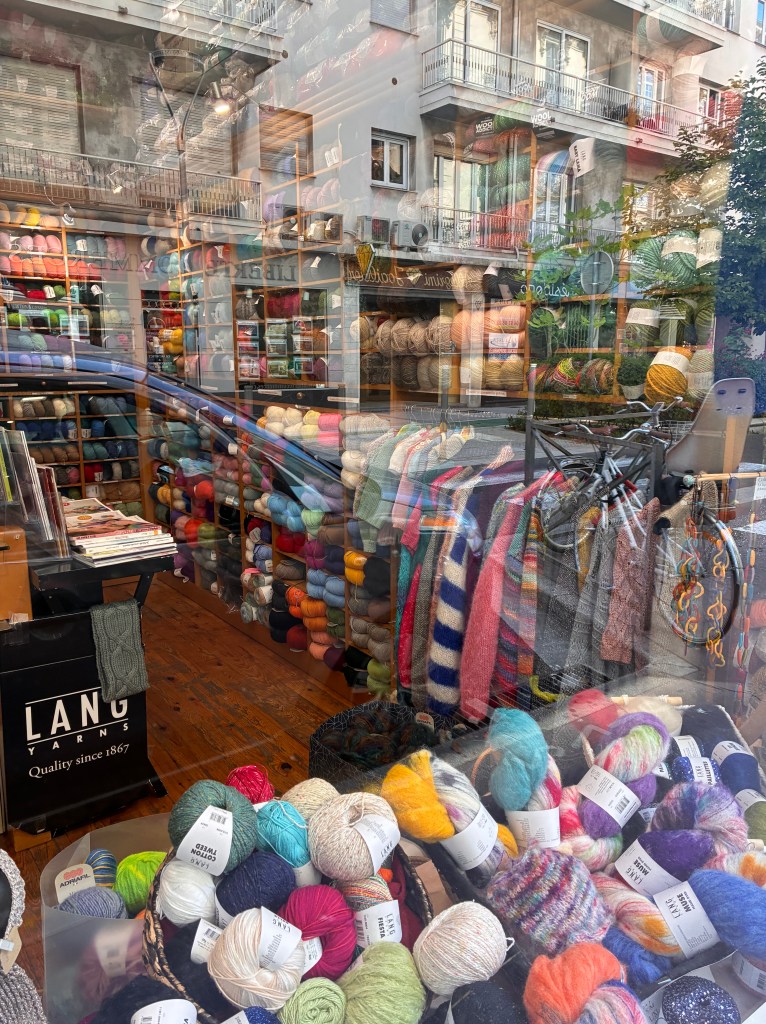
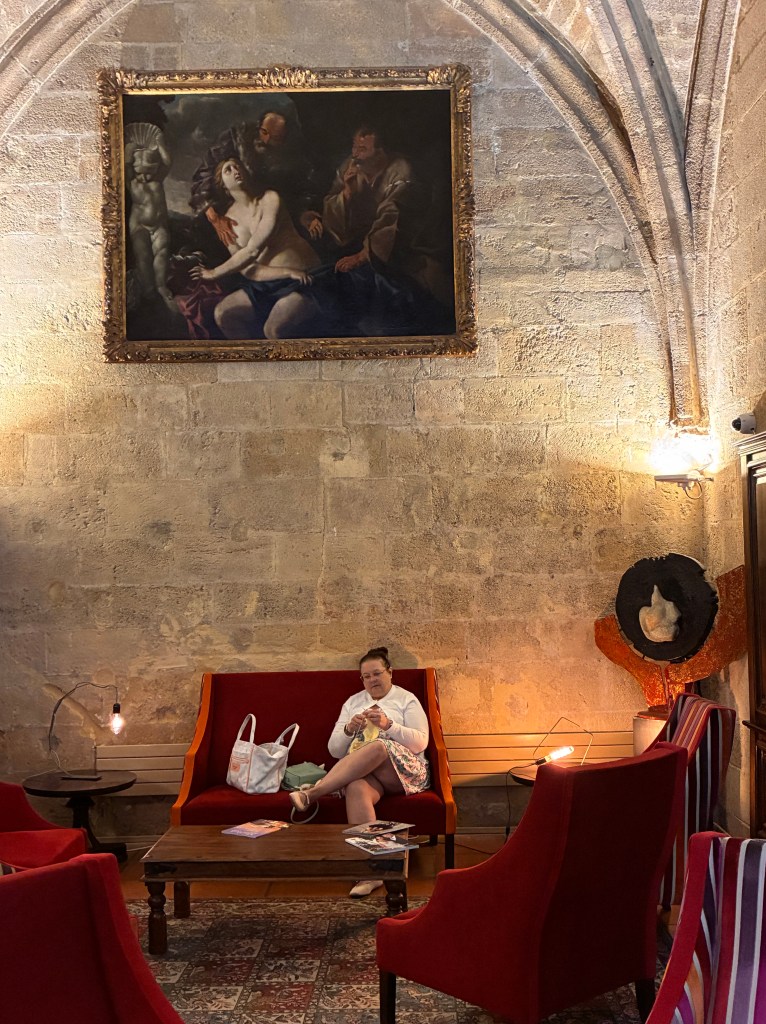
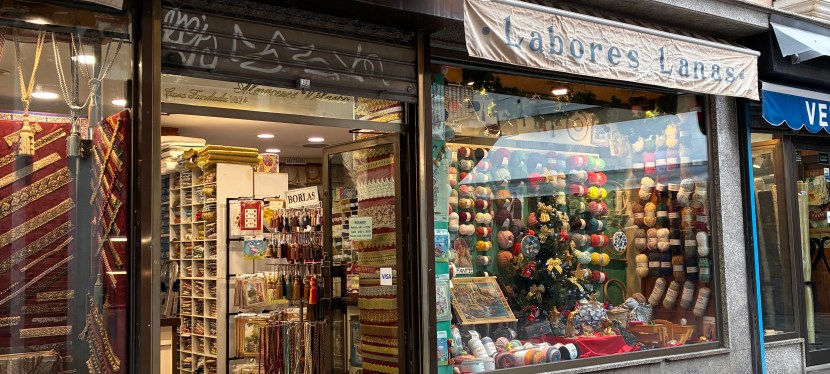
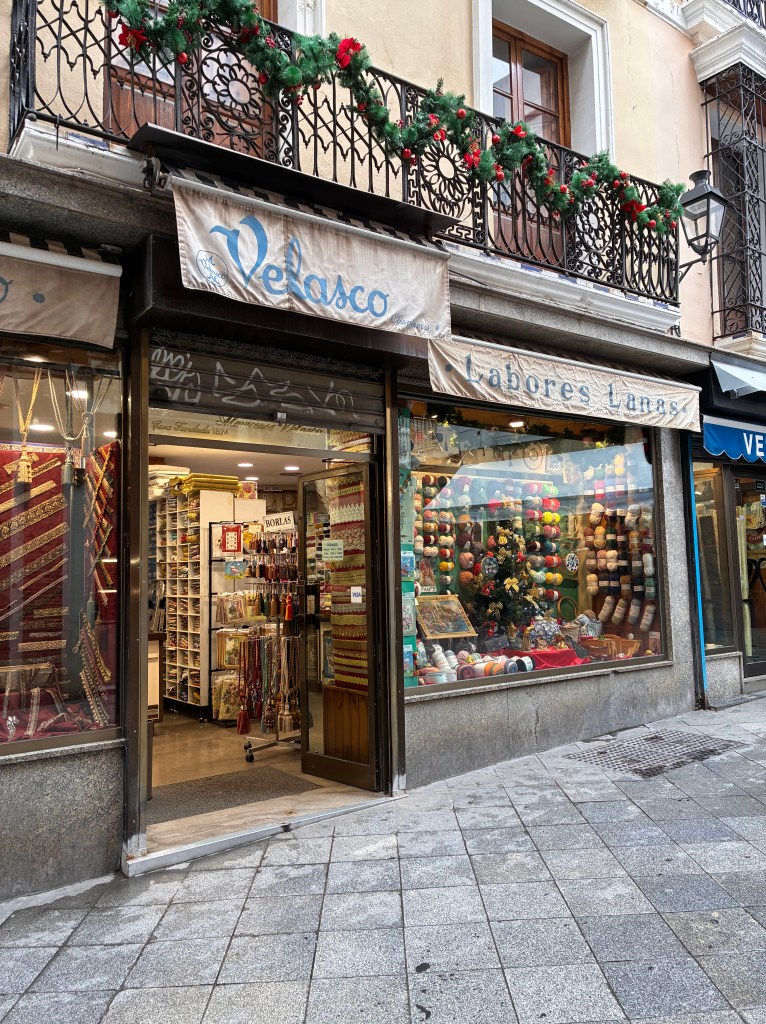
When traveling in Europe, one of my favorite excursions is to find a yarn shop and buy a few skeins to make a shawl or scarf while traveling. I always find luscious yarns (and all wool!!!), meet interesting people, and have an experience I’ll remember as one of the highlights of my trip.

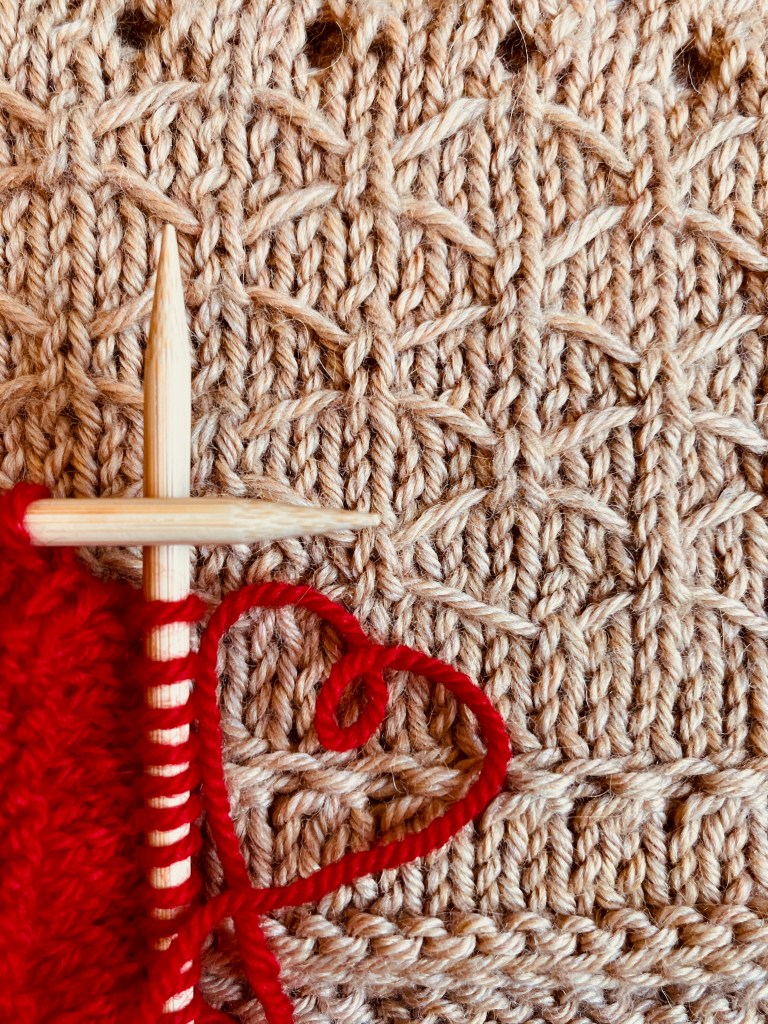
I follow the map on my phone down a quiet street in the South of France. I’ve already bought lots of yarn in Paris, but I’ve managed to break a set of circular knitting needles during my travels. Darn, I’ll have to find another knitting shop in Nice!

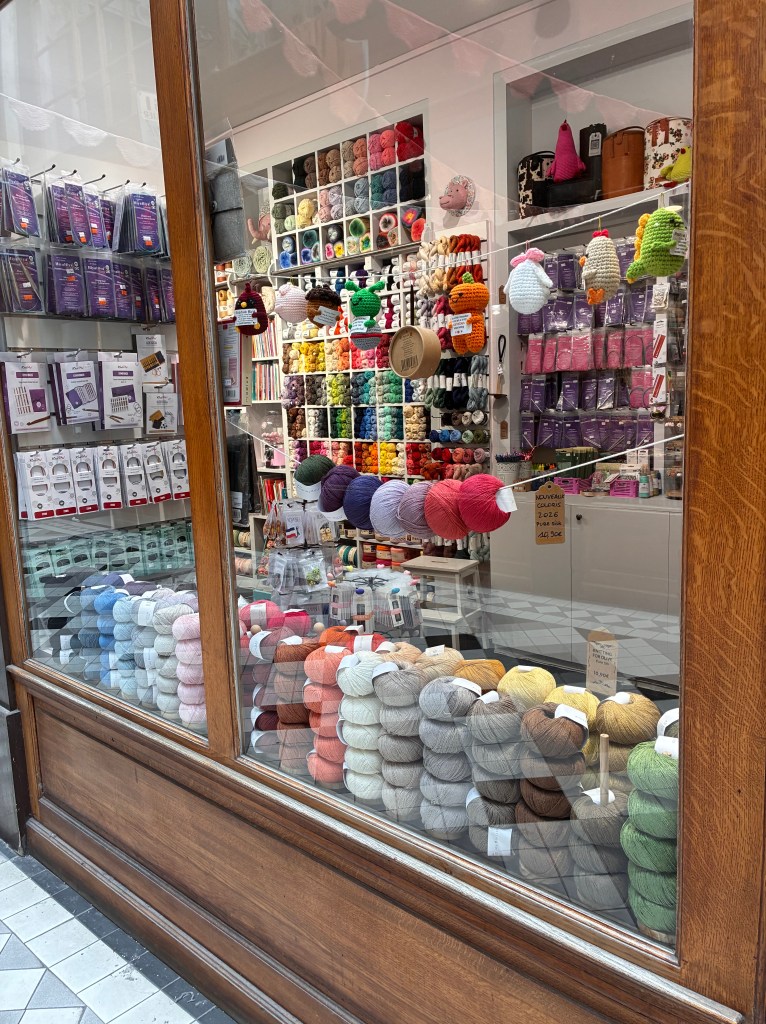
The quiet street is located just a few blocks from the Mediterranean, and there are only a few local people around, running errands on foot or otherwise going about their business. I find the tiny knitting store, but it’s closed. Peering in at the brightly colored yarns inside, I know it’s the place for me. I make a pharmacie run for wonderful French cosmetics and wait for the owner to return.

A French Knitting Shop

Bonjour, Madame!

The knit shop is open, and a handsome Frenchman of a certain age is seated behind a small wooden counter. Several other customers have squeezed inside the shop as well. I get in line and eye some skeins as blue as the Mediterranean, and all wool as well.

Bonjour, Monsieur,” I reply in greeting, as I’ve been taught to do upon entering any place of business in France.

When the customers in front of me have finished purchasing their yarn and needles, I repeat my greeting and explain in my bad French that I need 3.5 mm needles, circular if he has them.

This is NOT the big box store experience we have in the United States! There are no racks of needles and knitting supplies lining the walls, available in large quantities to pluck off and head to the self-checkout.

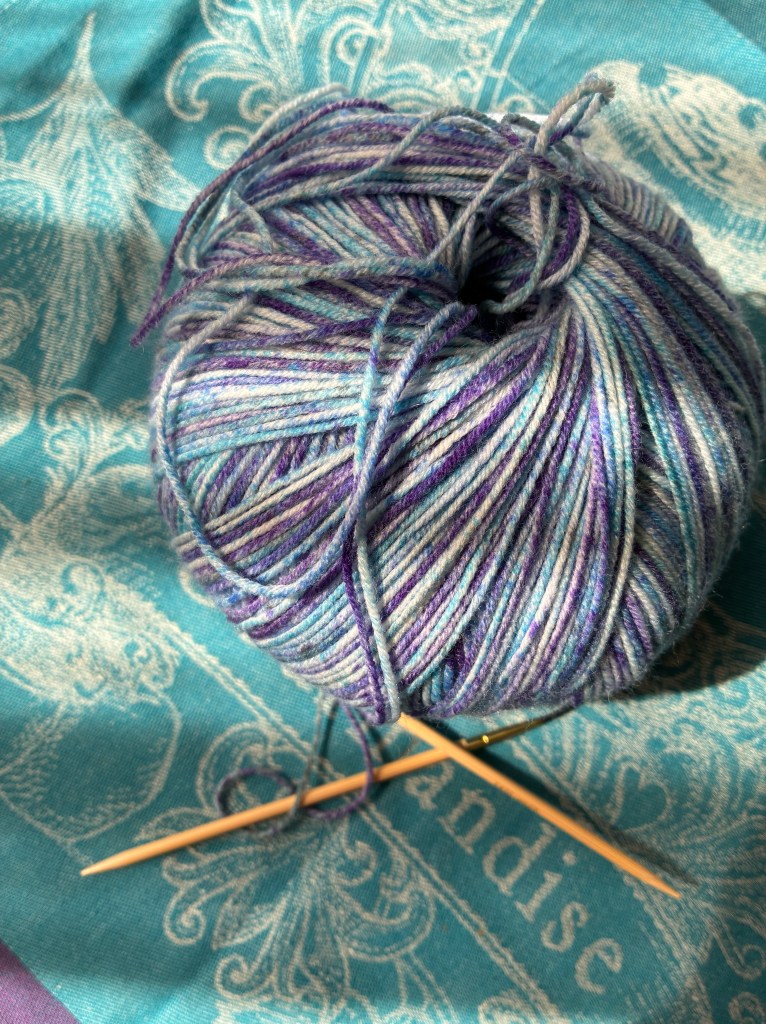
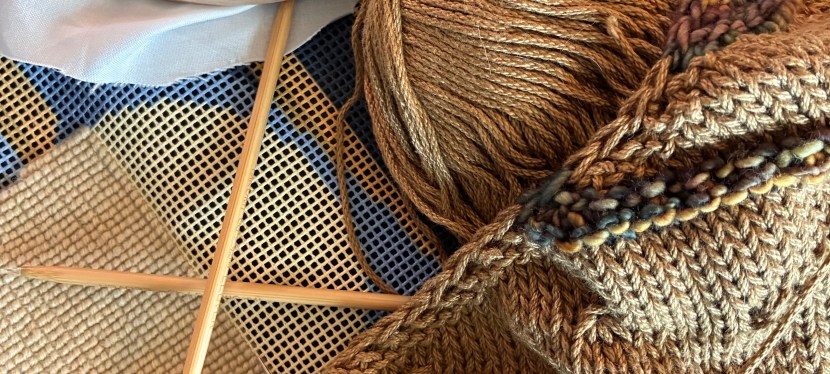
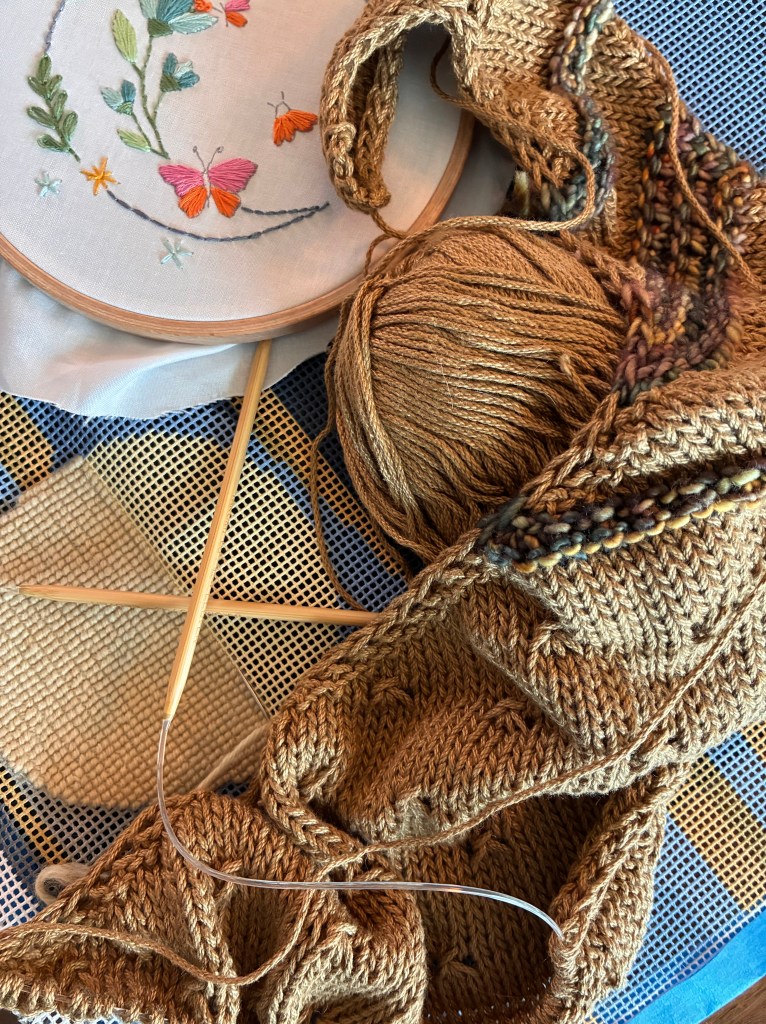
Instead, the handsome Frenchman pulls out a drawer underneath his counter, frowns, rummages around a bit, and finally comes up with two sets of circular needles in the size I need. I select the bamboo ones…and point to the skeins of Mediterranean blue yarn as well.

After profuse “mercis” for bailing me out of a knitting emergency, I pay, tuck the needles and yarn in my tote bag, bid the handsome shopkeeper “au revoir,” and I’m on my way.

Shopping the Old-Fashioned Way

Walking back to my hotel, I realize that this was how all shopping used to be, long ago. You didn’t “browse” or do “retail therapy” – shopping as recreation. If you needed something, you went to a specific shop and told the proprietor exactly what you needed to buy. You would have formally greeted the shopkeeper, and he (probably not a she) would greet you formally in return. You would buy something made of natural materials, and you would certainly not stuff your purchases in a plastic bag.

Knitting Memories from Europe

I’ve truly enjoyed all my excursions to buy yarn and knitting supplies in Europe. The yarns are always much higher quality than those on offer in big box craft stores in the U.S., and there’s always that personal interaction you rarely get in the big box stores.

In Montreal, I got to buy small-batch wool from local sheep – and with the name of the sheep attached to the label! In Spain, I got to buy the famous Merino yarns, actually made in the Merino region of Spain and at much more affordable prices than what we pay in America. In Portugal, I got to buy local Portuguese yarn as well, and the shawl I made while touring the country has become one of my favorite souvenirs ever.

The next time you travel, check out a local yarn shop! Even if you don’t speak the language, you’ll meet a local shopkeeper who truly knows their products. You’ll get high-quality yarn, and maybe you’ll make your own precious souvenir to help you remember a wonderful little excursion.

Bon Voyage and Happy Knitting,
Cindy

I’ve started a new travel blog, aimed at women in their “next chapter” after retirement, child-rearing, or other big life changes we all eventually face. Please check it out at www.travels-with-cindy.com.

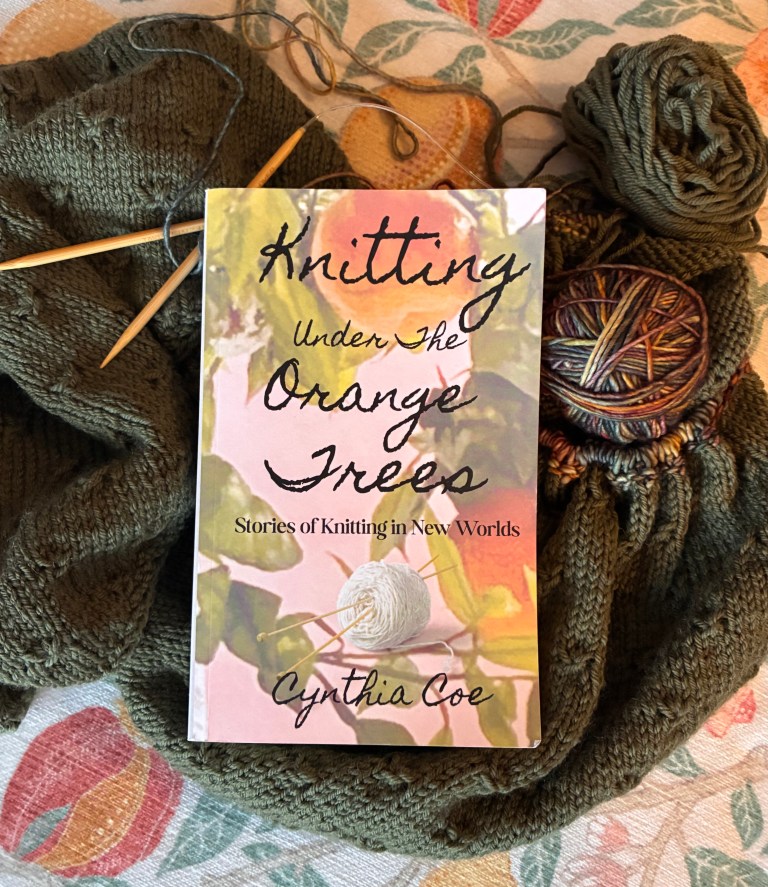
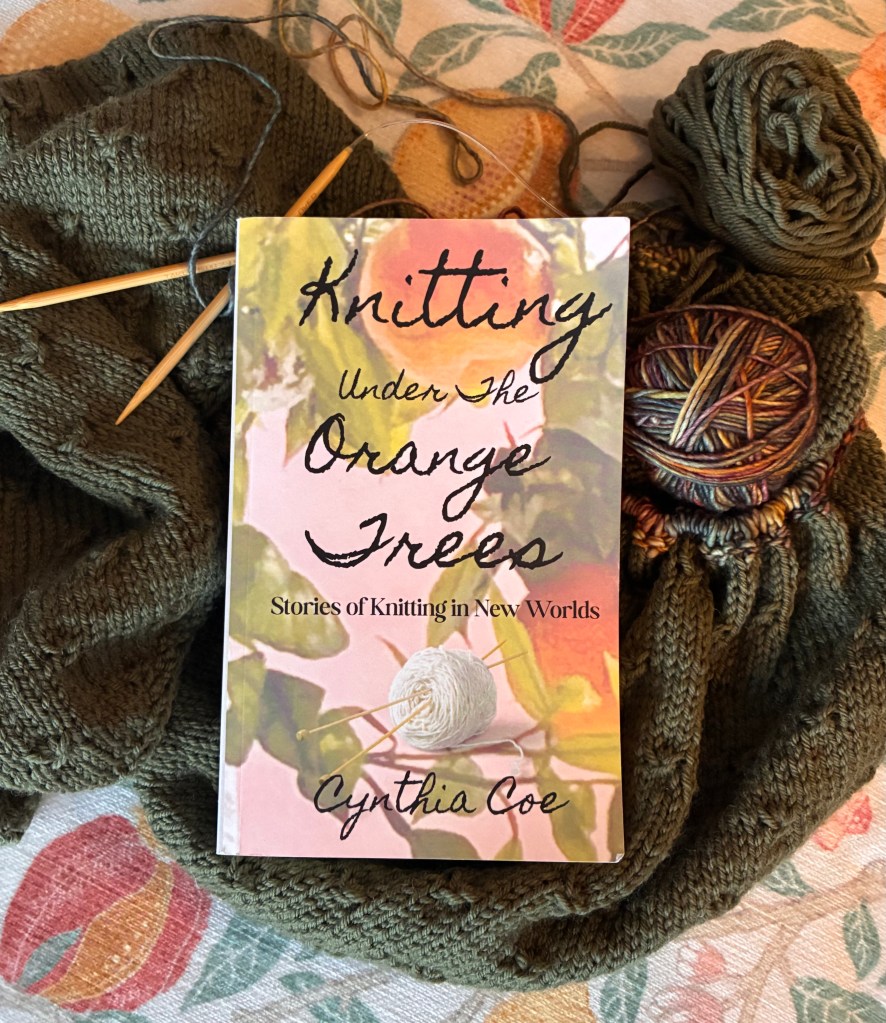
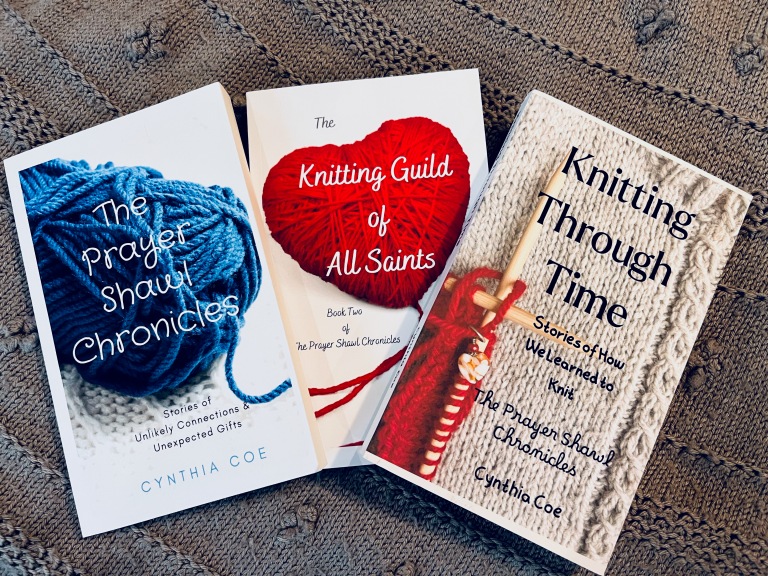
Do you love knitting and travel? Travel through time through my fictional histories of how Knitting got to Europe and the Americas by reading my books, Knitting Through Time and Knitting Under the Orange Trees, both available in paperback and on Kindle, included in Kindle Unlimited.

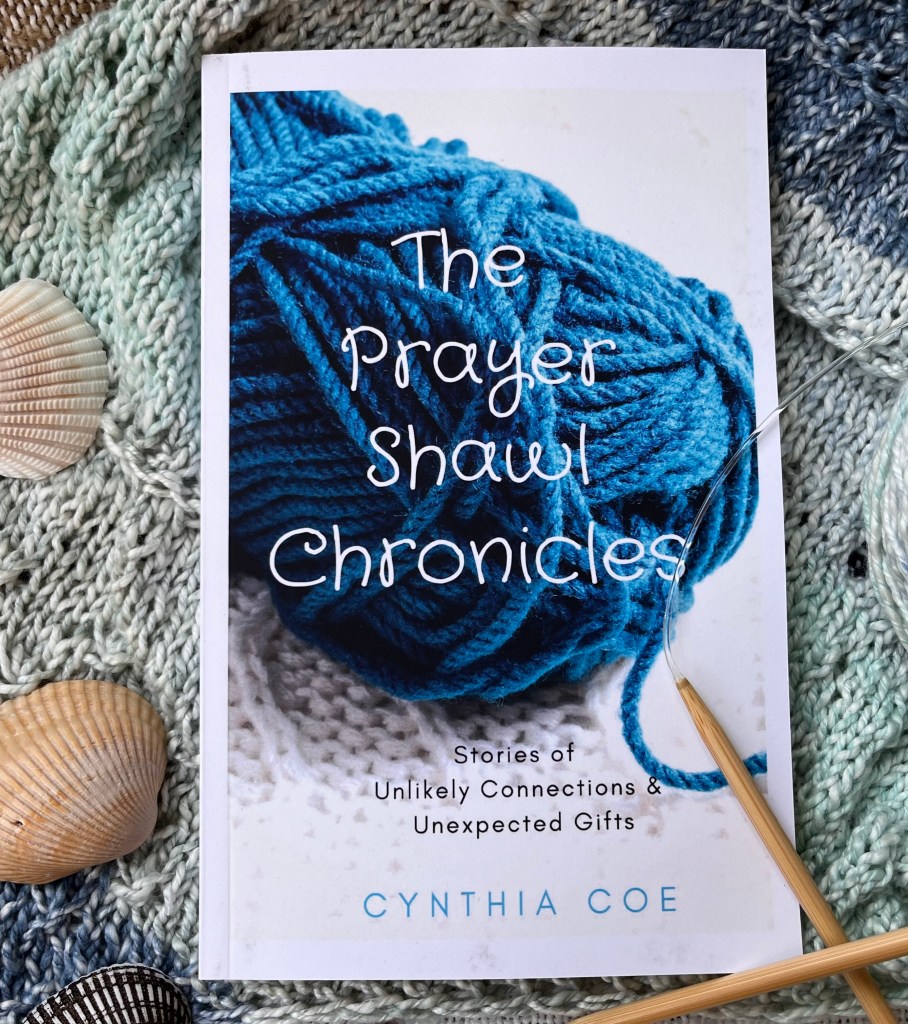
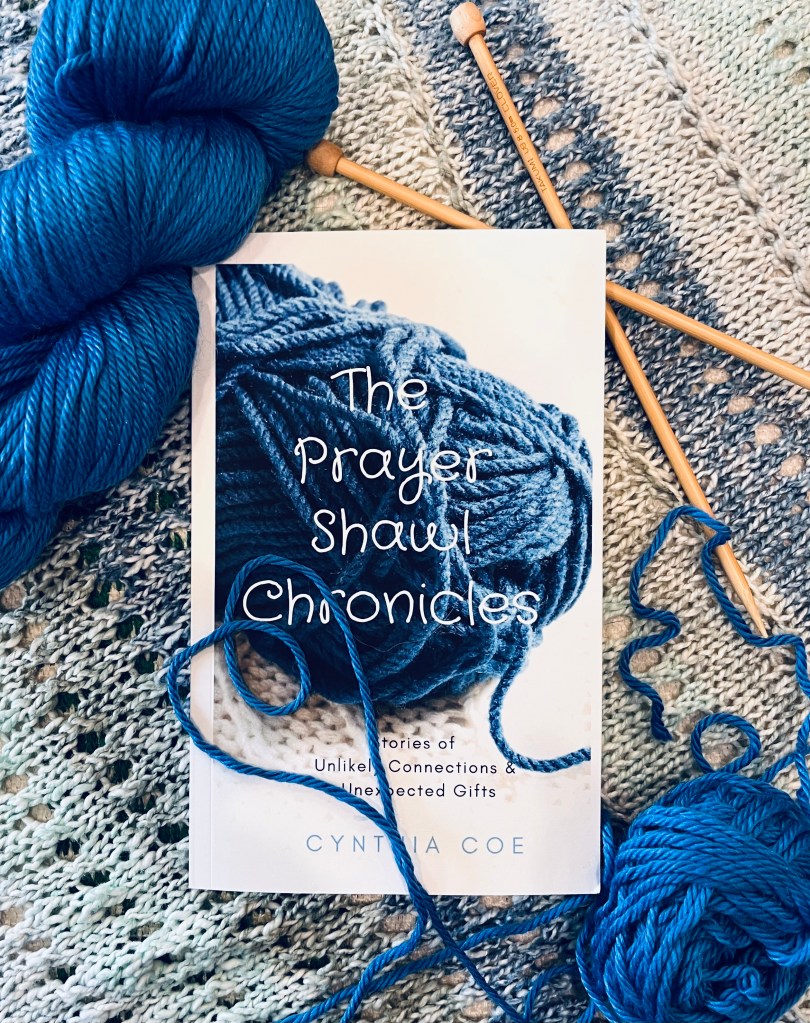
Cynthia Coe is the author of The Prayer Shawl Chronicles and its sequel, The Knitting Guild of All Saints. Her newest novels, Knitting Through Time and Knitting Under the Orange Trees, explore how knitting spread through Europe and on to the Americas. Follow her here on the blog, at http://www.cynthiacoe.com, or on her Amazon Author Page.
Knitting with Love: The Quiet Power of Prayer Shawls

There’s something deeply comforting about a handmade shawl. The weight of it. The warmth. The sense that someone, somewhere, took the time to create something just for you.

For many knitters, that feeling is exactly why we pick up our needles in the first place—not just to make something beautiful, but to make something meaningful.

Rooted in Tradition, Alive Today

The idea of special, meaningful cloths goes back centuries.

In Jewish tradition, the tallit is a prayer shawl used in worship. In Christian communities, fabric has long been used in healing rituals, blessings, and acts of care. Across cultures, textiles have carried meaning far beyond their practical use.

Today’s prayer shawls continue that tradition in a very accessible way. They show up in hospitals, at baptisms, during grief, in times of celebration, and in quiet moments of personal reflection.

They are simple—and yet deeply powerful.

Knitting as a Spiritual Practice

There’s a reason so many people find peace in knitting. It gives your hands something to do while your mind settles. It creates space to think, to process, or simply to be still.

When you knit a shawl with intention, that experience deepens.

You might:

  • Hold someone in your thoughts as you knit
  • Say a quiet prayer at the beginning or end of a session
  • Choose colors that reflect hope, healing, or love
  • Simply focus on creating something good in the world

There’s no “right way” to do it.

That’s part of the beauty.

Designing Something Personal

One of the most meaningful aspects of prayer shawls is how personal they can be. From simple beginner patterns to more detailed designs, each shawl can reflect the person making it—and the person receiving it.

Color, texture, size, and pattern all become part of the story. Even the simplest garter stitch shawl can carry deep meaning when it’s made with care.

A Gift That Matters

In a world full of quick texts and overnight shipping, a handmade shawl stands apart.

It says:

  • I thought of you
  • I spent time on this
  • You matter

For someone going through illness, loss, or uncertainty, that kind of gift can mean more than we often realize. And for the knitter, it offers something just as valuable—a sense of purpose, a symbol of love and of care. 

A Gentle Resource for Your Journey

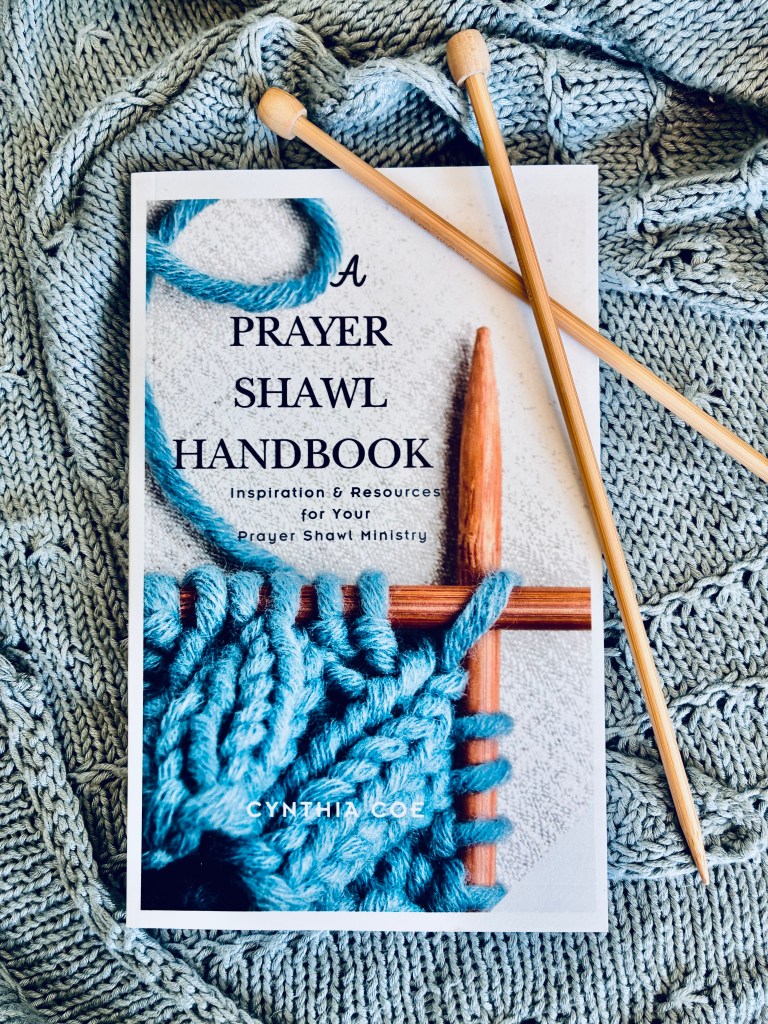
For those who feel drawn to this work, A Prayer Shawl Handbook offers a thoughtful and practical guide to getting started. It explores the history and meaning of prayer shawls, provides simple patterns for knitters and crocheters, and offers ideas for creating shawls with intention—whether for personal use, gifts, or church ministries. It’s a quiet companion for anyone who wants to knit not just with skill, but with love.

Cynthia Coe is the author of The Prayer Shawl Chronicles and its sequel, The Knitting Guild of All Saints. Her newest novels, Knitting Through Time and Knitting Under the Orange Trees, explore how knitting spread through Europe and on to the Americas. Follow her here on the blog, at http://www.cynthiacoe.com, or on her Amazon Author Page.
Waiting for Warmth

This winter has felt especially cold.

By late February, I always find myself restless. It’s too late to cast on a heavy wool sweater — we know this hard winter won’t last forever. And yet it’s hard to feel inspired to knit airy spring tops when frost still rims the mornings.

It’s an in-between season.

The sparkle of Christmas is long gone. But we aren’t yet in the soft greens and open windows of spring. Lent quietly stretches across these weeks — reflective, slightly uncomfortable, asking us to sit still when we’d rather rush ahead.

Even our knitting reflects it.

We hesitate. Do we commit to something warm and weighty, knowing we may not need it for long? Or do we begin something light and hopeful, even while the wind still bites?

This middle space can feel awkward. Unsettled. A little gray around the edges.

And yet, there’s something honest about it.

Not every season is meant for grand beginnings or festive celebration. Some seasons are meant for waiting. For smaller stitches. For patience. For trusting that warmth will come again — slowly, quietly, right on time.

Perhaps that’s why I find myself drawn to warmer landscapes in my imagination this time of year. Places where sunlight lingers a little longer. Where blossoms promise what’s ahead.

In the meantime, we use our imaginations and our creativity to look towards a time and place where the sun will shine and warmth will envelope us. 

Blessings, Cindy

To transport yourself instantly to someplace warmer, read my new novel, “Knitting Under the Orange Trees,” now available in both paperback and e-reader editions on Amazon

The Appeal of “Granny Crafts”: Have I Got Stories for You

As a longtime knitter, I couldn’t help but notice the trending appeal of what social media is calling “granny crafts” or even “grandma hobbies.” Am I surprised that young people are taking up knitting, crochet, embroidery, needlepoint, and other unplugged, slow, and quiet crafts? I shouldn’t be.

There’s a lot going on in the world right now. There always is, but the level of stress-inducing, high-anxiety, high-tension news seems to have hit a new peak in recent weeks. Whether you agree passionately with one side or another (and for the record—no politics on the knitting blog here!), you feel it. It’s hard to disengage for your own self-preservation and take a few hours—or even a few minutes—to truly chill out.

Why Slow, Unplugged Crafts Are Making a Comeback

Enter old-school crafting.

I’ve always knitted while watching television or listening to an in-person presentation. During the pandemic, I took up crochet to soak up stress and give myself something new to do while stuck at home. Lately, though, I’ve felt the need for complete quiet—completely unplugged and completely unrelated to anything else I do.

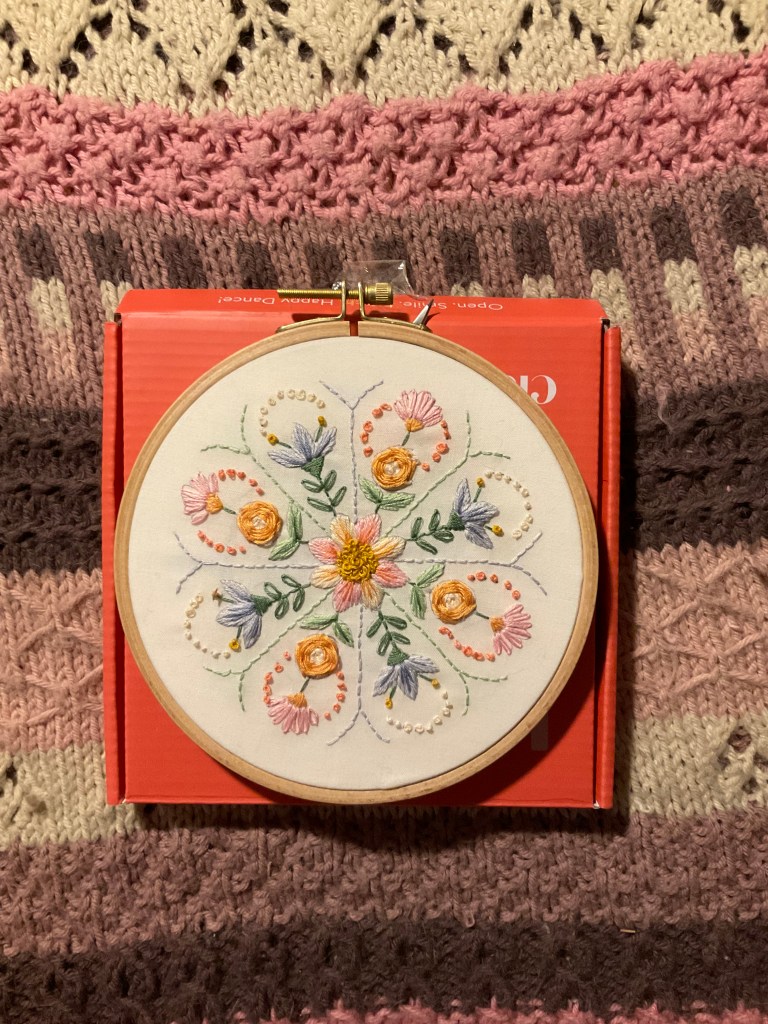
Over the past few months, I’ve taken up both embroidery and needlepoint, and the slow, repetitive stitching has become my go-to way of turning the rest of the world off for a while. These meditative crafts offer something rare: focus without pressure, rhythm without urgency, and creativity without noise.

Knitting, Healing, and Women’s Stories

In my books—the Prayer Shawl Chronicles and my historical knitting novels—I’ve always written about women finding peace and solace through slow, meditative knitting. These are women who turn to craft while navigating stressful jobs, personal challenges, grief, and change. Through knitting, they find healing for both body and soul.

I came to prayer-shawl knitting myself when my father entered the dementia ward of a nursing home. I needed something to help me cope as I sat with him, silently, for hours on end. Knitting became my way of staying present, grounded, and calm during a season when words failed.

Welcome to the World of Meditative Crafting

If you’re new to the soothing balm of simple, meditative crafting—welcome. You’ll find many other knitters and crafters who turn to yarn, thread, and needle to unwind, just like you. Yes, we all have our moments of ripping out a few rows and starting again, but it beats staring at our phones all day.

If you’re thinking of taking up knitting or another slow craft, give it a try. Crafts do not have to be perfect. It’s the quiet moments of concentration that count. And if you’re an old hand at knitting or embroidery, you already know: we need crafts unconnected to the internet—or world events—more than ever.

In the meantime, I hope you enjoy my books about women who, throughout the centuries, have picked up two sticks and a ball of yarn to make something beautiful—and to heal their own souls.

Blessings,

Cindy

Cynthia Coe is the author of The Prayer Shawl Chronicles and its sequel, The Knitting Guild of All Saints. Her newest novels, Knitting Through Time and Knitting Under the Orange Trees, explore how knitting spread through Europe and on to the Americas. Follow her here on the blog, at http://www.cynthiacoe.com, or on her Amazon Author Page.
How Knitting Traveled to the Americas (and Inspired My New Novel)

Knitting didn’t arrive in the Americas by accident—it traveled hand to hand, carried by women across oceans and generations.

As knitters, we know that techniques don’t live in books alone. They live in muscle memory, in watching someone else’s hands, in doing the same small motions over and over until they become part of us. Long before knitting patterns were printed or standardized, knitting moved through the world the same way people did—by necessity, memory, and care.

That history is what inspired my newest historical novel, Knitting Under the Orange Trees.

The story imagines how knitting traveled from Europe to the Americas during the sixteenth century—not through official records or trade documents, but through the daily lives of women. Women who packed little more than what they could carry. Women who brought practical skills with them: how to make clothing, how to keep others warm, how to create something familiar in an unfamiliar place.

In Knitting Under the Orange Trees, knitting is not a hobby. It is essential work. It happens in homes, convents, on ships, and in new settlements where warmth and clothing could mean survival. The novel explores how textile knowledge—quiet, often overlooked—helped shape early communities in the New World.

If you’ve read Knitting Through Time, this novel continues that world and deepens its history. If you haven’t, you can enter the series here, just as you would a new project: by picking up the needles and beginning.

Knitting has always been more than yarn and stitches. It is a way women have cared for one another, preserved knowledge, and carried home with them—no matter how far they traveled.

🧶✨ Knitting Under the Orange Trees is now available in paperback and e-book editions at this link. It is also included in Kindle Unlimited.

You can explore Knitting Under the Orange Trees and the full Knitting Through Time series at this link.  ✨🧶

I hope you enjoy this book! I truly LOVED writing it!

Blessings, Cindy

Cynthia Coe is an author, blogger, and avid knitter. Her books are available in paperback and e-reader edition on Amazon.com. Visit her Author page and follow this blog for more info and news.

Creative Detours (and the next book in the Prayer Shawl Chronicles)

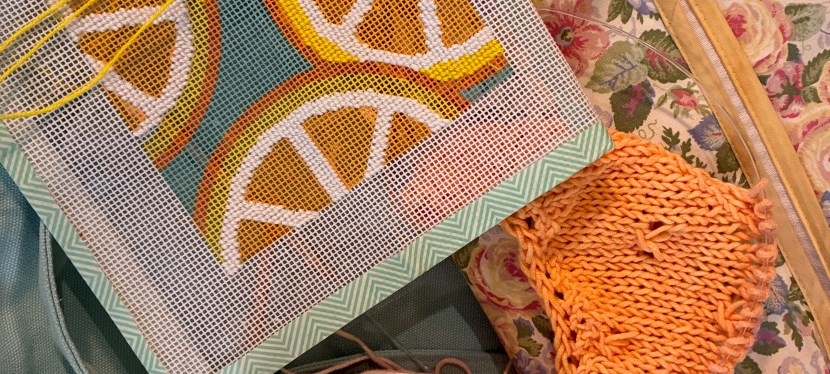
Sometimes even knitters need a break. I’ve set down my needles for a bit and picked up needlepoint — a portable, colorful craft that feels like fingerpainting with thread. After finishing the next-to-last draft of my new Prayer Shawl Chronicles novel, my brain needs a rest.

Do you ever get tired of knitting, even if it’s your primary hobby?

I’ve hit one of those times when I want to do “something else” for a little while — much like when I take a break from my beloved dance aerobics to do yoga, beach walks, or try something new. I always circle back to dance aerobics, and I always circle back to knitting.

Right now, though, I’m rediscovering needlepoint. It’s small, portable, and easy to do — almost like fingerpainting with thread and a needle. On a recent trip to Québec and Montréal, I tucked a little project into my bag and enjoyed the mindful rhythm of stitching in quiet moments. There’s something deeply satisfying about the relatively mindless rhythm of needlepoint: no designing, no choosing patterns, no counting stitches. Just color and thread.

And here’s the real reason for this creative detour: my brain is fried. I’ve just finished the next-to-last draft of my new novel — the upcoming book in The Prayer Shawl Chronicles series. This story travels from Bruges to Sevilla, then across the ocean to Peru and Florida… and it has worn me out!

So for now, I’m resting my writer’s mind with a few easy stitches. But you know me — I’ll be back to knitting soon enough… 🧶…as soon as I finish the final draft of my new novel!

Cynthia Coe is the author of The Prayer Shawl Chronicles, a series of fictional stories woven together by the theme of human connections made through prayer shawls and the craft of knitting. Her newest book is her first historical novel, Knitting Through Time: Stories of How We Learned to Knit. Learn more by visiting her Author Page at this link

The History in Our Knitting Hands

Knitting isn’t just a craft — it’s a way of holding onto history, one stitch at a time.

When we think of “history,” our minds usually go to big things: wars, presidents, protests, politics. But I’ve always been drawn to another kind of history — the quiet kind. The kind that unfolds not in the headlines, but in our homes, in our habits, and in our hands.

This is the history of daily life — what historians sometimes call “social history.” It’s the way people cook, gather, raise children, earn a living, and yes, knit. These are the changes that truly shape how we live, and I believe they matter just as much (if not more) than what’s in the textbooks.

Take the pandemic. Almost overnight, we changed how we shop, work, and interact. We got used to takeout and tracked packages, remote work and video calls. But we also learned to treasure quiet, in-person moments — time with loved ones, and time with ourselves.

As a knitter, I couldn’t help but notice something else: people returned to crafts. Knitting, crocheting, sewing — all the “granny crafts” came back into fashion. These slow, thoughtful traditions gave us something tangible to hold onto in a world that felt unsteady.

That’s no accident. In every time of upheaval, people turn to the familiar. And handcrafts like knitting carry history with them — not the kind of history with dates and battles, but the kind that teaches patience, resilience, and care.

We’ve seen this before. When factories replaced handwork, when knitting mills replaced home spinners, when the internet replaced handwritten letters — we gained speed, but we lost something too. We lost the rhythm of slow work. The connection between hands and heart. The quiet pride of making something, stitch by stitch.

The history I care about most lives in everyday changes like these.
That’s why I write about them, and why I keep knitting through them.

So if you’re someone who’s ever picked up a pair of needles and felt like you were joining a long line of women (and men) who made beauty out of necessity — you’re not just crafting. You’re preserving a kind of history. And that’s something worth holding onto.

Cynthia Coe is the author of The Prayer Shawl Chronicles, a series of fictional stories woven together by the theme of human connections made through prayer shawls and the craft of knitting. Her newest book is her first historical novel, Knitting Through Time: Stories of How We Learned to Knit. Learn more by visiting her Author Page at this link

As an Amazon Associate and Author, I provide links to products (including books I have written) and earn a very small fee if you click on the links and buy something. There is no additional charge to you!

Why You Shouldn’t Be Embarrassed to Do “Granny Crafts”


If you’re a 20-something who knits, crochets, or embroiders—this is for you. Granny Crafts aren’t just for grannies. They’re quiet, powerful tools for stress relief, creativity, and deep comfort through every stage of life.

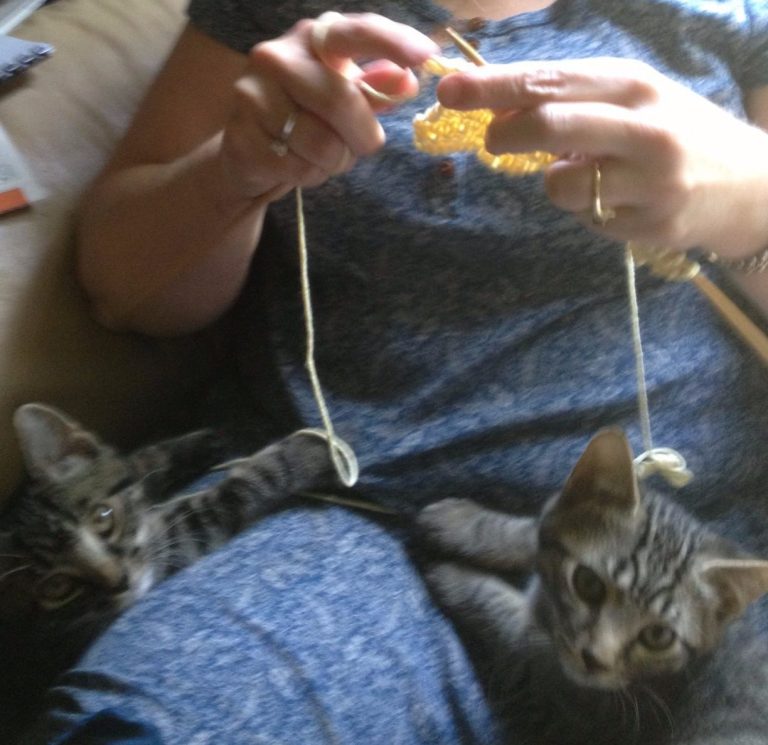
Cindy Knitting with Cats

Dear Young Crafty Kindred Spirit,

Lately, more and more people are talking about how young adults are embracing so-called “Granny Crafts”—and I love it.

If you’re here because you knit, crochet, embroider, or sew—or want to—you’re in good company. I’ve been knitting since I was a teenager myself. But it wasn’t until college, when stress started to weigh heavy on my shoulders, that I really picked it up as a coping mechanism. I’d sit in my dorm room or in a quiet corner of the student center, needles in hand, letting the rhythm of the yarn pull me back from the brink.

Some days, you just want everything—school, jobs, relationships, even the noise of the world—to go away for a while. I get it.

You were born into the digital age. My own kids got their first iPods in middle school and were among the first to start texting. Now, we all carry around little rectangles that buzz and ping and demand our attention 24/7. But here’s the secret: you can turn it off. Just for a few minutes. Really. The world won’t end.

And when you do? That’s when Granny Crafts work their quiet magic.

There’s no algorithm here. No pressure to go viral. No rush to the finish line. When you pick up a needle or a hook, it’s just you, your yarn, and your own rhythm. You can work slowly. Thoughtfully. Or set it down and pick it back up a month later. Granny Crafts are deeply human—analog, if you will. They exist on your terms, not someone else’s timeline.

You may not know it yet, but you’re building something far bigger than a handmade scarf. You’re building a lifelong tool for patience and comfort. Someday, you’ll find yourself stuck in medical waiting rooms. You’ll sit through school pickup lines or kids’ gymnastics practice. You’ll be at hospital bedsides or nursing homes, offering your presence when there’s nothing more you can do. Except this: stitch by stitch, you wait. You love. You breathe.

Granny Crafts give you something to hold on to when the rest of life feels uncertain. They will anchor you when stress comes crashing in, and they will accompany you through every phase of adulthood with grace and beauty.

Welcome to the circle. You’re not alone.

With love and yarn,
Cindy
Knitter, writer, and lifelong lover of “Granny Crafts”

If you’re looking for stories of other women—young, old, and in-between—who have walked that road, I invite you to follow my blog and check out my novels. I write about knitting, community, and faith in a world that is often spinning too fast. Sometimes, we need the quiet power of yarn and human connection to slow it down.

Cynthia Coe is the author of The Prayer Shawl Chronicles, a series of fictional stories woven together by the theme of human connections made through prayer shawls and the craft of knitting. Her newest book is her first historical novel, Knitting Through Time: Stories of How We Learned to Knit. Learn more by visiting her Author Page at this link

Creativity as a Spiritual Practice—Whether You Knit or Not

Whether you knit, write, bake, or daydream—your creative life might be more spiritual than you think.

In my life, creativity has always been more than a hobby. It’s a way of slowing down, listening deeply, and connecting with something greater than myself. Whether I’m holding knitting needles, writing a chapter, or just dreaming up new ideas, the creative process becomes, for me, a kind of prayer.

I’ve found that creativity invites us into stillness. Into presence. Into wonder. It doesn’t have to look like a finished project or a gallery-worthy painting. It can be quiet, even hidden—a moment of beauty in an ordinary day. Maybe it’s the way colors come together on your needles. Or the way a sentence finally says what your heart has been holding.

You don’t have to be a knitter to experience this. Whether you bake bread, write sermons, arrange flowers, doodle in the margins, or simply take time to notice the sacredness in the world around you—that’s creativity. And when we approach it with reverence, it becomes spiritual.

As a writer and lifelong maker, I often explore how creativity weaves its way through both daily life and sacred space. I reflect on themes of faith, prayer, and making meaning—on and off the page. Creativity, after all, isn’t about perfection. It’s about presence.

If that speaks to you, I invite you to follow more of my reflections at www.sycamorecove.org or on Facebook at www.Facebook.com/CynthiaCoeAuthor. I’d love to share this journey with you.


Cynthia Coe is the author of The Prayer Shawl Chronicles, a series of fictional stories woven together by the theme of human connections made through prayer shawls and the craft of knitting. Her newest book is her first historical novel, Knitting Through Time: Stories of How We Learned to Knit. Learn more by visiting her Author Page at this link

More Than Yarn and Needles

How every stitch—from cozy garments to prayer shawls—carries meaning in our culture

When we think of knitting today, we often think of coziness—warmth, comfort, and care woven into every stitch. In our 21st-century minds, knitting conjures images of home, love, and handmade gifts. But the symbolism of knitted items runs far deeper and more complex through human culture.

For years, knitting was stereotypically linked to elderly women in rocking chairs. While that image may feel quaint, it’s also dismissive—and increasingly outdated. Starting in the 1980s, knitting underwent a cultural revival. Young women reclaimed the craft through groups like Stitch ‘n Bitch, with bold new designs and creative freedom. Even celebrities like Julia Roberts and Patrick Stewart took up the needles, fueling a resurgence in quality yarns and artisan tools.

What sparked this return to slow, handmade work? In a fast-paced, high-tech world, many of us began craving simpler, tactile experiences. Knitting offered a chance to unplug, create with our hands, and make something uniquely our own. Whether it’s a simple scarf or an intricate lace shawl, every project becomes a kind of meditation—and a way to say, “I made this for you.”

Another beautiful expression of meaning through knitting is the prayer shawl movement. Beginning in 1997 as part of a seminary project, prayer shawls were envisioned as tangible signs of care and spiritual support. Without set patterns or specific religious rules, these shawls quickly found their way into churches, hospitals, and homes of every faith. Each one is as unique as the person who knits it—and the one who receives it.

From cozy comfort to quiet spiritual presence, knitted items continue to speak—sometimes loudly, sometimes softly—but always with meaning.

Happy Knitting! Cindy

Cynthia Coe is the author of The Prayer Shawl Chronicles, a series of fictional stories woven together by the theme of human connections made through prayer shawls and the craft of knitting. Her newest book is her first historical novel, Knitting Through Time: Stories of How We Learned to Knit. Learn more by visiting her Author Page at this link