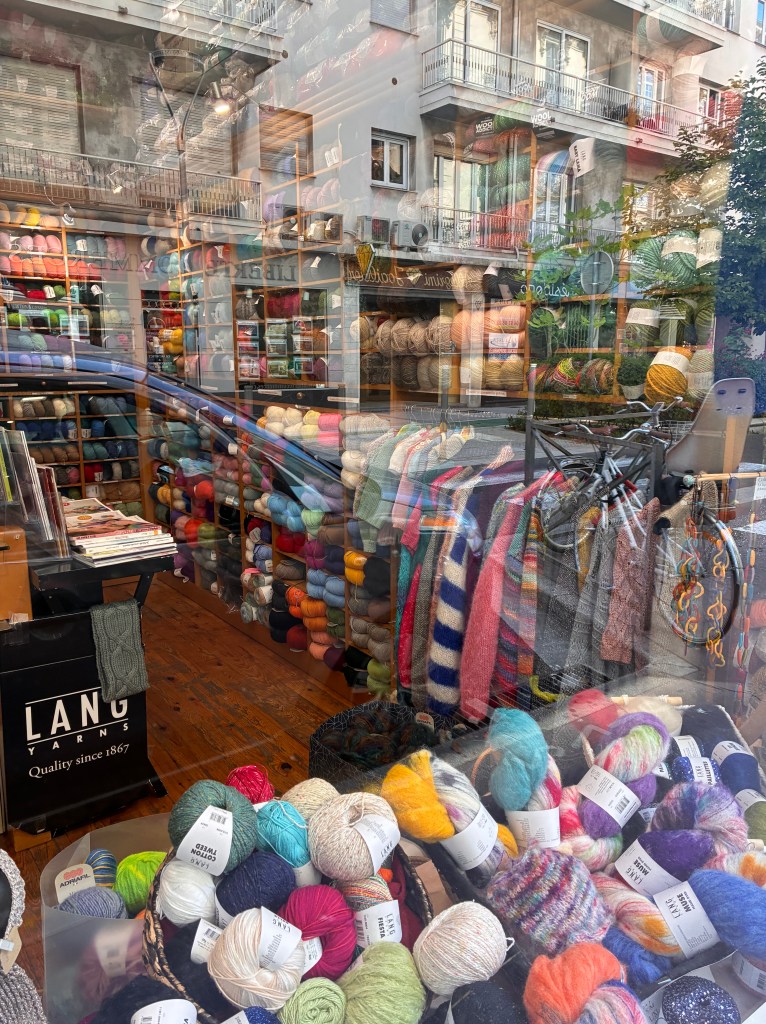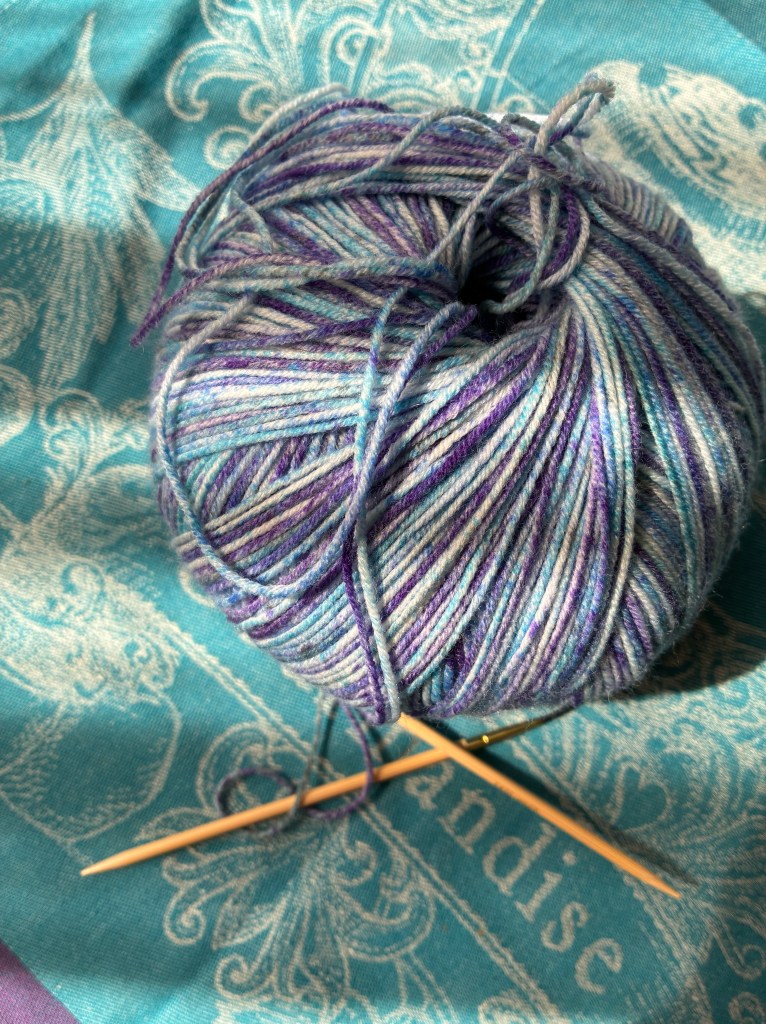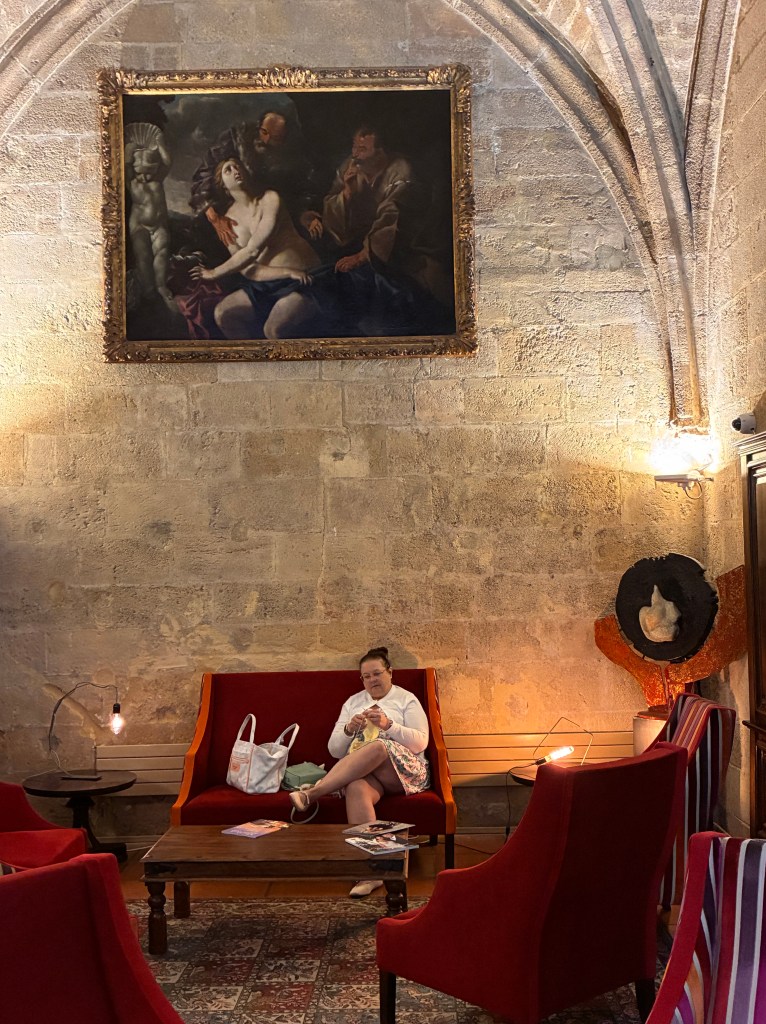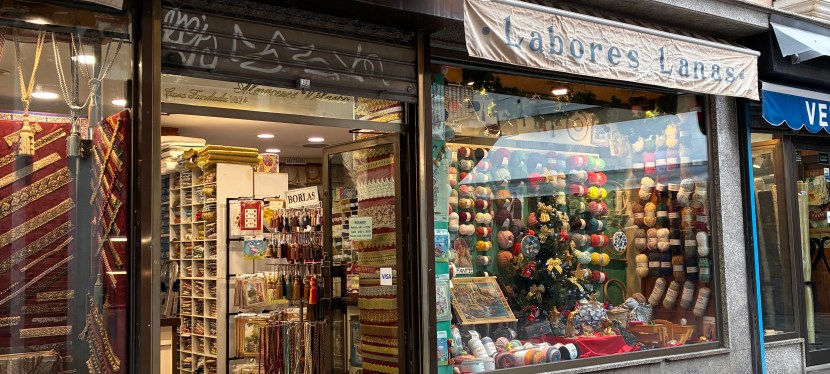
A visit to a yarn shop is never just an ordinary shopping trip. Yes, we may walk in thinking we need a skein of sock yarn, a set of needles, or “just one little thing” to finish a project. But let’s be honest: a yarn shop offers something far richer than supplies. It offers permission to pause.
In the middle of busy lives, a yarn shop gives us time for ourselves. It is downtime. Quiet time. Creative time. It is a place where we can step away from errands, obligations, and the noise of the world long enough to ask a wonderful question:
The Joy of Not Having a Plan
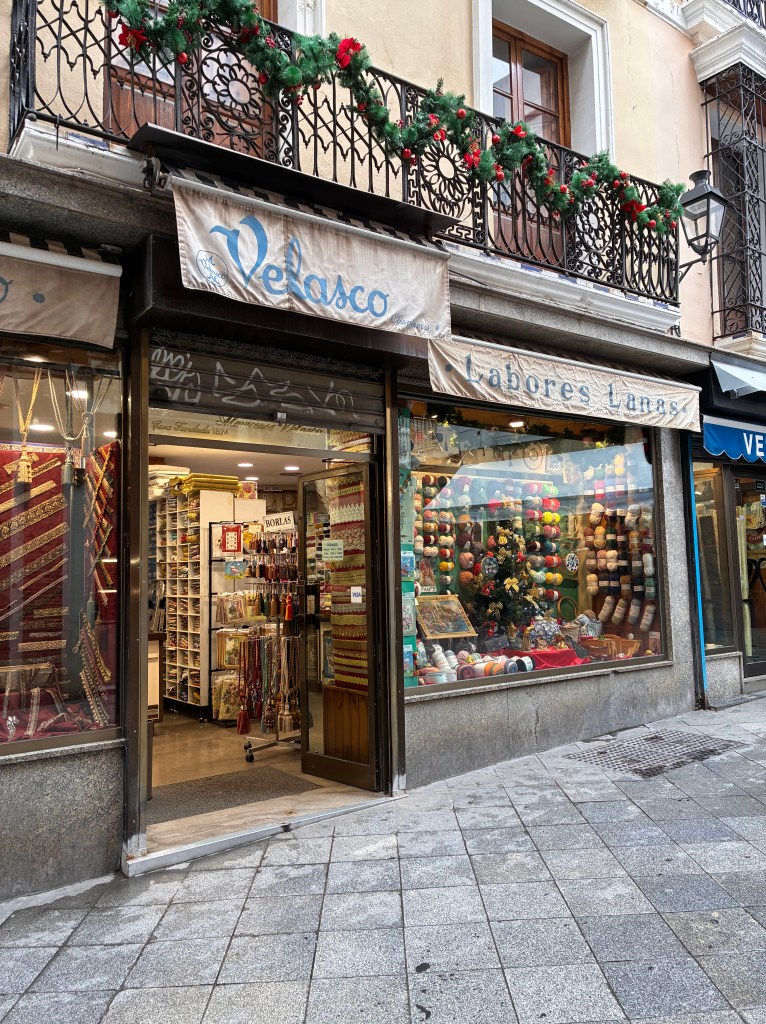
What could I make?
Sometimes we enter a yarn shop with a specific project in mind. We know the pattern, the gauge, the yardage, and the exact color we hope to find. But just as often, we wander in with no plan at all. That may be the best kind of yarn shop visit.
We touch a hank of wool. We pause over a color we would never have thought to choose. We notice the soft shimmer of silk, the rustic beauty of hand-dyed wool, or a label telling us the very breed of sheep that produced the fiber. And suddenly, creativity wakes up.
We think, What could I make with this? A shawl? A scarf? A hat? A gift? Something practical? Something extravagant? Something we don’t need at all, except that it would bring us joy? That moment — when yarn begins to suggest its own possibilities — is one of the small pleasures only knitters truly understand.
Finding Your People
Whether the yarn shop is down the road in your hometown or tucked along a side street in a place you’re visiting, there is almost always someone there who “gets” you. The shop owner. Another customer. A fellow traveler with yarn in her bag. Someone who understands why you are excited about a luxurious all-wool yarn, why you want to know where it came from, and why a label with the name of the sheep can feel like a treasure.
Non-knitters may not understand this. They may see shelves of yarn and wonder what all the fuss is about. But another knitter knows. Another knitter understands that yarn is not merely a product. It is possibility. It is texture, color, memory, skill, and imagination wound into a skein.
Yarn Shops as Travel Memories
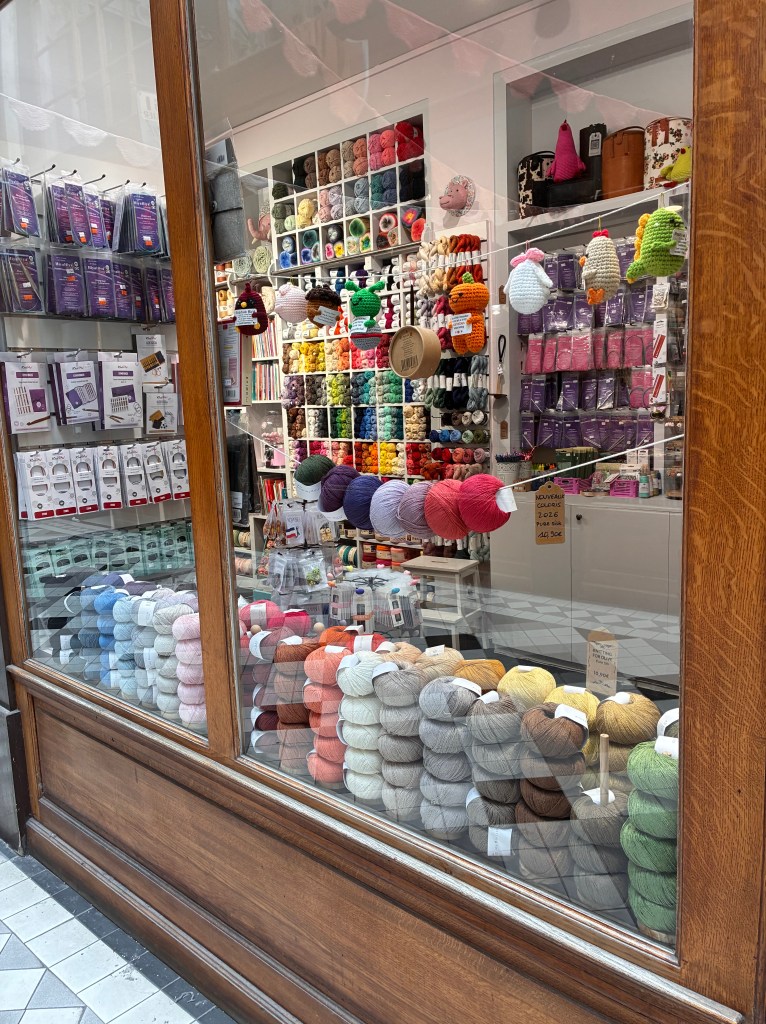
When I travel, I love visiting yarn shops. Some people collect magnets, postcards, or souvenir mugs. I come home with yarn. A skein from Canada, Spain, France, or a little shop discovered by accident becomes more than something to knit. It becomes a memory I can hold in my hands.
Later, when I make a scarf or shawl from that yarn, I remember the street where I bought it. I remember the woman behind the counter. I remember the sound of another language, the basket by the door, the color that caught my eye, the thrill of discovering that knitters everywhere speak a common language.
Even when we do not share the same words, we understand the gesture of touching wool, smiling over color, and imagining the next project.
A Small Pilgrimage
That is why I think of yarn shop visits as a kind of pilgrimage. Not a grand pilgrimage, perhaps. No long mountain trek. No ancient road required. But still, a journey.
We go looking for beauty. We go looking for inspiration. We go looking for a little time apart from the ordinary. We go looking for materials that may become gifts, garments, comfort, or art. And often, we find more than yarn.
We find conversation. We find encouragement. We find new ideas. We find a renewed sense of ourselves as makers.
Why This Matters in My Books
This is one reason knitting so often finds its way into my fiction. In my novels, knitting is never just something women do to pass the time. It is how they remember. How they heal. How they create community. How they carry beauty through difficult places.
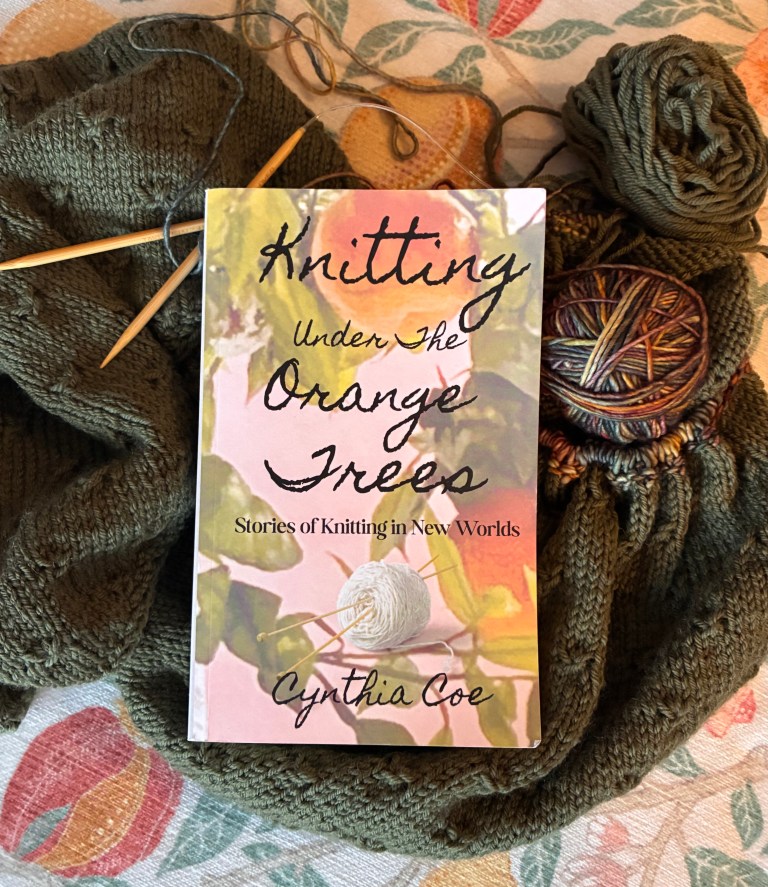
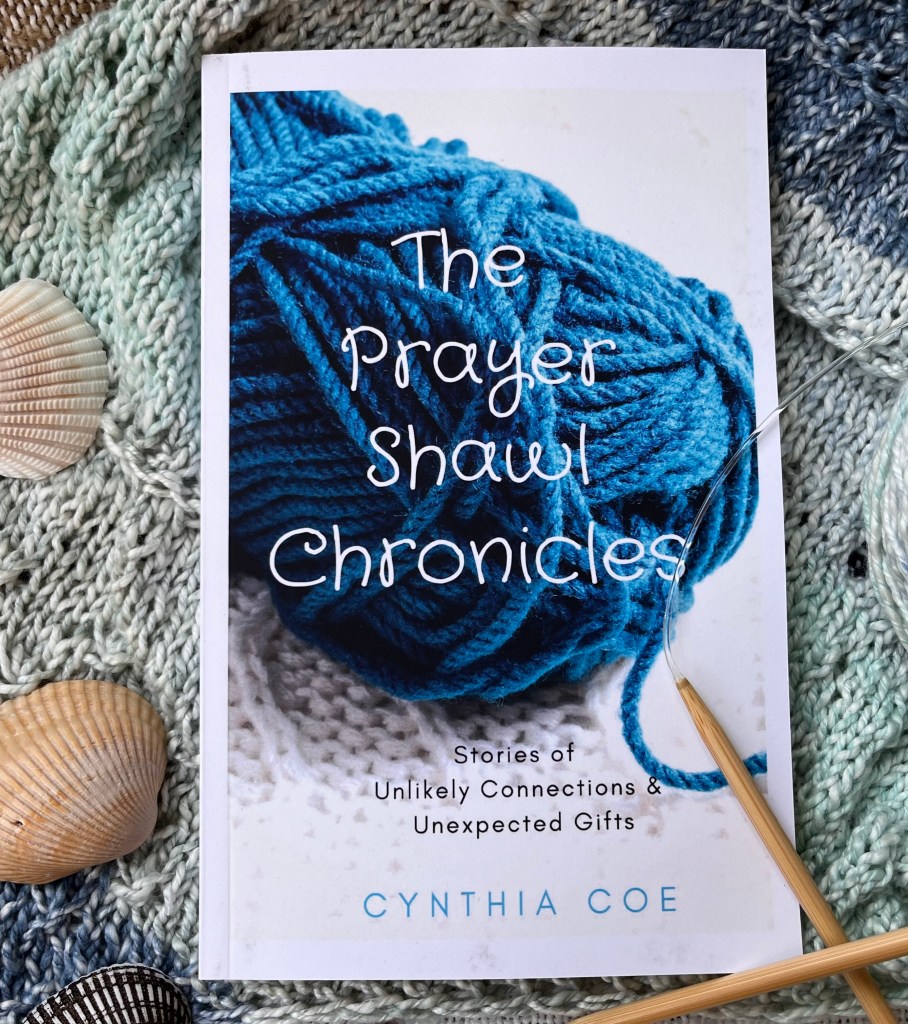
In The Prayer Shawl Chronicles and The Knitting Guild of All Saints, yarn becomes part of friendship, faith, grief, and comfort. In Knitting Through Time and Knitting Under the Orange Trees, knitting travels across centuries and continents, linking women whose names history may have forgotten but whose work mattered.
Because knitters know something important: A single strand can become something strong. A quiet hour can become a gift. And a visit to a yarn shop can become the beginning of a story.
I hope you have your own wonderful knitting story! Blessings, Cindy
Cynthia Coe is the author of The Prayer Shawl Chronicles and its sequel, The Knitting Guild of All Saints. Her newest novels, Knitting Through Time and Knitting Under the Orange Trees, explore how knitting spread through Europe and on to the Americas. Follow her here on the blog, at http://www.cynthiacoe.com, or on her Amazon Author Page.
As an Amazon Associate and Author, I provide links to products (including books I have written) and earn a very small fee if you click on the links and buy something. There is no additional charge to you!