An American Knitter in Europe

When traveling in Europe, one of my favorite excursions is to find a yarn shop and buy a few skeins to make a shawl or scarf while traveling. I always find luscious yarns (and all wool!!!), meet interesting people, and have an experience I’ll remember as one of the highlights of my trip.

I follow the map on my phone down a quiet street in the South of France. I’ve already bought lots of yarn in Paris, but I’ve managed to break a set of circular knitting needles during my travels. Darn, I’ll have to find another knitting shop in Nice!

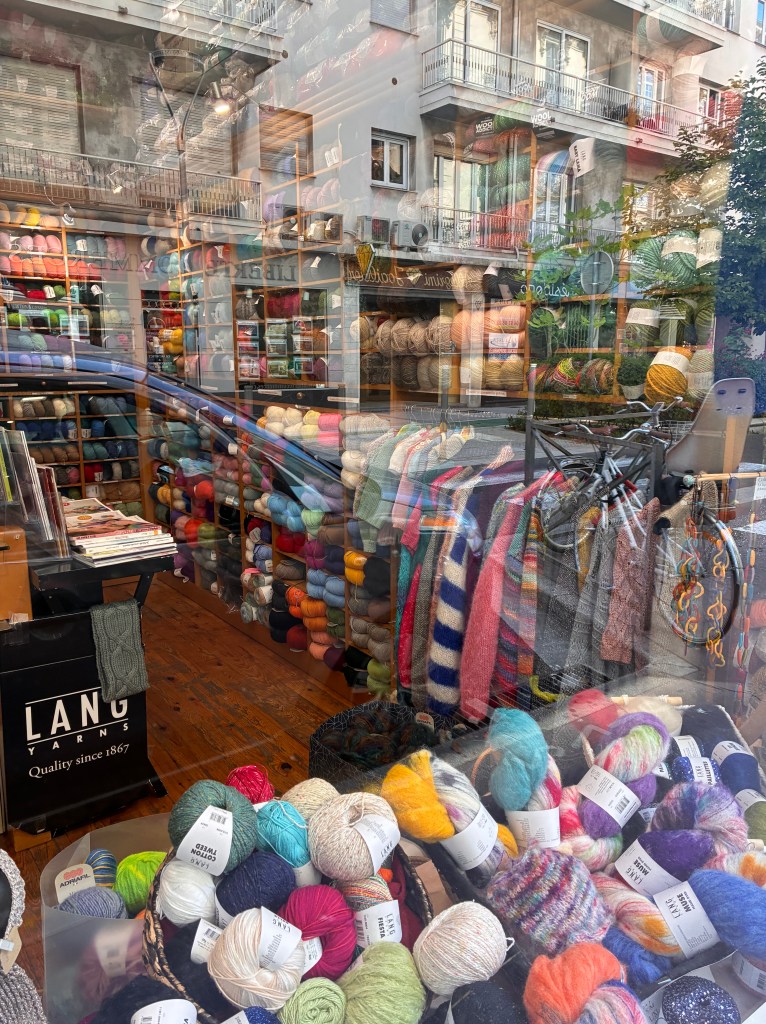
The quiet street is located just a few blocks from the Mediterranean, and there are only a few local people around, running errands on foot or otherwise going about their business. I find the tiny knitting store, but it’s closed. Peering in at the brightly colored yarns inside, I know it’s the place for me. I make a pharmacie run for wonderful French cosmetics and wait for the owner to return.

A French Knitting Shop
Bonjour, Madame!

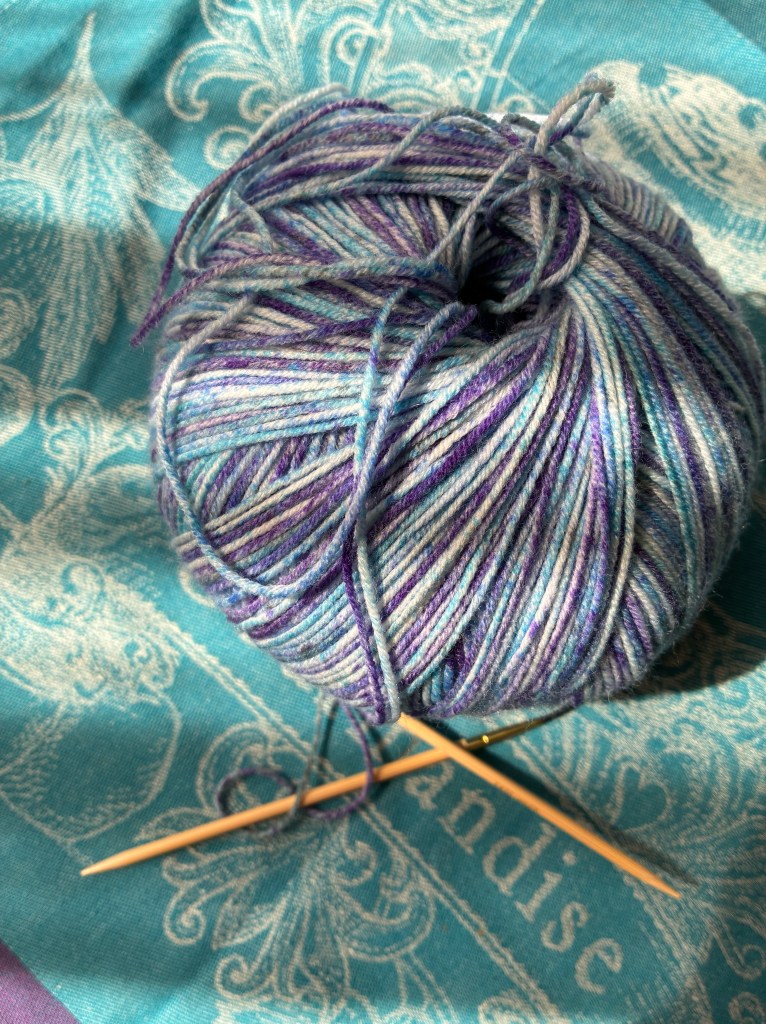
The knit shop is open, and a handsome Frenchman of a certain age is seated behind a small wooden counter. Several other customers have squeezed inside the shop as well. I get in line and eye some skeins as blue as the Mediterranean, and all wool as well.

Bonjour, Monsieur,” I reply in greeting, as I’ve been taught to do upon entering any place of business in France.

When the customers in front of me have finished purchasing their yarn and needles, I repeat my greeting and explain in my bad French that I need 3.5 mm needles, circular if he has them.

This is NOT the big box store experience we have in the United States! There are no racks of needles and knitting supplies lining the walls, available in large quantities to pluck off and head to the self-checkout.

Instead, the handsome Frenchman pulls out a drawer underneath his counter, frowns, rummages around a bit, and finally comes up with two sets of circular needles in the size I need. I select the bamboo ones…and point to the skeins of Mediterranean blue yarn as well.

After profuse “mercis” for bailing me out of a knitting emergency, I pay, tuck the needles and yarn in my tote bag, bid the handsome shopkeeper “au revoir,” and I’m on my way.

Shopping the Old-Fashioned Way

Walking back to my hotel, I realize that this was how all shopping used to be, long ago. You didn’t “browse” or do “retail therapy” – shopping as recreation. If you needed something, you went to a specific shop and told the proprietor exactly what you needed to buy. You would have formally greeted the shopkeeper, and he (probably not a she) would greet you formally in return. You would buy something made of natural materials, and you would certainly not stuff your purchases in a plastic bag.

Knitting Memories from Europe
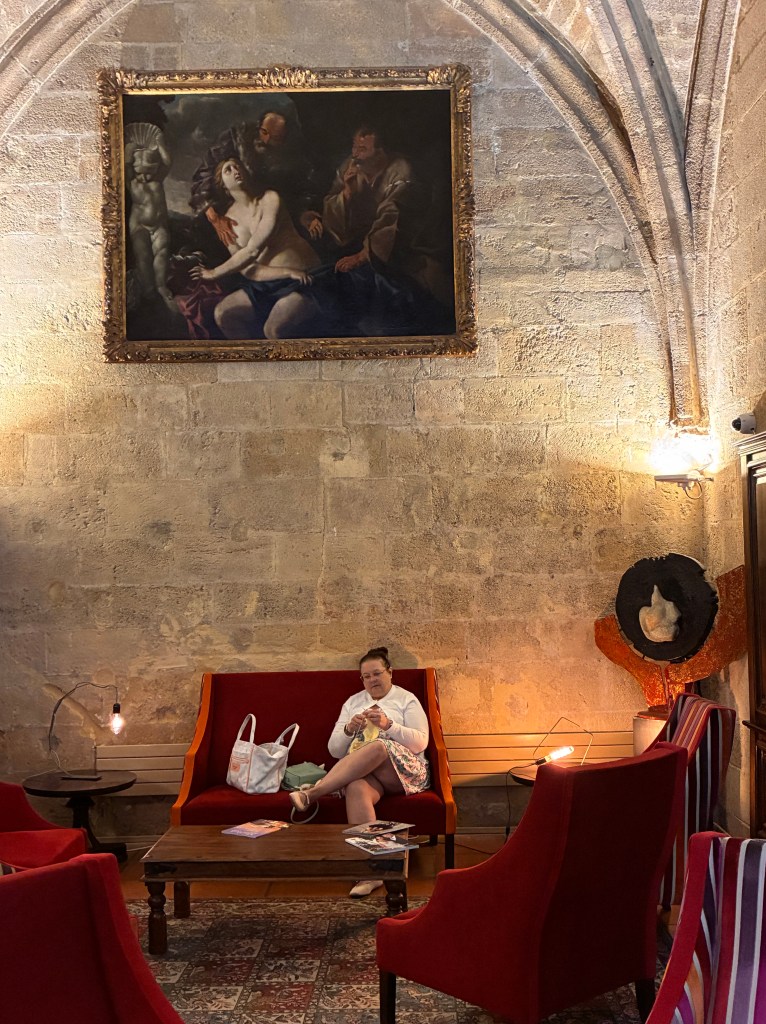
I’ve truly enjoyed all my excursions to buy yarn and knitting supplies in Europe. The yarns are always much higher quality than those on offer in big box craft stores in the U.S., and there’s always that personal interaction you rarely get in the big box stores.

In Montreal, I got to buy small-batch wool from local sheep – and with the name of the sheep attached to the label! In Spain, I got to buy the famous Merino yarns, actually made in the Merino region of Spain and at much more affordable prices than what we pay in America. In Portugal, I got to buy local Portuguese yarn as well, and the shawl I made while touring the country has become one of my favorite souvenirs ever.

The next time you travel, check out a local yarn shop! Even if you don’t speak the language, you’ll meet a local shopkeeper who truly knows their products. You’ll get high-quality yarn, and maybe you’ll make your own precious souvenir to help you remember a wonderful little excursion.

Bon Voyage and Happy Knitting,
Cindy

I’ve started a new travel blog, aimed at women in their “next chapter” after retirement, child-rearing, or other big life changes we all eventually face. Please check it out at www.travels-with-cindy.com.

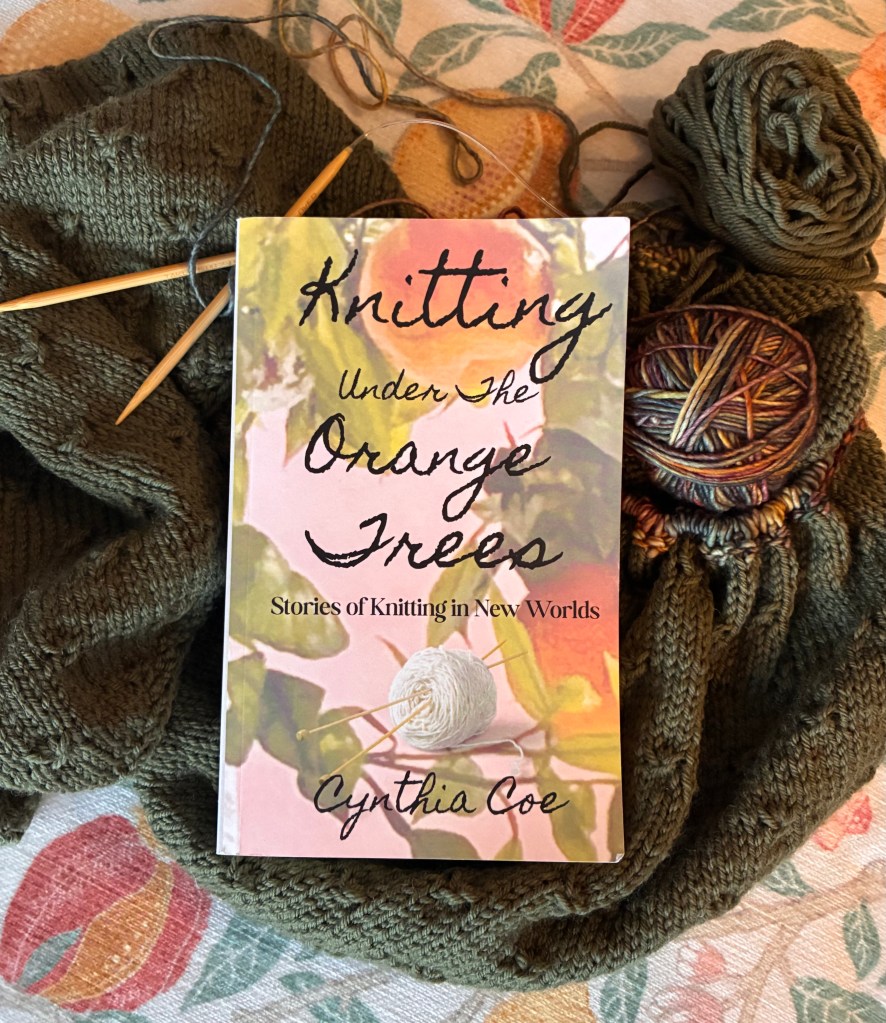
Do you love knitting and travel? Travel through time through my fictional histories of how Knitting got to Europe and the Americas by reading my books, Knitting Through Time and Knitting Under the Orange Trees, both available in paperback and on Kindle, included in Kindle Unlimited.
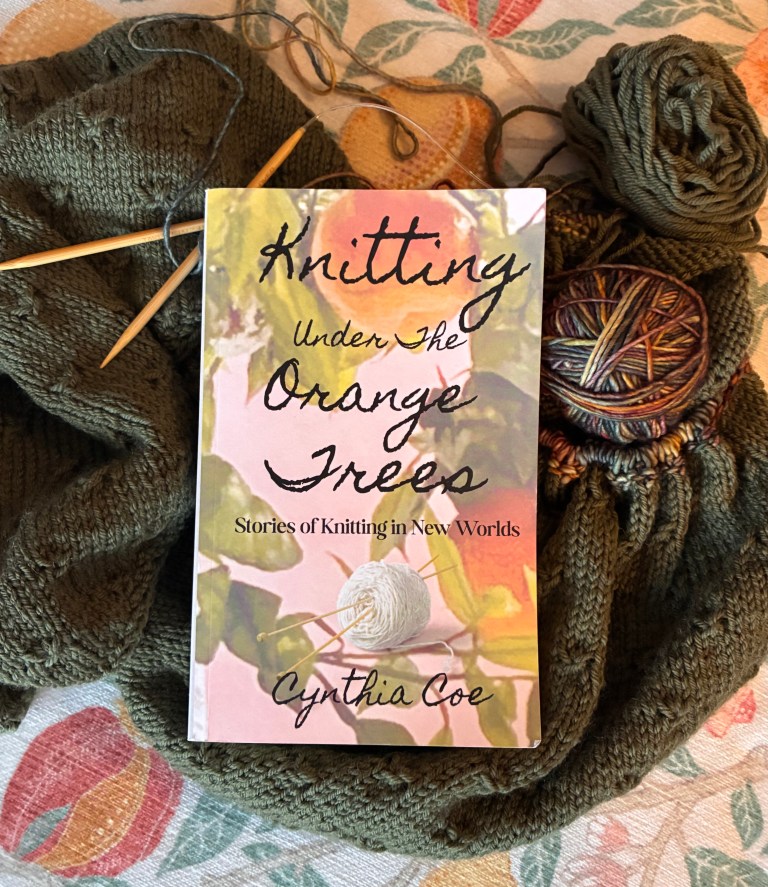
Cynthia Coe is the author of The Prayer Shawl Chronicles and its sequel, The Knitting Guild of All Saints. Her newest novels, Knitting Through Time and Knitting Under the Orange Trees, explore how knitting spread through Europe and on to the Americas. Follow her here on the blog, at http://www.cynthiacoe.com, or on her Amazon Author Page.
How Knitting Traveled to the Americas (and Inspired My New Novel)

Knitting didn’t arrive in the Americas by accident—it traveled hand to hand, carried by women across oceans and generations.

As knitters, we know that techniques don’t live in books alone. They live in muscle memory, in watching someone else’s hands, in doing the same small motions over and over until they become part of us. Long before knitting patterns were printed or standardized, knitting moved through the world the same way people did—by necessity, memory, and care.

That history is what inspired my newest historical novel, Knitting Under the Orange Trees.

The story imagines how knitting traveled from Europe to the Americas during the sixteenth century—not through official records or trade documents, but through the daily lives of women. Women who packed little more than what they could carry. Women who brought practical skills with them: how to make clothing, how to keep others warm, how to create something familiar in an unfamiliar place.

In Knitting Under the Orange Trees, knitting is not a hobby. It is essential work. It happens in homes, convents, on ships, and in new settlements where warmth and clothing could mean survival. The novel explores how textile knowledge—quiet, often overlooked—helped shape early communities in the New World.

If you’ve read Knitting Through Time, this novel continues that world and deepens its history. If you haven’t, you can enter the series here, just as you would a new project: by picking up the needles and beginning.

Knitting has always been more than yarn and stitches. It is a way women have cared for one another, preserved knowledge, and carried home with them—no matter how far they traveled.

🧶✨ Knitting Under the Orange Trees is now available in paperback and e-book editions at this link. It is also included in Kindle Unlimited.

You can explore Knitting Under the Orange Trees and the full Knitting Through Time series at this link.  ✨🧶

I hope you enjoy this book! I truly LOVED writing it!

Blessings, Cindy

Cynthia Coe is an author, blogger, and avid knitter. Her books are available in paperback and e-reader edition on Amazon.com. Visit her Author page and follow this blog for more info and news.

Knitting and the Spontaneity and Relaxation of Travel

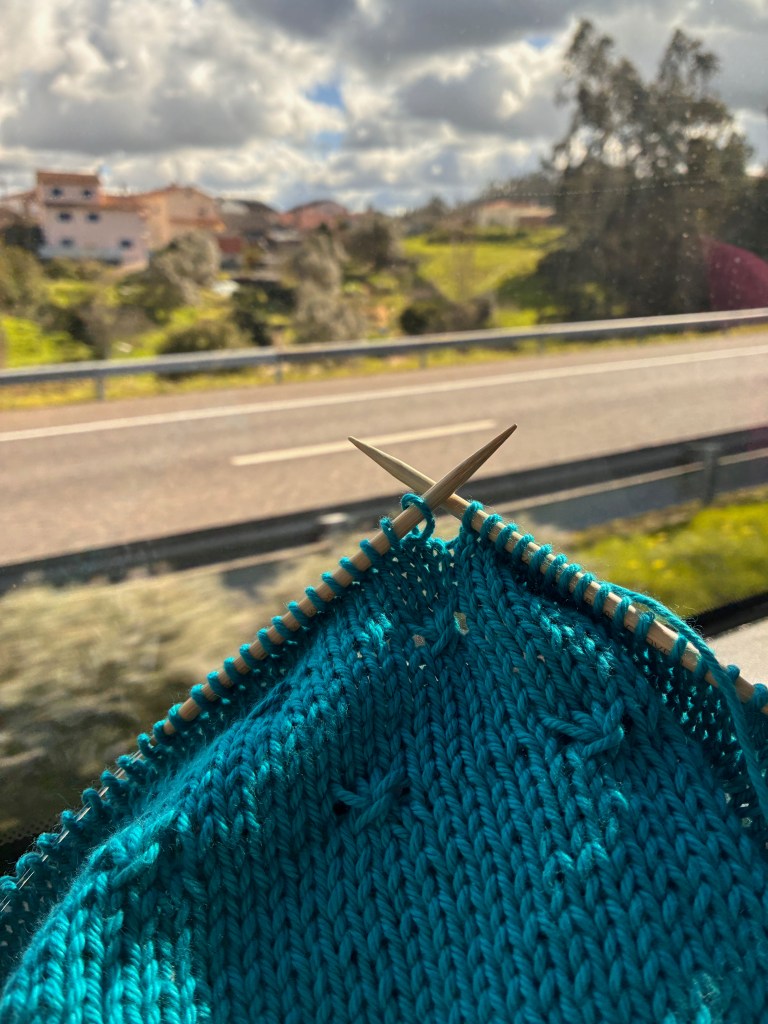
I just returned from a vacation tour of Portugal. Some of my most relaxing moments involved sitting on the bus, knitting and watching the budding vineyards and olive orchards of the Portuguese countryside go by.

This was my first big trip overseas by myself. I had gone with school groups, with family, and with my husband, but never alone. And I loved it.

I found a tour company that offered “solo” tours for those of us who are widowed, divorced, or traveling alone for any reason. I eagerly booked a trip to Portugal, a place I had never been. That was part of the fun, discovering and exploring a country I knew little about and making memories solely mine.

As a knitter, I naturally researched and found yarn shops in Porto and Lisbon, thinking I’d pay them a visit and maybe blog and post photos of these new-to-me shops. However, that didn’t happen. My tour kept me on my feet and exploring all kinds of sights, sounds, and activities I would never have discovered on my own. I took naps during the few hours of downtime in those cities, never getting around to finding those yarn stores.

Yet I found a wonderful yarn store without any planning or looking at all. While walking around a lovely pedestrian street in the old part of Coimbra, an ancient university town, I happened to find one right smack in front of me. I stepped in to find two entire walls of the shop stuffed with bins of brightly colored Portuguese wool, available for far less than I would have paid in the US. I eagerly purchased three skeins of wool yarn in a mustard yellow color, the same used to decorate tiles and houses in this town and in many other parts of Portugal. I learned that the use of this yellow color was introduced by the Moors centuries ago to symbolize happiness and sunshine – just the color to symbolize my adventure here, too.

Why only three skeins? I wanted a project just for this trip. I wanted a small, manageable knitting project I could work on in the bus, as I relaxed at the hotel before going to bed, and maybe even on the long plane ride going home. And that it was. I made a shawl, using a memorized pattern and favorite stitch combinations, constructing my own personal souvenir of a green and pleasant land feeding me with healthy and delicious food, green wines, and the charm of centuries past.

I will have this shawl for the rest of my life, the sunny yellow of the wool reminding me of a perfect day in Coimbra, eating pastel de nata (custard pastries!) and milky coffee for lunch, strolling the streets with new friends and happening upon a yarn shop, walking down cobblestone streets to visit a cathedral I swear I’d already seen while writing a scene in a novel under construction.

I’ll remember quiet drives on that big comfortable bus with a seat to myself, calming and pleasantly knitting that yellow shawl, glancing up now and then to see the vineyards budding in the springtime, my mind forgetting anything anywhere else.

With blessings for calm, quiet knitting…wherever you may find yourself, Cindy


Cynthia Coe is the author of The Prayer Shawl Chronicles, a series of fictional stories woven together by the theme of human connections made through prayer shawls and the craft of knitting. Her newest book is her first historical novel, Knitting Through Time: Stories of How We Learned to Knit. Learn more by visiting her Author Page at this link