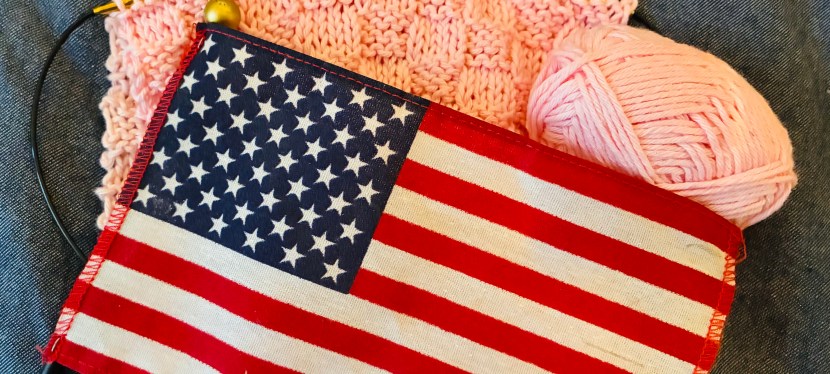
Knitting America Together: A Stitch-by-Stitch History

The history of knitting in America is really the history of people coming to this country and bringing their skills, traditions, hopes, and memories with them.

Knitting did not arrive by one single route. It crossed oceans in trunks, baskets, workbags, and memories. In my book Knitting Through Time, I imagined knitting traveling from Spain into Europe, then across the Atlantic with Dutch settlers who helped bring knitting traditions to New Amsterdam — later New York. In my novel Knitting Under the Orange Trees, I followed another possible path: knitting moving from Spain to the Americas, where European, Indigenous, African, and colonial cultures met in complicated and fascinating ways.

Women, Wool, and Everyday Life

In the early years of this country, fabric was not a hobby. It was survival. For many women, one of their primary responsibilities was making and maintaining clothing and household textiles for their families. That meant spinning, weaving, sewing, mending — and knitting stockings, mittens, caps, shawls, and warm garments.

Today, we may knit for pleasure, creativity, comfort, or beauty. But for generations of women before us, fiber work was part of daily life. It warmed children, protected workers, stretched household budgets, and made a home feel cared for.

A Nation of Immigrant Stitches

As the United States grew, so did its knitting traditions. Dutch, Spanish, French, Scandinavian, German, Irish, Russian, and many other immigrants brought their own ways of working with wool, color, pattern, and needles. Some traditions were practical and plain. Others were dazzlingly decorative, filled with cables, lace, colorwork, and symbolic motifs.

Every sock, shawl, mitten, and sweater carried a bit of memory from somewhere else. A stitch pattern might recall a grandmother’s village. A warm pair of mittens might reflect a northern climate. A lace shawl might carry echoes of elegance, thrift, and skill.

The Stitches That Connect Us

That is what I love about knitting history. It is not just about yarn. It is about women’s work, family care, immigration, creativity, faith, survival, and love.

When we pick up our needles today, we are part of that long and beautiful story. Every stitch connects us with the women — and men — who came before us, making something useful, lovely, and lasting with their own two hands.

Happy 250th Birthday to America! Cindy

Cynthia Coe is the author of The Prayer Shawl Chronicles and its sequel, The Knitting Guild of All Saints. Her newest novels, Knitting Through Time and Knitting Under the Orange Trees, explore how knitting spread through Europe and on to the Americas. Follow her here on the blog, at http://www.cynthiacoe.com, or on her Amazon Author Page.
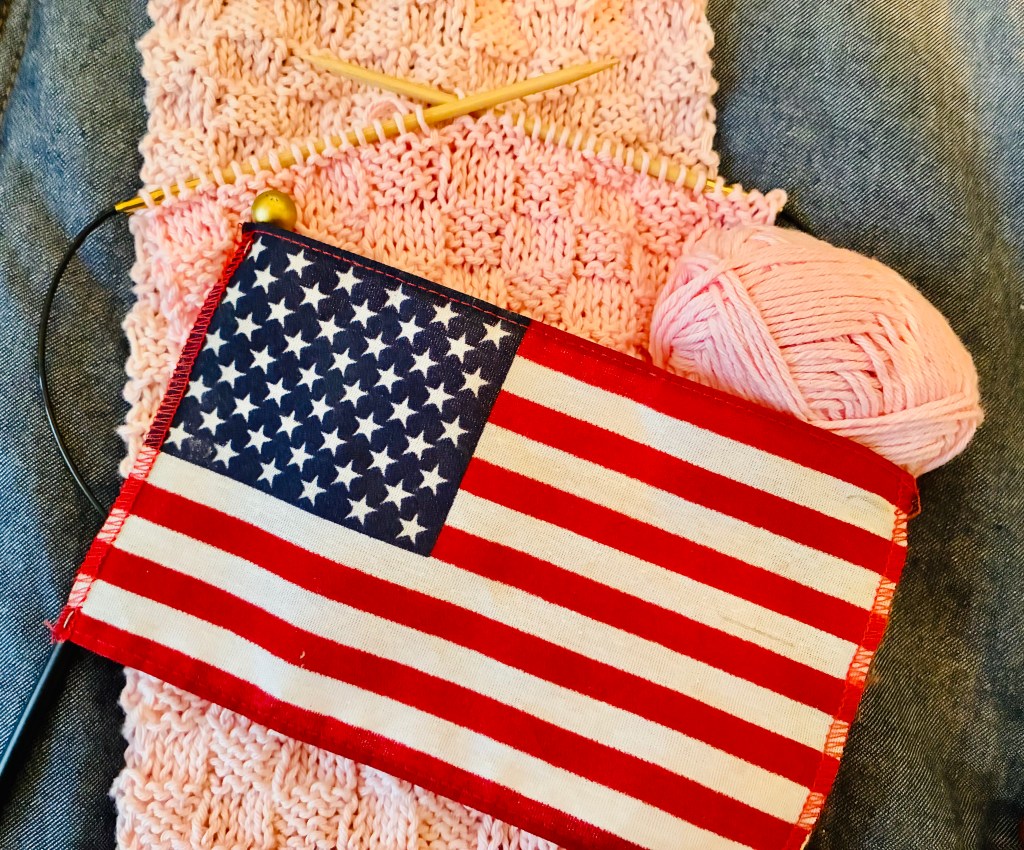
The History in Our Knitting Hands

Knitting isn’t just a craft — it’s a way of holding onto history, one stitch at a time.

When we think of “history,” our minds usually go to big things: wars, presidents, protests, politics. But I’ve always been drawn to another kind of history — the quiet kind. The kind that unfolds not in the headlines, but in our homes, in our habits, and in our hands.

This is the history of daily life — what historians sometimes call “social history.” It’s the way people cook, gather, raise children, earn a living, and yes, knit. These are the changes that truly shape how we live, and I believe they matter just as much (if not more) than what’s in the textbooks.

Take the pandemic. Almost overnight, we changed how we shop, work, and interact. We got used to takeout and tracked packages, remote work and video calls. But we also learned to treasure quiet, in-person moments — time with loved ones, and time with ourselves.

As a knitter, I couldn’t help but notice something else: people returned to crafts. Knitting, crocheting, sewing — all the “granny crafts” came back into fashion. These slow, thoughtful traditions gave us something tangible to hold onto in a world that felt unsteady.

That’s no accident. In every time of upheaval, people turn to the familiar. And handcrafts like knitting carry history with them — not the kind of history with dates and battles, but the kind that teaches patience, resilience, and care.

We’ve seen this before. When factories replaced handwork, when knitting mills replaced home spinners, when the internet replaced handwritten letters — we gained speed, but we lost something too. We lost the rhythm of slow work. The connection between hands and heart. The quiet pride of making something, stitch by stitch.

The history I care about most lives in everyday changes like these.
That’s why I write about them, and why I keep knitting through them.

So if you’re someone who’s ever picked up a pair of needles and felt like you were joining a long line of women (and men) who made beauty out of necessity — you’re not just crafting. You’re preserving a kind of history. And that’s something worth holding onto.

Cynthia Coe is the author of The Prayer Shawl Chronicles, a series of fictional stories woven together by the theme of human connections made through prayer shawls and the craft of knitting. Her newest book is her first historical novel, Knitting Through Time: Stories of How We Learned to Knit. Learn more by visiting her Author Page at this link

As an Amazon Associate and Author, I provide links to products (including books I have written) and earn a very small fee if you click on the links and buy something. There is no additional charge to you!