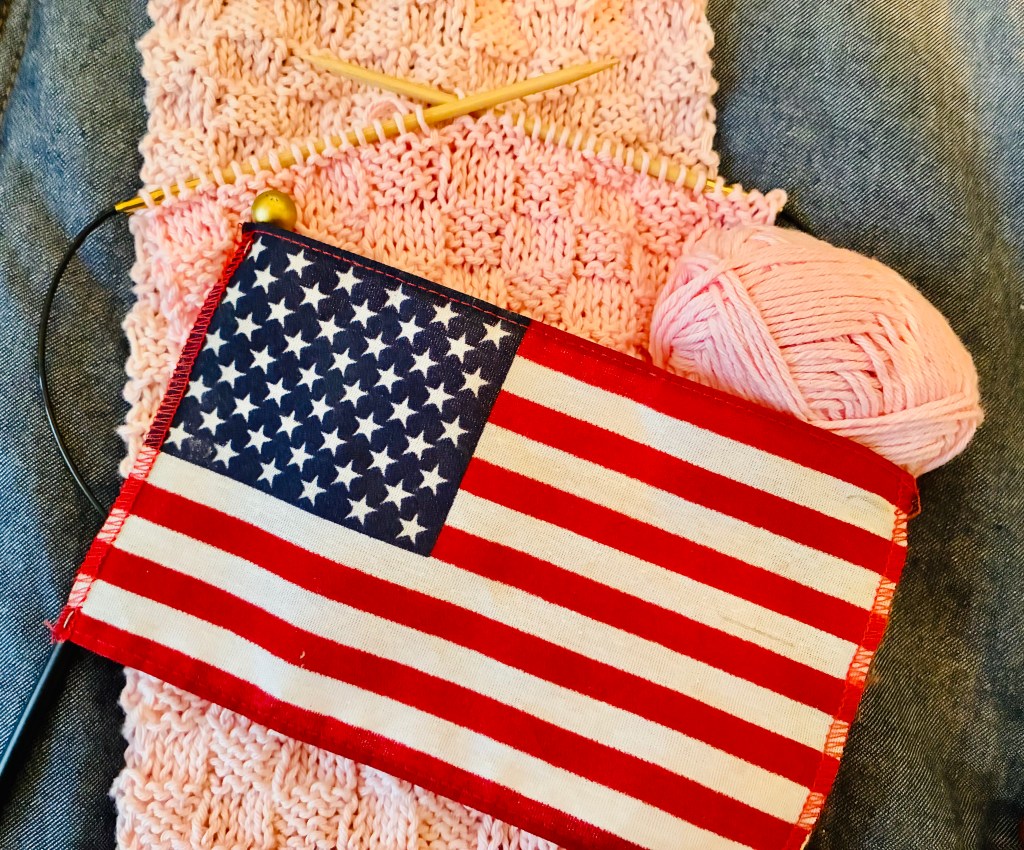
The history of knitting in America is really the history of people coming to this country and bringing their skills, traditions, hopes, and memories with them.
Knitting did not arrive by one single route. It crossed oceans in trunks, baskets, workbags, and memories. In my book Knitting Through Time, I imagined knitting traveling from Spain into Europe, then across the Atlantic with Dutch settlers who helped bring knitting traditions to New Amsterdam — later New York. In my novel Knitting Under the Orange Trees, I followed another possible path: knitting moving from Spain to the Americas, where European, Indigenous, African, and colonial cultures met in complicated and fascinating ways.
Women, Wool, and Everyday Life

In the early years of this country, fabric was not a hobby. It was survival. For many women, one of their primary responsibilities was making and maintaining clothing and household textiles for their families. That meant spinning, weaving, sewing, mending — and knitting stockings, mittens, caps, shawls, and warm garments.
Today, we may knit for pleasure, creativity, comfort, or beauty. But for generations of women before us, fiber work was part of daily life. It warmed children, protected workers, stretched household budgets, and made a home feel cared for.
A Nation of Immigrant Stitches
As the United States grew, so did its knitting traditions. Dutch, Spanish, French, Scandinavian, German, Irish, Russian, and many other immigrants brought their own ways of working with wool, color, pattern, and needles. Some traditions were practical and plain. Others were dazzlingly decorative, filled with cables, lace, colorwork, and symbolic motifs.
Every sock, shawl, mitten, and sweater carried a bit of memory from somewhere else. A stitch pattern might recall a grandmother’s village. A warm pair of mittens might reflect a northern climate. A lace shawl might carry echoes of elegance, thrift, and skill.
The Stitches That Connect Us
That is what I love about knitting history. It is not just about yarn. It is about women’s work, family care, immigration, creativity, faith, survival, and love.
When we pick up our needles today, we are part of that long and beautiful story. Every stitch connects us with the women — and men — who came before us, making something useful, lovely, and lasting with their own two hands.
Happy 250th Birthday to America! Cindy
Cynthia Coe is the author of The Prayer Shawl Chronicles and its sequel, The Knitting Guild of All Saints. Her newest novels, Knitting Through Time and Knitting Under the Orange Trees, explore how knitting spread through Europe and on to the Americas. Follow her here on the blog, at http://www.cynthiacoe.com, or on her Amazon Author Page.