Looking for the Perfect Travel Project to Knit?

The Perfect Travel Companion: A Shawl Knitting Project

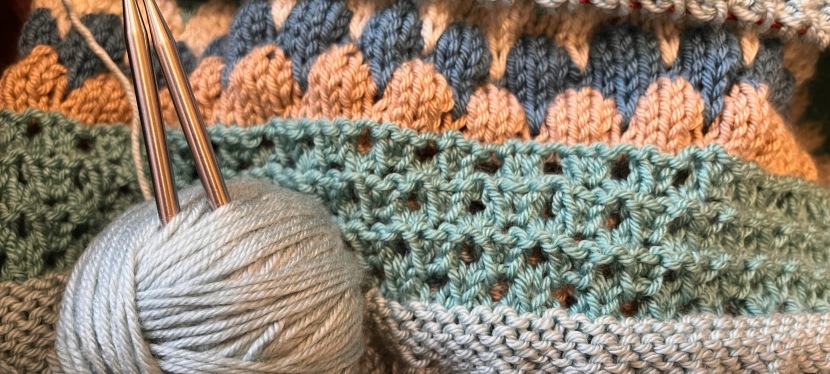
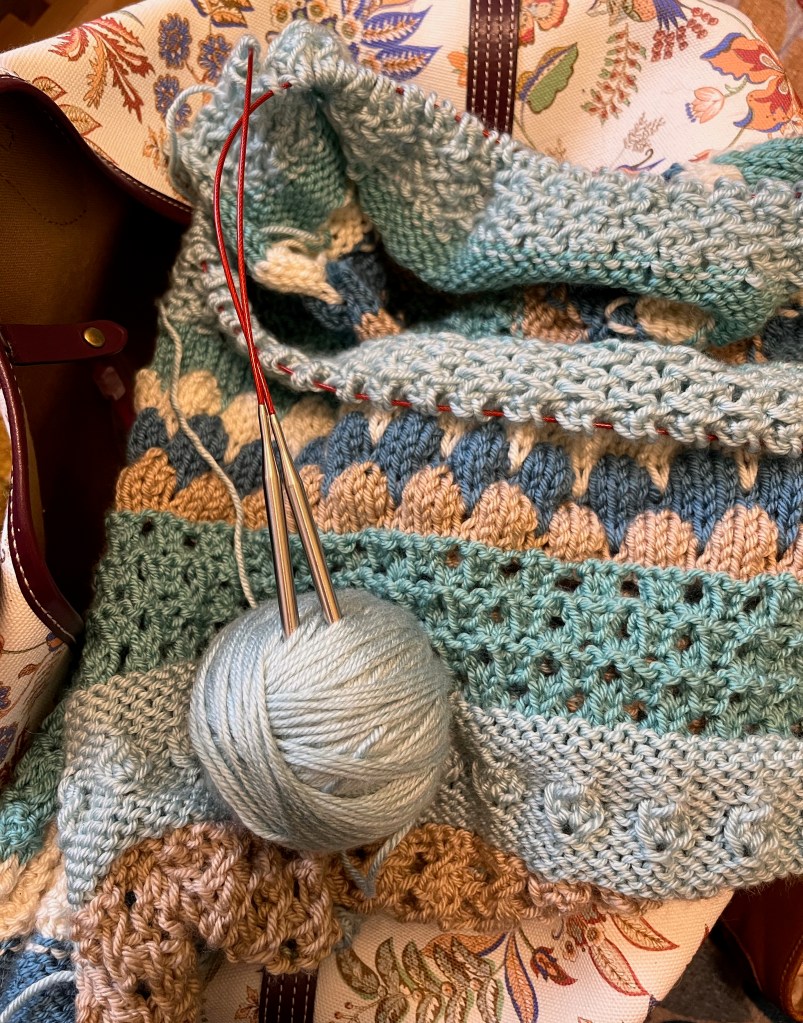
Planning a long trip and wondering what knitting project to take along? A simple shawl is the perfect choice!

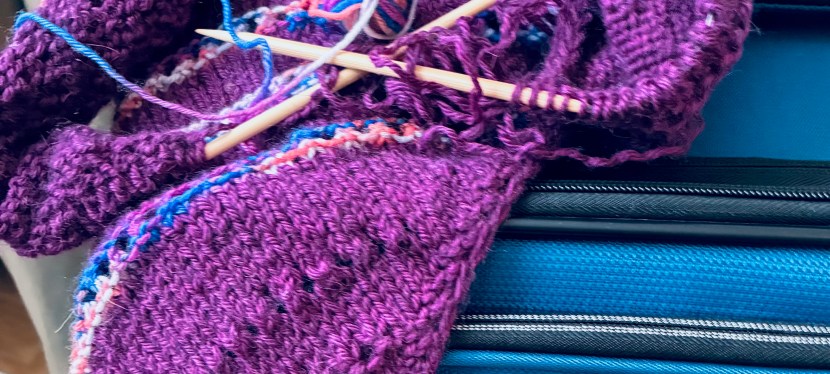
Why a shawl project? Because it’s stress-free, portable, and endlessly adaptable. No need to memorize a complicated pattern or keep track of stitch counts—just cast on and knit. You can use your favorite yarn and continue until you run out or until your shawl reaches the perfect size. It’s an easy, meditative project that keeps your hands busy while you relax and enjoy the journey.

Best of all, your finished shawl might come in handy on the flight home, keeping you cozy in a chilly airplane cabin. Another bonus? If you stop by a local yarn shop and find some “souvenir yarn,” you can start a new project right away! Just remember to pack a pair of knitting needles or pick up a pair that suits your new yarn.

A travel shawl project is all about simplicity, creativity, and making memories—one stitch at a time. Happy knitting and safe travels!

(And to answer the question, “are knitting needles allowed on airplanes?” Absolutely, Yes! I’ve never had a problem. You may be asked to put them up for take-off and landing, but that’s only reasonable and no big deal.)

Here’s my simple go-to shawl pattern:

Simple Travel Shawl Knitting Pattern

This easy-to-knit shawl is perfect for travel—no complicated pattern to memorize, just relaxing, meditative knitting. Use any yarn you love and knit until you reach your desired size or run out of yarn.

Materials:

  • Any weight yarn (choose your favorite!)
  • A pair of knitting needles suitable for your yarn (circular needles recommended for larger shawls)
  • Scissors
  • Tapestry needle for weaving in ends

Instructions:

Cast on: 7 stitches.

Set-up: Knit 2 rows.

Increase pattern:

  • Right Side (RS): Knit 1, increase 1(KFB or your preferred increase). Knit to the next to the last stitch, decrease 1, knit the last stitch.
  • Wrong Side (WS): Knit to the next to the last stitch, increase 1, knit the last stitch

Repeat these two rows until your shawl is the desired size or you run out of yarn.

Customize Your Shawl

You can work the entire shawl in garter stitch (knit every row) for a squishy, textured fabric, or in stockinette stitch (knit RS, purl WS) for a smooth look. Want something unique? Feel free to mix and match any of your favorite memorized stitch patterns to create a one-of-a-kind piece!

Bind off loosely and weave in ends.

Optional: Block your shawl for a more polished finish.

Now you have a cozy, handmade piece—perfect to wear on the journey home!

Happy Travels! Cindy

Cynthia Coe is the author of The Prayer Shawl Chronicles, a collection of interrelated short stories about knitters and those they meet through knitting and sharing prayer shawls. 

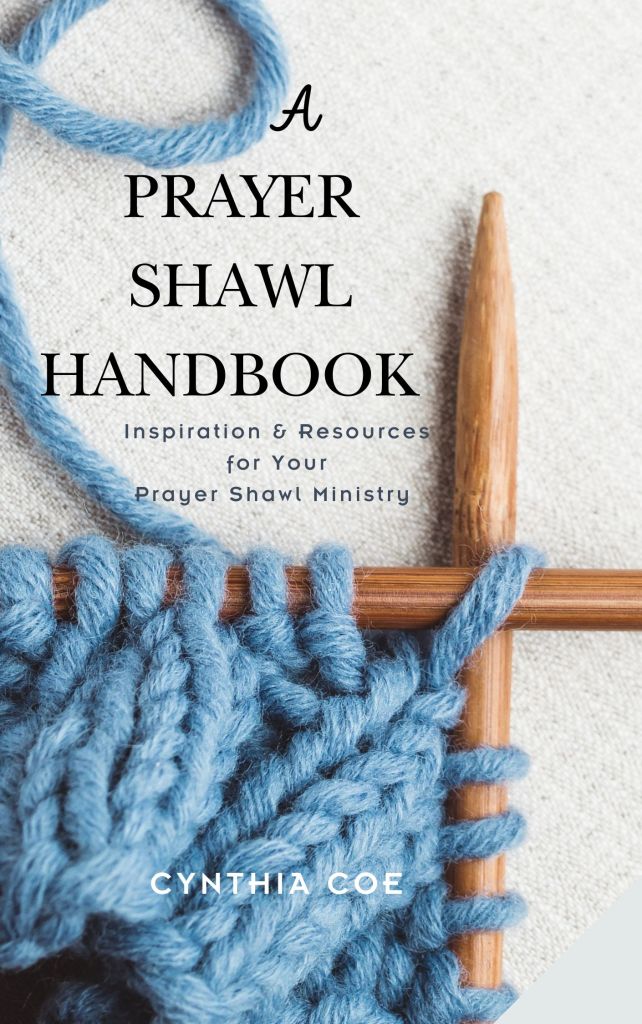
Be sure to check out my newly published A Prayer Shawl Handbook: Inspiration and Resources for Your Prayer Shawl Ministry, now available in paperback and e-book editions and included in Kindle Unlimited.
xr:d:DAFrvfJwOOQ:44,j:7117223354181397058,t:23112222

Patterns in Nature, Patterns in Fiber Arts

Why do some knitting patterns just “look right”? Where could you find inspiration for designing your next fiber arts project?

Look no further than Mother Nature herself! Certain patterns are found time and time again in nature. Intuitively, we are already hard-wired and attuned to recognizing these patterns. So if you find yourself stumped for design ideas or a pattern that’s sure to please, here are design elements found in nature and their knitting or other fiber arts equivalents.

The Wave: This pattern lends itself easily to the inherently linear nature of knitting. Most knitting patterns are done in rows, and rows are akin to long, thin waves. These waves can have crests and dips, interruptions and smooth sections – just like many knitting or crochet rows.  If you’re knitting in any kind of garter stitch pattern or with other repetitive lines, you’ve got your wave.

A pattern in nature related to the Wave includes the Meander pattern. Think a pathway, river, or snake. Though our finished products in knitting and other fiber arts usually no longer meander, our yarns certainly meander from our skeins to our needles as we’re working!

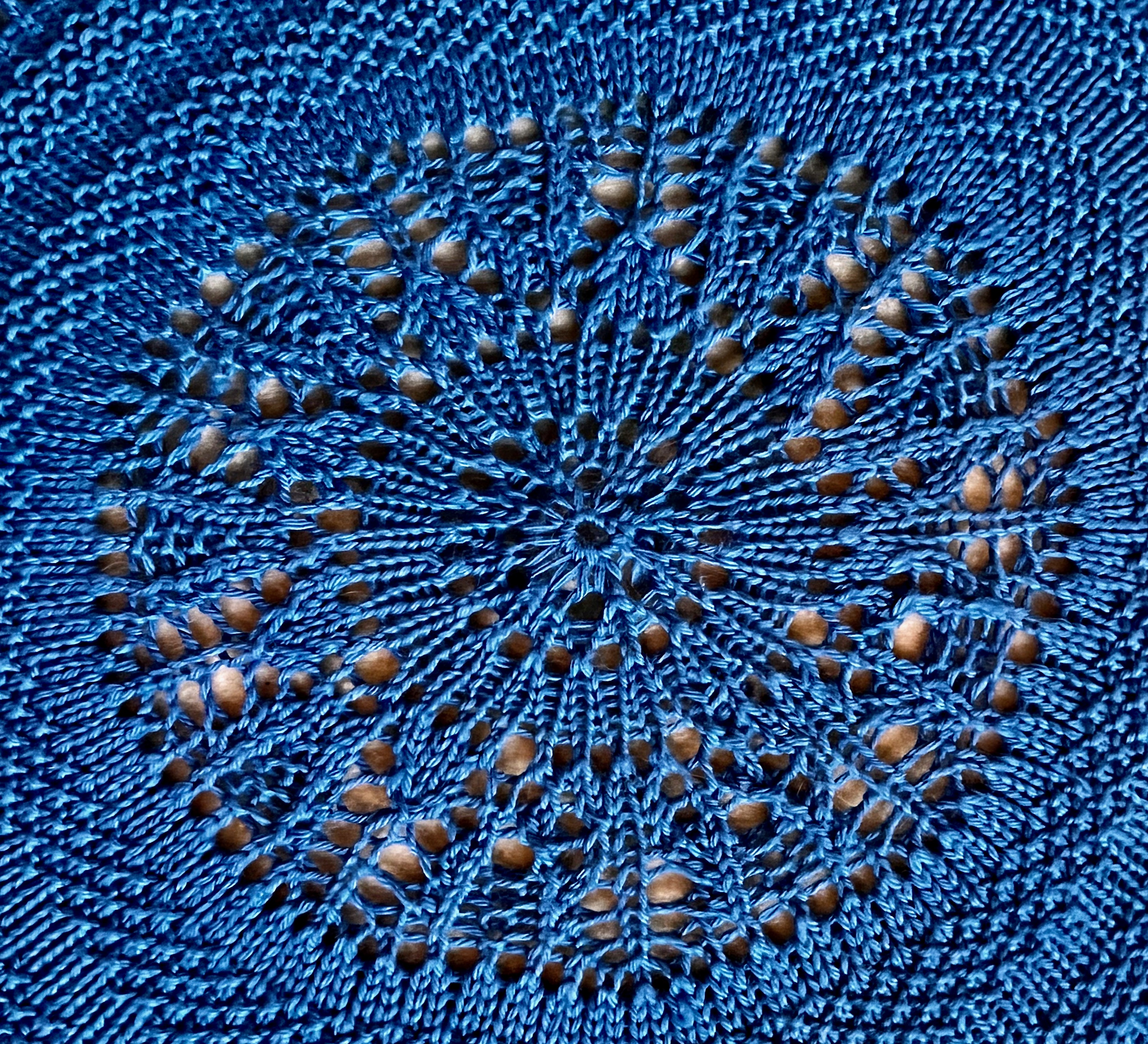
The Burst: Think of the iconic photograph of a drop of milk making a round, crown shaped pattern. Or the shape of a daisy or other flowers or plants “bursting” with a central point. This circular pattern is a bit trickier for knitters. Making a circular pattern with double pointed needles can be fiddly and, in my opinion, is a rather advanced skill. But if you want to knit to impress, this would be your “wow” pattern. This pattern is much easier in crochet, and many crochet patterns feature increasing numbers of stitches starting from a small space. 

The Spiral pattern is similar to the Burst pattern. Both are round patterns, with the spiral meandering around and around instead of making a round burst from a central point. Spirals are more often found in crochet patterns than knitting. 

Fractals: Think branches of a tree or other plant, fractals branch out from a central line, just as tree limbs or leaves branch out from a stem or trunk. We see a lot of fractals in embroidery and other fiber arts using decorative stitches. Many more advanced knitting stitches do feature fractals that mimic plant leaves. These are sure to give your design a nod to nature.

Cells and Bubbles: Cells are the building block of nature, so cell-like designs are often found in all finds of knitting, crochet, and other fiber arts. They may take the form of holes or spaces in our stitches, or we may make block-like patterns in our colorwork or stitching. Think moss stitch in knitting or even basketweave. Bubbles are similar to cell patterns and can give a pattern the feel of fun and joy. 

These patterns are all around us – in our own bodies, in plants, and in the heavens. We know these patterns; we recognize these patterns. Take a look at your favorite fiber arts patterns some time. What do you recognize from the natural world?

Enjoy Your Fiber Arts Designing…and Time in Nature! Cindy

Cynthia Coe is the author of The Prayer Shawl Chronicles, a collection of interrelated short stories about knitters and those they meet through knitting and sharing prayer shawls. 

Be sure to check out my newly published A Prayer Shawl Handbook: Inspiration and Resources for Your Prayer Shawl Ministry, now available in paperback and e-book editions and included in Kindle Unlimited.

Beginner, Intermediate, and Advanced in Knitting Patterns – What the Definitions Should Mean!

Spoiler Alert: “Advanced” is reserved for “I couldn’t possibly knit that while watching TV”

Do you ever check the “Level of Difficulty” on a knitting pattern? Have you ever picked up a “beginner” level pattern, only to find it way, way, way beyond your skill level? Or found that an “intermediate” pattern required you to count each and every movement of the yarn you made, and it still didn’t come out right?

Friends, I’ve been there. I would consider myself a fairly experienced knitter, but I enjoy fairly mindless “meditative” knitting, especially while I’m watching TV or listening to an audio book. Recently, I grimaced in annoyance at a pattern that was labeled for “beginners.” This pattern required yarn-overs, yarn-overs on the purl side that required an extra loop that the pattern failed to mention, and slip stitches that were supposed to go over all that. And at beginner level knitter was supposed to navigate all that??? Really???

So here’s my own definitions of what “beginner,” “intermediate,” and “advanced” should mean in patterns for those of us who knit for pleasure:

Beginner means knits and purls only!!! Nothing else! I mean it! Most beginners are still trying to make consistent stitches that don’t look like something the cat got ahold of. The beginner knitter wants to begin and end with the same number stitches on the needle. If you’re a pattern designer and call your pattern “beginner” level, don’t throw in slip stitches, yarnovers, or anything else that needs explaining. Think stockinette stitch and garter stitches, maybe a moss stitch. There’s a lot you can do with these.

Intermediate means a few tricks that don’t require excessive brain power. Intermediate means you’ve mastered the basic knit and purl stitches and can make a piece of fabric you’re not embarrassed to show other people. You’re now ready to throw in a few fancy stitches that will add texture and impress the heck out of your friends, but you do not have to count beyond the number 4.  For pattern designers, this means stuff like increases, decreases, slip stitches if you explain them properly, and yarnovers. If it’s a sweater pattern, you may ask the knitter to pick up stitches for the button band, but you better provide a video.

Advanced means the knitter will need to turn off the TV, mute the phone, and tell everyone to leave her alone for the next hour. For pattern designers, bring it. You may ask the knitter to count in sets of twelve if you want. You may ask the knitter to knit 9 tog with yarn so thin you have to squint to see it. You may include German short rows, whatever those things are. You may ask your knitter to turn the fabric upside down and flip it over twice every two rows. It’s fine. This knitter has been forewarned and is game for anything. 

Pattern designers, take note and proceed accordingly! Tell us what we’re getting into! And in plain English, please!

Love and kisses to designers who think I knit better than I do, Cindy

Cynthia Coe is the author of The Prayer Shawl Chronicles, a collection of interrelated short stories about knitters and those they meet through knitting and sharing prayer shawls. 

Be sure to check out my newly published A Prayer Shawl Handbook: Inspiration and Resources for Your Prayer Shawl Ministry, now available in paperback and e-book editions and included in Kindle Unlimited.
New Year, New Stitches: Crafting Daily Knitting Rituals

It’s a brand new year! Looking for a new way to find a sense of calm and grounding each and every day? Think about starting a daily knitting ritual. By taking up a daily knitting ritual, you are invited to weave the threads of your daily life into a tangible tapestry—a daily celebration in which you find a sense of calm and grounding. 

You can do a temperature blanket, a prayer shawl, or any kind of project that involves a set number of rows or a set time period in which you calmly knit and leave the rest of the world behind. The point is to take a little time each day for quiet – even silent – time of meditative knitting that reminds you to slow down and forget your worries. 

I first began a daily knitting ritual with a “temperature blanket” in 2019. I knitted one ridge of garter stitch each evening without fail, showing the high temperature of the day. What began as a simple commitment to my temperature blanket evolved into a nightly time of peacefulness. Seated in my favorite chair, surrounded by loved ones, I marked the close of each day—a time to reflect, acknowledging that I’ve given my best today, and it’s time to unwind.  

As I knit through the seasons, my knitting echoed the transitions from cold to warm, from short days to the long, sun-soaked afternoons of late spring, then back to cool and later cold days of autumn and early winter. These daily stitches grounded me in the natural rhythms of life—a simple yet profound celebration of life’s perpetual forward motion and renewal.

If you need a pattern, here’s my own…

Temperature Blanket Pattern: 

Materials: I use inexpensive cotton yarn from the big box craft stores, in the same colors for temperatures used by the television weather reports. I use size 8 or 9 knitting circular knitting needles to deal with the large number of stitches used. 

-Cast on 100 stitches, knit one row using the color of January 1

-At the beginning of each month, I knit one row of Yarnovers followed by the number of the month. For instance, for my first row, I would knit: [K2tog, Yarnover, knit 1 stitch]. In February, it would be [K2tog, YO, knit 2]…and so on. I continue this pattern until the end of the row. (You’ll have a couple extra stitches or be short a couple of stitches some months.)

-For the second row of the first day of the month (wrong side), knit using the same color

-For each succeeding day in the month, knit two rows in your chosen color for the temperature of the day. (I used the high temperature. You can use the low temperature, a median temp, or whatever you choose.)

-Your project will be quite long if you continue for 12 months, using worsted weight or larger. You might consider binding off and starting a second blanket after six months. 

And speaking of new creations, I invite you to explore the soothing art of prayer shawl knitting, using my brand new book, “A Prayer Shawl Handbook.” Discover the therapeutic joy of crafting these beautiful shawls, with each stitch infused with intention and care. May “A Prayer Shawl Handbook” inspire you to embark on a heartwarming journey of creating not just garments but moments of solace and connection.

Blessings on your knitting rituals! Cindy

Cynthia Coe is the author of The Prayer Shawl Chronicles, interrelated short stories woven around those who make and receive handmade, prayerfully crafted gifts of prayer shawls. Click this link to order or for more information. 

Write Your Own Knitting Patterns? Yes, You Can!

Inside: My story of how I wrote my first knitting patterns

You’ve made lovely hand-knitted sweaters and scarves. You have a go-to blanket pattern etched in your head. You constantly hear, “what pattern is that?” and you sheepishly say, “uh…I just made it up.” Then you hear, “no kidding? You should publish that!”

Yes, you should. And with a plethora of self-publishing and crafty platforms available to everyone, you absolutely can publish anything you want, including your own knitting patterns.

But how to get started?

Reader, I faced this problem just a couple of months ago. In writing my upcoming new book, “A Prayer Shawl Handbook,” I knew I had to provide some basic prayer shawl patterns for my readers to truly call this book a comprehensive handbook for this crafting ministry. 

A Sneak Preview of Cindy’s Upcoming New Book, “A Prayer Shawl Handbook”

I have several “go-to” prayer shawl patterns in my head – patterns I don’t even think about and can simply cast-on and knit. But write these down???? Gasp. I’m not a technical writer by any stretch of the imagination. Fiction writing and knitting pattern writing are not, in my poor little mind, in the same skill set. 

How to get started? Try. Sit yourself down, pull out a pencil and a blank sheet of paper, and take your first stab at it. 

What about formatting your pattern?

Fortunately, a new book called “The Knitting Pattern Handbook: How to Write Great Patterns That Knitters Will Love to Make” by Kristina McGrath and Sarah Walworth has just been published, and I was fortunate enough to be given an advance copy for review by the publisher.  What timing! I gulped down this little book and decided, yes, I could do this.

I cast on my favorite memorized patterns and took notes as I went along. I ripped out, re-figured, crumbled up and tossed some early drafts in the trash can. But I persevered until I got some basic prayer shawl patterns knocked out, along with three prayer patch patterns. 

Yes, there are formats you need to use and abbreviations you need to adhere to. You probably recognized them from your own knitting projects you’ve made from other people’s patterns. You just need to focus on these things and make sure you’re consistent.

My tip: don’t skip steps or assume the reader of the pattern knows everything there is to know about knitting. Especially if your patterns are geared towards beginners (which mine are), something you think is obvious may not be. 

Get friends to help proof and test your draft patterns

This is where it gets really terrifying, in my experience. You hand off your draft pattern to a trusted fellow knitter and see if they come up with what you came up with. They may say, “this makes no sense whatsoever.” They may say, “I just don’t understand what you mean by a yarn-over. What is that?” You go back to the drawing board and explain the details you thought you included but didn’t. 

The authors of the new Knitting Pattern Handbook suggest that you hire technical editors and pay them for proofing and revising your patterns. Did I do this? No. I’m just starting out, and I can’t justify shelling out a lot of money for some basic patterns. Friends who knit told me what I needed to know. If I get the notion to start designing intricate sweaters in five different sizes, I’ll certainly re-think and probably get professional help. But as a newbie knitting designer, that’s not where I am.

Everybody starts with the basics

Where I am as a knitting designer is at the beginning. I have some basic patterns that are great for beginners and for simple “meditative” knitting. These are patterns I’d like to share with my readers, so I will. 

If you, too, have some basic knitting patterns you’d like to at least share with friends, go for it! If you’d like to get into the knitting design business and make a few bucks (or a lot!), go for that, too! Every knitting designer starts somewhere, likely with a nice, basic design. And you can, too!

Blessings on your knitting designs, no matter how intricate or basic! Cindy

Cynthia Coe is the author of The Prayer Shawl Chronicles, interrelated short stories woven around those who make and receive handmade, prayerfully crafted gifts of prayer shawls. Click this link to order or for more information. 

Follow me and subscribe for news of my upcoming new books!

As an Amazon Associate and Author, I provide links to products (including books I have written) and earn a very small fee if you click on the links and buy something. There is no additional charge to you!

What To Do with Leftover Luxury Yarn?

I don’t play yarn chicken. Life is too short for that kind of teeth grinding, blood pressure elevating stress in my life. If I’m knitting a nice sweater out of all-wool, cashmere, alpaca, or some other luxury yarn, I make sure I have enough yarn to make the best sweater I can make. 

That leaves a happier problem than running out of yarn (i.e., losing at yarn chicken – frantically trying to finish your project before you run out of yarn). You’re left with a skein or two of really nice yarn you don’t want to just toss in your stash.

What do you make out of just a small amount of luxury yarn? I usually make a simple scarf to go with my newly handknit sweater. A scarf makes a nice accessory for any outfit, and it gives a matching sweater that “wow” factor. Store-bought sweaters almost certainly do not come with matching scarves – only we hand knitters get these lux perks. If this scarf turns out a little short, no problem. Just stitch the ends together, and voila, you have a matching cowl instead. 

Here’s some other items I sometimes make with leftover luxury yarn:

  • Table runners
  • Coasters
  • Placemats or fabrics to place under plants or office items (pencil box, stapler, phone, etc.)
  • Bathmats 
  • For a larger amount of yarn, a shawl or throw blanket

I don’t overthink the design of these handknit extras. In fact, here’s my Go-To Pattern for scarves and any other rectangle-shaped small fabric:

The Five by Five – a Simple Checkerboard pattern, pictured in this blog post.

  • Cast on 20 stitches (for larger items, cast on additional sets of 8 stitches)
  • Row 1: (K4, P4) x 2, K4
  • Row 2: (P4, K4) x 2, P4 
  • Rows 3 & 4: Repeat rows 1 & 2.
  • Row 5: (P4, K4) x 2, P4
  • Row 6: (K4, P4) x 2, K4
  • Rows 7 & 8: Repeat rows 5 & 6. 
  • Continue these 8 rows until you run out of yarn, cast off. 

For more simple patterns, follow me for news of my upcoming book, A Prayer Shawl Handbook, to be published in early December! 

What do YOU do with leftover yarn? Feel free to join the discussion by commenting on this blog or on my Facebook page! Share your great ideas!

Blessings, Cindy

Cynthia Coe is the author of The Prayer Shawl Chronicles, interrelated stories about knitters and those for whom they knit and love. The sequel to this book, The Knitting Guild of All Saints, has been released! Available in paperback and on Kindle, included in Kindle Unlimited. 

Copyright Cynthia Coe 2023. All Rights Reserved.

New Knitting & Crochet Books Coming Fall 2023

Hello Crafty Readers! I’m blogging for the first time in a while. I just finished the first draft of a new novel in The Prayer Shawl Chronicles series, so my head and heart have been preoccupied with that these past several months.

My new novel will probably come out some time in 2024, but in the meantime, there’s plenty of new knitting and crochet books to keep all of us occupied. 

I review books for NetGalley, and publishers kindly give me pre-publication peeks of their new books. Here’s what’s on tap for us crafty types (all available for pre-order; click the links for more info):

The Knitting Pattern Writing Handbook by Kristina McGrath and Sarah Walworth (Storey Publishing). Highly recommended if you write your own knitting patterns or plan to in the future. This little book tells you all you need to know to put your own patterns out into the world. Concise, plain language. Invaluable if you sell patterns online; helpful if you just want to share patterns with friends or understand what all those abbreviations mean. 

A Year of Knitting Stitches by Tabetha Hedrick (Globe Pequot, Stackpole Books). This is an excellent collection of knitting stitch patterns. I’ve used a couple in the past and always found several stitches that became “keepers.” This will definitely sit on my desk next year; the perfect gift for a knitter.

A Year of Crochet Stitches by Jill Wright (Globe Pequot, Stackpole Books). This is an equally excellent collection of crochet stitches for those of us who enjoy making up our own patterns or just want something different and all our own. In this collection, stitches are nicely organized by type of stitch (e.g. all kinds of bobble stitches). Perfect for the intermediate and advanced crocheter and an excellent gift idea.

Oversize Fashion Crochet by Salena Baca (Globe Pequot, Stackpole Books). This is a collection of only 6 patterns of oversized sweaters, a poncho, and other bulky garments. While this is a limited group of patterns, I found them all do-able and attractive for the average crafter. The schematics and drawings of how to assemble the garments were particularly good. 

More blogging to come, now that my next novel is on the back burner for a bit!

Happy Crafting, Cindy

Cynthia Coe is the author of The Prayer Shawl Chronicles, interrelated short stories woven around those who make and receive handmade, prayerfully crafted gifts of prayer shawls. Click this link to order or for more information. 

How to Knock Out a Handknitted Christmas Gift in Two Days

It’s early December, and you’re probably feeling the heat of your Christmas knitting deadlines looming. That scarf you’ve promised your favorite niece. The charity drive for handknitted scarves for the homeless. Or your kids who’ll expect an annual handknit scarf. And you’re freaking out.

Friends, you can do this. You can still knock out a half dozen handknit scarves, if necessary. I’m in the same boat, and here’s my recipe for an easy-peasy handknit scarf you can knock out in two days – assuming you have something worthwhile to watch on TV or appropriate Christmas music playing in the background.

  • First, procure a big skein of size 5 bulky yarn. I’m using Yarnspirations Caron brand “Sprinkle Cakes” yarn, bought at my local big box craft store. You just need one skein per scarf.
  • Next, get yourself size 11 US (8.0 mm) knitting needles – straight or circular, doesn’t matter.
  • Cast on 20 stitches, knit one row for a nice border.

You’re going to use a 4×4 basket weave pattern – blocks of 4 stitches, 4 rows high. Four knit stitches, 4 purl stitches, repeat to the end of the row. Flip your work over and continue in reverse. Do this for 4 rows, then switch the knits for purls and visa-versa, to wit:

  • Row 1: Knit 4, Purl 4, Knit 4, Purl 4, Knit 4
  • Row 2: Purl 4, knit 4, purl 4, knit 4, purl 4
  • Row 3: repeat row 1
  • Row 4: repeat row 2
  • Row 5: Purl 4, knit 4, purl 4, knit 4, purl 4
  • Row 6: knit 4, purl 4, knit 4, purl 4, knit 4
  • Row 7: repeat row 5
  • Row 8: repeat row 6

Continue in this pattern until you almost run out of yarn. Bind off, weave in loose ends. And voila! You’ve got a long, cozy, generously knit scarf that makes you look like a star!

For added warmth and good wishes, drink one glass of wine or a handful of chocolates while you knit. You’ll feel less stressed. I promise. 

You’ve got this! Go forth and finish that Christmas knitting!!!

Advent Blessings for a wonderful holiday, Cindy

P.S. Thanks so much for all your positive response and kind words on the publication of my new book!!!!! Y’all are awesome!!! Love, Cindy

Cynthia Coe is the author of The Prayer Shawl Chronicles, interrelated stories about knitters and those for whom they knit and love. The sequel to this book, The Knitting Guild of All Saints, has been released! Available in paperback and on Kindle, included in Kindle Unlimited. 
DIY Knitting Design – When You Can’t Find a Pattern That’s Just Right

You may have heard that knitted vests are all the rage these days. I’ve seen quite a number of knitted vests and armless tunics featured in fashion magazines, though I haven’t really seen many in the stores yet. 

Honestly, I haven’t worn a knitted vest since around 1987. Would I wear one again? I just might. If I could find a pattern I liked….

With plenty of yarn at my disposal (my yarn cabinet overflows), I have many yarn options available. The problem? I can’t find a pattern that works. I searched high and low on Ravelry for a free pattern. But everything on offer featured complicated details, the dreaded short rows, or intricate stitching that would ruin my eyesight. The few I liked called for fingerling yarn (too small) or bulky (too large). I just couldn’t find that Goldilocks “just right” pattern.

As I’ve found many times in my knitting life, sometimes it’s just easier to make up your own pattern that works for you. In fact, unless you have EXACTLY the yarn called for in a pattern – which is rare – you might save yourself a lot of time searching through the multitude of patterns on the web by scribbling out your own design.

It’s not that hard to come up with your own design. Here’s my process:

  • Identify a favorite sweater that fits just right. It can be store bought and manufactured.
  • Measure it. Write down the width and the length of the body, along with the dimensions of the arms and the neck.
  • Knit a swatch and determine the gauge. How many stitches to an inch? Multiply the dimensions of the favorite sweater by your gauge, subtracting stitches for neckline, armpits, and so forth. If you’re off, forgive yourself and carry on. 
  • Use your favorite stitches to give your garment some zing. I usually do this as I go.

Do you need pages-long instructions and umpteen books to do DIY Knit Design? Nope. What I find most helpful are bare bones charts for top-down sweaters (telling me how many stitches to increase on top and how many stitches to put on a lifeline for the arms) and a comprehensive stitch dictionary. Here are my current go-to sources:

As a knitter, you have skills. You have the ability to make precisely what you want. Go for it!

Blessings on your DIY Designs, Cindy

Cynthia Coe is the author of The Prayer Shawl Chronicles, a collection of interrelated short stories about knitters and those they meet through knitting and sharing prayer shawls. 

Show Your Knitting Love With A Prayer Patch

Want to show someone some love through your knitting, but you don’t have time to knit an entire blanket or sweater? Try giving your loved one a “prayer patch.” 

A Prayer Patch is a small piece of knitting you give someone to simply show you care about them. Much like a full-blown Prayer Shawl, a Prayer Patch might be given to someone facing surgery, someone grieving a family member, or someone just going through a tough time. You could even give a Prayer Patch to someone simply to let them know you’re thinking about them. 

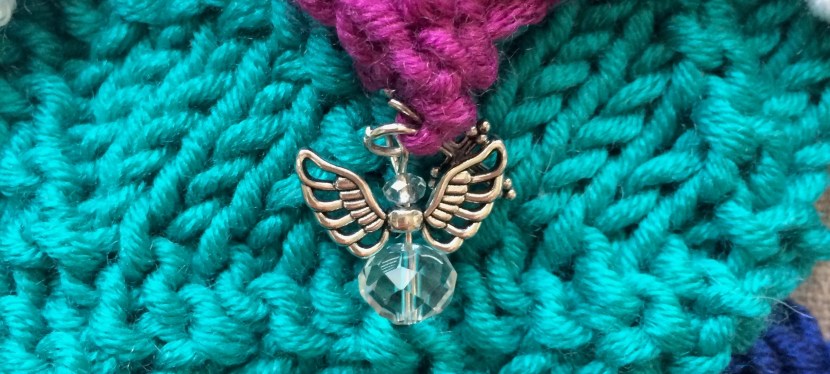
To make a Prayer Patch, you can use yarn leftover from a favorite project. You might even use a favorite stitch or pattern that’s so stuck in your head you can make it without thinking. You might even attach a small charm to your Prayer Patch, such as an angel, cross, or other symbol meaningful to your spiritual life. (I’ve found it’s easiest to leave a long tail when you cast off, then you have something ready-made for attaching the charm.)

Some churches, I hear, offer Prayer Patches to newcomers or those attending services who need a small token of their faith community’s love and care for them. (Psssst…in my new book, The Prayer Shawl Chronicles, a newcomer receives a Prayer Patch. Her life is changed forever, and she learns to knit – not necessarily in that order.)

What do you do with a Prayer Patch? You could tuck it into a purse or backpack. You could use it on your desk as a coaster or under your phone while it charges. It’s so small, you could keep it almost anywhere to remind you that someone loves you. Churches or other faith communities might send it along with a flower delivery or include it with a get-well card. It could even be a miniature version of a Prayer Shawl for the recipient to keep with them on-the-go. 

And for the knitter herself, making a Prayer Patch gives you space and time to be quiet, collect your thoughts, and perhaps remember a loved one in prayer. It’s an easy project, perfect for taking a half hour or so to simply and silently send your hopes and prayers to someone who needs them. 

Here’s a favorite Prayer Patch pattern I’d like to share with you:

The “Diamond of Hope” Prayer Patch

(I used the Caron x Pantone mini-skeins and size 10 needles. You can get two prayer patches out of each of these small skeins. You could use whatever yarn you have handy with appropriate sized needles.)

Cast on 17 Stitches.

Knit one row for a nice border.

Row 1 (Right Side): (P1, K7) x 2, P1

Row 2 (Wrong Side): K2, P5, K3, P5, K2

Row 3: K1, P2, K3, P2, K1, P2, K3, P2, K1

Row 4: P2, K2, P1, K2, P3, K2, P1, K2, P2

Row 5: K3, P3, K5, P3, K3

Row 6: P4, K1, P7, K1, P4

Row 7: Repeat Row 5

Row 8: Repeat Row 4

Row 9: Repeat Row 3

Row 10: Repeat Row 2

Repeat Rows 1-10, then Repeat Row 1 once more

Knit one row for a border.

Bind off. 

Leave a long tail for tying on a symbolic charm, such as an angel, cross or other sign of hope. 

This is easier than it looks! Once you get the pattern in your head, you can do it in your sleep. You’re always moving out from a point or in towards a point. 

The pattern makes one large diamond with 4 smaller diamonds inside it and 8 triangles around it, for a total of 12 spaces on the piece. (Twelve apostles total, with 4 writers of the Gospels, if you’re into symbolism.)

Blessings on your Prayer Patches, Cindy

Cynthia Coe is the author of The Prayer Shawl Chronicles, a book of related short stories in which prayer shawls end up in unlikely places, friendships are made through knitting, and people in need receive unexpected gifts. Available in e-book and paperback and included in Kindle Unlimited