Your Crafting Supplier Goes Out of Business. What do you do?

Many of us have recently learned that a major crafting retailer is going out of business for good, nationwide. And many of us wonder, what to do? Here are tips.

Here we go again: another round of business closings, and this time it affects our beloved hobbies of knitting, sewing, crocheting, jewelry making, and many other crafts. Those of us using these hobbies to keep our sanity, calm down, express creativity, or just make something nice for ourselves or loved ones might wonder how we get the basic supplies for these crafts.

We’ve been here before. During the pandemic, ALL of the online retailers supplying my yarns for knitting eventually went out of business. And reader, I got some huge bargains on top quality yarns, which I’m still using and expect to use for many years to come. Here’s what I learned:

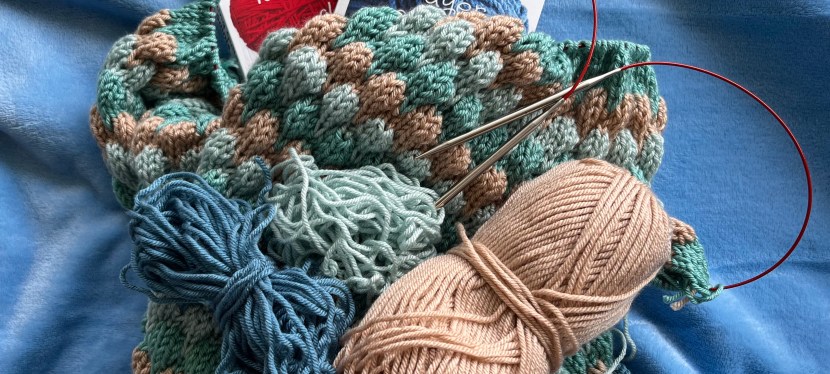
  • Don’t fret about where to buy your next yarn stashes just yet. Nature abhors a vacuum. Supply markets naturally fill gaps when they arise. If you don’t have a nice place to buy crafting materials in the near future, again, Patience! Work through your stash. If you have indeed bought plenty of yarns or other materials from the big going-out-of-business sales, you’ll have plenty to do. If you must, order online or visit a locally owned shop. At some point, if there’s demand, another business will snatch up the market for reasonably priced crafting materials!
  • Deep Clearance Sales WILL Happen. You’re about to scoop up some deals on crafting supplies, but you may need to be patient. Businesses handle these closure sales different ways. One retailer suddenly had huge sales BEFORE announcing a closure. If you see this, read the red flags and move! On the other hand, other businesses may keep trying to sell merchandise they think they can squeeze more money out of before they are finally forced to go to deep discounts. If you KNOW a business is closing and still has vast quantities of yarns or other craft supplies on hand, wait. Then, when those discounts finally happen, pounce!
  • Buy plenty of yarn or other supplies you absolutely know you will use. If you knit sweaters or blankets, there will be no way to get more skeins if you run out. Buy at least as much as you think you’ll need for a project, plus extra. (You can always make something small, like a cowl or coasters, with the spare materials after you finish your big project.)
  • On the other hand, DON’T buy yarn you know deep in your heart you’ll never use. Just because something is 90% off doesn’t mean it’s a great deal for you. Only buy yarns you would have bought or strongly considered buying if not on sale. If you see something at 75-90% off that you think you might want to try for a small project, go ahead if you have the spare cash. Otherwise, don’t buy something that will be sitting in a closet ten years from now.
  • Think about storage and future plans. During the pandemic, I bought huge amounts of all-wool yarns in my favorite colors and weights. I was also in the process of moving and downsizing. Given that I will (and already have) put these yarns to good use at some point, I ended up re-purposing a china cabinet for these yarns. I ditched a bunch of things that cabinet used to hold – items I never used. Before you buy huge amounts of yarn or other crafting supplies, think: where will I store it, what can I get rid of to free up storage, and do my future plans allow for this? (Pssst…you might get storage bins on sale, too, if you have room for them.)
  • If you’re buying wool yarns, think about preservation. Moths just love wool. They love to eat it, especially if hidden away in quiet, dark places. So if your yarn-buying spree involves wool or other such yarns, be prepared to seal up your purchases in large plastic bags. Save yourself future heartbreak.

In the meantime, happy retail therapy at bargain prices!!! Cindy

Cynthia Coe is the author of The Prayer Shawl Chronicles, a collection of interrelated short stories about knitters and those they meet through knitting and sharing prayer shawls. 

Be sure to check out my newly published A Prayer Shawl Handbook: Inspiration and Resources for Your Prayer Shawl Ministry, now available in paperback and e-book editions and included in Kindle Unlimited.

Cynthia Coe is a writer, book reviewer, and avid knitter. Her books and blog posts can be found on her Amazon Author Page

Women’s History and the History of Fabric-Making (Spoiler Alert: It’s the Same Thing)

Did you know that if you lived just a couple of hundred years ago – and any time before that – and you’re a woman, you would have spent much of your life making fabric? Yes, we as women still do much of the cooking and cleaning in our families, though the men in our lives and households do much, much more than they did prior to the 1970’s. We still cook, and some of us even enjoy it.

Many of us still enjoy making fabrics by knitting, crocheting, or weaving. We might enjoy sewing, making quits, or even making our own clothes. But up until recently in human history, the making of fabric was no hobby. It was work and important work at that. And if you were a woman, it would have been one of your primary occupations.

As I’ve researched the history of knitting for my next book in The Prayer Shawl Chronicles, I’ve discovered these truths, and it’s changed the way I look at fabrics. In our current culture, we barely give a thought to the fabrics we wear, use to bathe, sit upon, or trod upon. Yet someone made these fabrics. The raw materials came from some place, somewhere in the world. Someone – likely other women, working in not great conditions and for low wages – worked at the factories that turn out the cotton, synthetic, wool, silk, and all other fabrics we likely take for granted.

In my novels, you’ll see characters knitting for solace, for quiet time, and as an aid to spirituality. Yet in real life, women also knitted to survive the cold, to keep themselves and their families warm. I hope to convey this reality in my next novels, and I hope you’ll take a moment to appreciate all those mechanized and digitized looms, yarn spinners, and dying machines that means we as 21st century women get to simply knit…for fun. 

Interested in the history of fabric making? Here are my go-to recommendations: 

The History of Fabrics and Cloth Making

Women’s Work, The First 20,000 Years: Women, Cloth, and Society in Early Times by Elizabeth Wayland Barber (W.W. Norton & Company, Inc., 1995).

Fabric: The Hidden History of the Material World by Victoria Finlay (Pegasus Books, 2022).

The Fabric of Civilization: How Textiles Made the World by Virginia Postrel (Basic Books, 2020).

Worn: A People’s History of Clothing by Sofi Thanhauser (Vintage Books, 2022).

Happy Reading! Cindy

Follow this blog for impending news of a new novel in The Prayer Shawl Chronicles!

Cynthia Coe is the author of The Prayer Shawl Chronicles, a collection of interrelated short stories about knitters and those they meet through knitting and sharing prayer shawls. 

Be sure to check out my newly published A Prayer Shawl Handbook: Inspiration and Resources for Your Prayer Shawl Ministry, now available in paperback and e-book editions and included in Kindle Unlimited.

It’s All About Color: Crafting Color Symbolism in Every Stitch

Exploring Symbolic Colors in Prayer Shawl Design

When you embark on the journey of creating a prayer shawl – or any other crafting project – the choice of colors goes beyond aesthetics; it can carry profound symbolism. Across various traditions, colors have played a significant role in conveying concepts and stories. Whether you’re crafting for spiritual or personal reasons, understanding the symbolism of colors can add a meaningful layer to your prayer shawl design.

Here’s list of common colors and traditional symbolism associated with each:

  • Red: Passion, Love, and Energy
  • Red symbolizes passion, love, energy, courage, warning, power, celebration, and attention, with its meanings varying across cultures and contexts.
  • White: Celebration and Renewal
  • White, representing celebration and renewal, symbolizes purity, a fresh start, and the illuminating power of light.
  • Purple: Rich Emotions
  • Purple can evoke both warmth and calmness.
  • Blue: Calmness and Spirituality
  • Blue brings a sense of calmness. It suggests elements of water, peace, and the expansive sky.
  • Green: Growth and Abundance
  • The color of growth, green is used after Pentecost. It signifies nature, abundance, and tranquility.
  • Yellow and Gold: Warmth and Cheerfulness
  • Yellow suggests cheerfulness and sunshine, while gold brings a sense of coziness and warmth.
  • Pink: Joy and Playfulness
  • Pink represents joy, youthfulness, and cheerfulness.
  • Brown: Earthy Humility
  • Brown symbolizes humility, reminiscent of monk’s robes. It brings warmth through its connection to nature and soil.
  • Beige: Calming Desert Tones
  • A calming color reminiscent of sand, beige can symbolize time spent in the desert or on the beach.

In moments of uncertainty, neutral tones such as beige, cream, grey, taupe, and sand always make for a beautiful prayer shawl. Consider the soothing, cozy, and comfortable feelings these colors can evoke. After all, your hand-crafted work aims to embrace someone with a heartfelt hug.

Whether you find inspiration in religious symbolism or personal preferences, let your prayer shawl be a reflection of warmth, comfort, and love.

Happy knitting!

Cindy

Cynthia Coe is the author of The Prayer Shawl Chronicles, a collection of interrelated short stories about knitters and those they meet through knitting and sharing prayer shawls. 

Be sure to check out my newly published A Prayer Shawl Handbook: Inspiration and Resources for Your Prayer Shawl Ministry, now available in paperback and e-book editions and included in Kindle Unlimited.

What To Do with Leftover Luxury Yarn?

I don’t play yarn chicken. Life is too short for that kind of teeth grinding, blood pressure elevating stress in my life. If I’m knitting a nice sweater out of all-wool, cashmere, alpaca, or some other luxury yarn, I make sure I have enough yarn to make the best sweater I can make. 

That leaves a happier problem than running out of yarn (i.e., losing at yarn chicken – frantically trying to finish your project before you run out of yarn). You’re left with a skein or two of really nice yarn you don’t want to just toss in your stash.

What do you make out of just a small amount of luxury yarn? I usually make a simple scarf to go with my newly handknit sweater. A scarf makes a nice accessory for any outfit, and it gives a matching sweater that “wow” factor. Store-bought sweaters almost certainly do not come with matching scarves – only we hand knitters get these lux perks. If this scarf turns out a little short, no problem. Just stitch the ends together, and voila, you have a matching cowl instead. 

Here’s some other items I sometimes make with leftover luxury yarn:

  • Table runners
  • Coasters
  • Placemats or fabrics to place under plants or office items (pencil box, stapler, phone, etc.)
  • Bathmats 
  • For a larger amount of yarn, a shawl or throw blanket

I don’t overthink the design of these handknit extras. In fact, here’s my Go-To Pattern for scarves and any other rectangle-shaped small fabric:

The Five by Five – a Simple Checkerboard pattern, pictured in this blog post.

  • Cast on 20 stitches (for larger items, cast on additional sets of 8 stitches)
  • Row 1: (K4, P4) x 2, K4
  • Row 2: (P4, K4) x 2, P4 
  • Rows 3 & 4: Repeat rows 1 & 2.
  • Row 5: (P4, K4) x 2, P4
  • Row 6: (K4, P4) x 2, K4
  • Rows 7 & 8: Repeat rows 5 & 6. 
  • Continue these 8 rows until you run out of yarn, cast off. 

For more simple patterns, follow me for news of my upcoming book, A Prayer Shawl Handbook, to be published in early December! 

What do YOU do with leftover yarn? Feel free to join the discussion by commenting on this blog or on my Facebook page! Share your great ideas!

Blessings, Cindy

Cynthia Coe is the author of The Prayer Shawl Chronicles, interrelated stories about knitters and those for whom they knit and love. The sequel to this book, The Knitting Guild of All Saints, has been released! Available in paperback and on Kindle, included in Kindle Unlimited. 

Copyright Cynthia Coe 2023. All Rights Reserved.

That Liberating Feeling of Ripping Out Your Knitting Project

We’ve all been there. You start a knitting or crochet project. You’re well underway with it. And you hate it. What do you do? Soldier on, or rip it out and start over?

I found myself in this place with a knitted sweater recently. I had designed it myself, using expensive alpaca and wool yarn, in a deep red color. Since the yarn was a delicate fingerling weight using tiny needles, I had put hours upon hours of work into it. But I could tell it would be way, way too small for me.  What to do? 

Reader, I ripped out the entire project. All of it. And I felt liberated. Instead of keeping myself in a rut I couldn’t get out of, I got to re-think and start an entirely new project. 

When I ripped out my former sweater, I honestly did not regret the time I spent on it. As with all knitting projects, I enjoyed pleasant, restorative quiet time while making this sweater. I enjoyed knitting along while watching and listening to my favorite shows. Was this wasted time? Absolutely not. In fact, I considered the ripping out process as getting double the value for the money spent on this particular yarn. 

My former knitted sweater is now in the process of becoming a crocheted prayer shawl I’m making as a prototype for a new book. I have no regrets. Instead of suffering through a project I would never wear, I’m making something that will wrap around someone’s shoulders and fit perfectly, no matter the size of the person. 

Other crafters – woodworkers, painters, metal workers – may have to throw away or destroy projects that don’t work. I imagine that must hurt and be costly. As knitters and crocheters, we get to do something most people can’t do. We get a do-over. If a project isn’t working for us – for whatever reason – all we have to do is pull that piece of yarn and keep pulling until the project literally doesn’t exist anymore. Our flexible yarns give us the possibility of release from our mistakes and the possibility of a brand new start. 

Blessing for all the do-overs in your life, Cindy

Cynthia Coe is the author of The Prayer Shawl Chronicles, interrelated stories about knitters and those for whom they knit and love. The sequel to this book, The Knitting Guild of All Saints, has been released! Available in paperback and on Kindle, included in Kindle Unlimited. 

Knitting on Vacation: What to Pack

Spring is here, and many of us will soon head out on fun vacations. You, of course, will take your knitting. What else would you do, sitting in the sun or with a gorgeous view in front of you, and plenty of time on your hands? Yes, you’ll definitely need your knitting. 

What to pack? As a well-traveled, experienced Knitter, here’s my list:

  • Yarn, but not too much. You’ll need enough yarn to get you through your vacation and back, but don’t feel you need to pack enough for the next six months. I am always tempted to pack waaaaay too much, taking up space I could better use for clothes, shoes, or souvenirs on the way back. 
    • Think about how well your project fits your destination. Heavy wool at the beach? Not a great fit, in my opinion. If you’re going someplace warm, light cotton yarns will keep you from sweltering underneath your project and will work best thrown in a beach bag and exposed to sand and water. Going to a ski resort? Pack the heavy wool and let your project keep your knees warm.
    • Can your yarn be replaced? Think about the “what ifs.” If you lose your luggage, spill red wine on your yarn, or some other disaster befalls your yarn, will it be the end of the world for you? Think about taking inexpensive and easily replaced yarn when travelling.
    • How’s your eyesight and attention level on vaca? You’ll likely be on the move (and hopefully, pleasantly distracted) when knitting on vacation, so consider a larger weight yarn you can knit in less-than-ideal lighting and with lots of other things going on. Vacation is a time to zone out, so give yourself that option. 
  • Knitting Needles, But Only What You Really Need. Yes, you need to be prepared. But not for every single project you could possibly make on vacation. Again, check your pattern before leaving town and make sure you have the right size. Believe me, trying to find knitting needles while on the road is difficult and takes up time you could be spending doing something fun. If you’re not sure on what size you need, start your project at home or at least make a swatch. 
    • Circular Needles Travel Better. Remember the time you lost a straight knitting needle in the sofa cushions? It happens. Don’t let it happen on an airplane, in a rental car, or who-knows-where and you can’t find it and can’t replace it. With circular knitting needles, you’re far less likely to lose a single knitting needle and thus ruining your vacation.
    • Airline Travel? Yes, you can travel with knitting needles. TSA says so. I’ve never had a problem in decades of airline travel. Some airlines may ask you to put away your knitting needles during take-off and landing. Be considerate and do so. Do so anyway; these are sharp sticks we’re talking about. Also, I take point protectors with me and use them on the plane when I’m not knitting, just to be safe. 
  • Scissors, but not on the plane. You would think you could take a tiny pair of dull scissors on the plane, but not those sharp-pointed knitting needles, right? WRONG. TSA in Knoxville has taken possession of several small pairs of scissors and a couple of really cute Swiss-Army knives from me over the last couple of years (including the ones with the sweet Edelweiss flowers on them!!!!). But they’ve never even questioned my knitting needles. Go figure. I think you could probably pack a pair of scissors in your checked luggage (the bags you may or may not see again), but do so at risk of losing them. Prepare to buy a cheap pair of nail clippers or something else with a blade once you get to your destination or clear security. Most cotton yarns can be cut with a good yank, just sayin.’
  • Patterns – store it on your phone. Hit the easy button on this. You don’t want to haul around a pattern book with you, and paper copies get lost and damaged beyond recognition. Take a photo of your pattern and keep it on your phone, at least as a back-up. If you need to refer to it while you’re in the air (and your phone is supposed to be off), jot it down on a sticky note or inside a paperback book you also plan to take. 
  • Other Stuff? Keep it Simple. Remember, you’re on vacation! Knitting should be stress free and simply something to help you relax and pass away the time in the airport or just while zoning out, listening to the waves hit the beach. Yes, of course, take whatever stitch holders or whatever you know you will need, but only take what you absolutely must have. Leave the rest at home!

I hope all my readers get to enjoy their Knitting Someplace Special this coming spring and summer! Blessings, Cindy

Cynthia Coe is the author of The Prayer Shawl Chronicles, interrelated stories about knitters and those for whom they knit and love. The sequel to this book, The Knitting Guild of All Saints, has been released! Available in paperback and on Kindle, included in Kindle Unlimited. 

Yarn – It’s Fundamental to Human Culture

We’ve all seen the memes. “My other hobby is buying yarn.” “My yarn stash exceeds my expected lifespan.” “Yarn is like chocolate; you can never have too much.” 

We treat yarn as if there’s an abundant worldwide stash ready for us to buy, in any amount. Craft stores literally stock enough yarn to reach the ceiling. You can obtain yarn for any project you have in mind with a couple of clicks on your phone.

This wasn’t always the case. In researching for my next book in The Prayer Shawl Chronicles, I’ve been shocked to learn how much time women have spent over the centuries making yarn and thread. Before industrialization, if you were a human being and a woman, you would spend a good part of your waking hours making yarn or thread. If you were a Neanderthal woman, you would have used fibers from the inner bark of conifer trees to make string for fishing lines and nets, to hang food to dry, to set traps for small animals, and to sew together animal hides for clothes and shelter. If you lived in Europe up until the industrial revolution, you would carry around a spindle and a fist full of wool, and you would make yarn while you watched the kids, walked, talked, and generally while you kept an eye on whatever else went on in your life. You would know how to work a spinning wheel as well as you knew how to cook. It’s what your family needed to survive.

Why don’t we study this in history class? Why don’t we see remnants of these time-consuming tasks featured in museums? Think about it – yarns, threads, and cloths eventually deteriorate and rot. These cushy, soft products don’t survive as long as items made of metal, stone, or even wood. So our foremothers’ efforts put into anything woven, knitted, or sewn have largely faded (or rotted) away from the saved artifacts of human culture.

The next time you pick up a skein of yarn to knit your next project, consider yourself blessed. Thanks to human ingenuity, all you had to do to get that yarn was click buttons on your phone or make a craft store run, which you probably enjoyed. Appreciate that you, as a 21st century woman, have the leisure to simply sit and knit for the sheer pleasure of it. 

Blessings, Cindy

Recommended Reading:

The Fabric of Civilization: How Textiles Made the World, by Virginia Postrel

Women’s Work: The First 20,000 Years, by Elizabeth Wayland Barber 

Cynthia Coe is the author of The Prayer Shawl Chronicles, interrelated stories about knitters and those for whom they knit and love. The sequel to this book, The Knitting Guild of All Saints, has been released! Available in paperback and on Kindle, included in Kindle Unlimited. 

As an Amazon Associate and Author, I provide links to products (including books I have written) and earn a very small fee if you click on the links and buy something. There is no additional charge to you!

How the Pandemic Ended My Yarn Snobbery

I was a “yarn snob” for about two years. After discovering the joys of buying high quality wool, alpaca, and even silk yarns online, I gleefully knitted cardigan sweaters, pullovers, shawls, and small blankets out of the finest yarns on the planet. Of course, I also had to discover hand washing of all these lovely fibers. My crafting budget took a hit, too.

Then came the pandemic. Within a couple of months, supply lines to all these wonderful all-natural yarns came to a screeching halt. Two companies from which I had previously bought wool yarns closed or sold out. Another subscription service supplying all kinds of wonderfully squishy yarns struggled to get products out of South America. I bought up lots of yarn on clearance or going-out-of-business sales, but my days of buying wooly goodness in the form of knitting yarn were clearly over.

But my knitting was still in high gear. With reduced schedules and lots of free time around the house, I imagine I wasn’t the only one doing more knitting than usual this past year. I imagine many people took up knitting as beginners, too.

My own demand for readily available yarn quickly veered off towards good old-fashioned acrylic. Frustrated with shipping delays for the so-called “luxury yarns,” I found that I could click a couple of buttons or swing by the big box craft stores and get all the synthetic yarn I wanted. 

And is acrylic so bad, after all? I think not. It’s affordable. It’s durable. Projects I made from acrylic yarn twenty years ago still look great. And I can throw them in the washing machine AND dryer without experiencing total disasters. Yes, acrylic yarn is a by-product of the oil industry, but at least it’s used for a good purpose. Right? 

I still love to wear my warm wooly sweaters, especially during these Dogwood and Blackberry Winters of our Appalachian Spring here in Tennessee. I don’t enjoy hand washing the things. But I sure do like going out to the mailbox and getting new acrylic yarn just days after I order it!

Happy Knitting, Cindy

Cynthia Coe is the author of The Prayer Shawl Chronicles, a collection of interrelated short stories about knitters and those they meet through knitting and sharing prayer shawls. 

Is Yarn As Addictive As Candy?

It’s been said that yarn-buying and knitting are two separate hobbies. I’m inclined to agree. With all sorts of lovely, soft yarns on the market these days, it’s easy to get carried away. 

This past year, I made the big switch from buying cheap, synthetic yarns to buying higher quality, all-natural yarns. I’m really glad I did. The yarns are softer and much better looking. As an environmentalist, I can feel better about purchasing more sustainable products. 

After bumping up my knitting skills in the last year as well, I’m also ready to say, “my knitting is worth the better yarns.” If I’m going to use my much-practiced skills and well-honed techniques, I should quality materials. If you’re just starting out, using cheaper materials is recommended. But I’m well past that stage in my life. It’s time to “own” my more advanced stage of knitting.

Yet I still go through a heck of a lot of yarn, as much as I knit. It’s hard to pass up on the pastel violet yarn that would make a gorgeous springtime sweater…or the yellow and orange sherbet fingerling alpaca that would be just the thing for a summer garment…or the silk and wool blend navy blue yarn that would match everything in my winter wardrobe. 

Yarn is indeed as addictive as candy. One look, and you want to indulge. Visions of all the great sweaters, scarves, cowls, hats, and even summer tops dance in your head. You feel better just having the stuff in your hands. And, like candy, you can have too much. Your yarn storage bins bulge with yarns that’s been sitting there, un-knitted, for the last several years. You cringe at your credit card bill and vow to say “enough!”

It’s “yarn diet” time for me, I’m afraid. I’ve promised myself I’ll knit through the four sweater projects and three or four smaller stashes of yarn before I buy any more yarn. But once I’ve knit through these projects….I can buy more yarn!!!

Happy Knitting (and Yarn Buying), Cindy

Cynthia Coe is a writer, book reviewer, and avid knitter. Her books and blog posts can be found on her Amazon Author Page

A Shout-Out to Ewe Knit & Sew for the swirl-pop yarn in the photo! What a great marketing idea!

What to do With All That Clearance Yarn?

Tis the season when the Big Box stores run their yarn clearance sales. We’re all enticed with clearance sales notices popping up in our emails and texts, letting us know of the 70% off sales we likely won’t be able to resist.

So more than a few of us head off (or sneak off) to the yarn store and stock up. If we’re lucky, we pick up that yarn we found too pricey a couple of months ago and get to work on that sweater we envisioned. Or we might find some colors that will work for the fall and winter, and we happily get to work on Christmas gifts.

But what about that yarn at the unbelievable price, in bright summer colors? Well, some of us buy it anyway and figure out what to do with it later. If you’re like me, you can’t just pass it up.

You’ve got a problem on your hands: what to do with all that clearance yarn? I’ve found myself in this dilemma lately. In knitting through my stash, I’ve come up against a plethora of bright, happy colored yarns – bought on clearance in years past – and no discernable plan for any of it. Here’s what I’m doing with it:

  • A Sampler Shawl. I’ve got six skeins of pastel colored cake-type yarn that looked good in the store but turned out scratchy and not-so-nice. I’m using it to try out some new stitches. This shawl may look okay when it’s finished; it might not. That’s okay.  I’ve tried out lots of new techniques and stitches I’ll use in other projects.
  • Mini Prayer Shawls. I’ve used up the Caron x Pantone mini-skeins to make small, coaster-sized squares to hand out as “thank you” gifts. I’ve been asked to speak at a local Book Club, and I’m planning to hand out these mini Prayer Shawls to those lovely ladies who bought and read my latest book. They could probably be used as coasters, phone charging pads, or some other household use.
  • Something wonderful and unexpected. Several years ago, I bought a huge plastic bag full of blue, green, and white yarn at a big box sale of manufacturer rejects and remainders. Just for kicks, I made a long and skinny shawl that’s become my favorite go-to early morning wrap. The yarn tuned out super soft, and the shawl is vibrant and looks terrific. Who knew?

I know you creative knitters will have many other uses for clearance yarn. Feel free to drop a comment to share your ideas with me and other readers!

Happy Knitting, Cindy

Cynthia Coe is the author of The Prayer Shawl Chronicles, a collection of interrelated short stories about knitters and those they meet through knitting and sharing prayer shawls. 

Psssst! The e-book edition of The Prayer Shawl Chronicles will soon be on sale! On Tuesday and Wednesday, August 13 & 14, The Prayer Shawl Chronicles will be on sale for only $1.99 at this link from 8 a.m. Eastern Time on Tuesday until 11 p.m. on Wednesday night. Give it a try and help me out by reviewing it on Amazon!