New Year, New Stitches: Crafting Daily Knitting Rituals

It’s a brand new year! Looking for a new way to find a sense of calm and grounding each and every day? Think about starting a daily knitting ritual. By taking up a daily knitting ritual, you are invited to weave the threads of your daily life into a tangible tapestry—a daily celebration in which you find a sense of calm and grounding. 

You can do a temperature blanket, a prayer shawl, or any kind of project that involves a set number of rows or a set time period in which you calmly knit and leave the rest of the world behind. The point is to take a little time each day for quiet – even silent – time of meditative knitting that reminds you to slow down and forget your worries. 

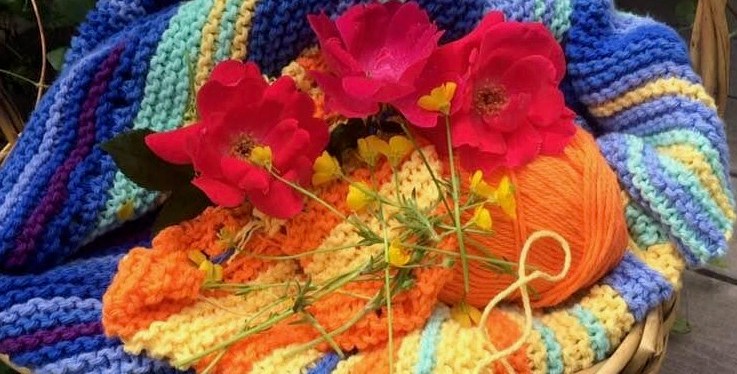
I first began a daily knitting ritual with a “temperature blanket” in 2019. I knitted one ridge of garter stitch each evening without fail, showing the high temperature of the day. What began as a simple commitment to my temperature blanket evolved into a nightly time of peacefulness. Seated in my favorite chair, surrounded by loved ones, I marked the close of each day—a time to reflect, acknowledging that I’ve given my best today, and it’s time to unwind.  

As I knit through the seasons, my knitting echoed the transitions from cold to warm, from short days to the long, sun-soaked afternoons of late spring, then back to cool and later cold days of autumn and early winter. These daily stitches grounded me in the natural rhythms of life—a simple yet profound celebration of life’s perpetual forward motion and renewal.

If you need a pattern, here’s my own…

Temperature Blanket Pattern: 

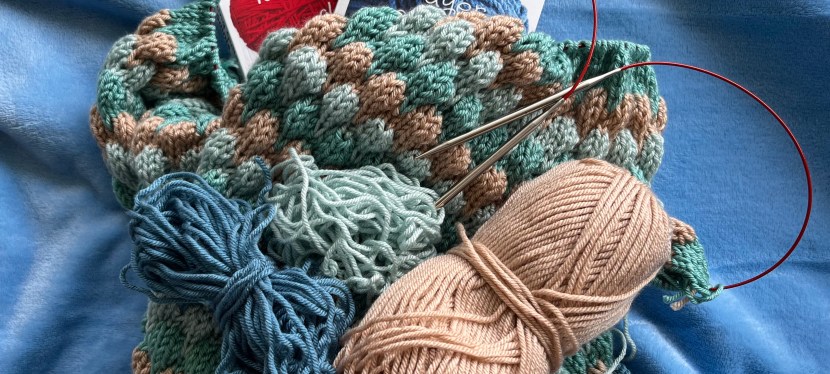
Materials: I use inexpensive cotton yarn from the big box craft stores, in the same colors for temperatures used by the television weather reports. I use size 8 or 9 knitting circular knitting needles to deal with the large number of stitches used. 

-Cast on 100 stitches, knit one row using the color of January 1

-At the beginning of each month, I knit one row of Yarnovers followed by the number of the month. For instance, for my first row, I would knit: [K2tog, Yarnover, knit 1 stitch]. In February, it would be [K2tog, YO, knit 2]…and so on. I continue this pattern until the end of the row. (You’ll have a couple extra stitches or be short a couple of stitches some months.)

-For the second row of the first day of the month (wrong side), knit using the same color

-For each succeeding day in the month, knit two rows in your chosen color for the temperature of the day. (I used the high temperature. You can use the low temperature, a median temp, or whatever you choose.)

-Your project will be quite long if you continue for 12 months, using worsted weight or larger. You might consider binding off and starting a second blanket after six months. 

And speaking of new creations, I invite you to explore the soothing art of prayer shawl knitting, using my brand new book, “A Prayer Shawl Handbook.” Discover the therapeutic joy of crafting these beautiful shawls, with each stitch infused with intention and care. May “A Prayer Shawl Handbook” inspire you to embark on a heartwarming journey of creating not just garments but moments of solace and connection.

Blessings on your knitting rituals! Cindy

Cynthia Coe is the author of The Prayer Shawl Chronicles, interrelated short stories woven around those who make and receive handmade, prayerfully crafted gifts of prayer shawls. Click this link to order or for more information. 

Crunch Time for Holiday Crafting – What To Do?

Finish, Don’t Finish, or….Another Option?

You’re knitting or crocheting a special gift for a special person in your life…and it’s a mere days (or hours) before Christmas, and you’re not even close to finishing. What to do? Friends, do not fret! You have options.

Option 1– Suck it Up and Finish the Thing. This is by far the most unpleasant option for holiday knitters, but it may be what you need to do. Just how close are you to finishing? If you can conceivably finish this sweater, hat, or pair of socks, you may feel a sense of accomplishment by simply staying up late, putting needles to work, and finish the thing. Compensate by promising yourself your next project will be slow, relaxing, and enjoyable.

Option 2 – Don’t Finish; They’ll Understand. This option relies on the fact that the special recipient of your special gift understands that you’re making this handcrafted gift out of love AND that it takes time. You’re not just going to the store and throwing the first thing you see into the shopping cart. You’re putting TIME – your precious and irreplaceable time – into this gift. Your person will value that more than anything. As a practical matter, you can wrap up your unfinished gift, a sketch or copy of the pattern, or simply a piece of yarn and a nice note explaining that the gift is still a work in progress. It’s okay. Really.

Option 3 – It’s Christmastide!!! You have 12 more days to finish!!! Remember that song, “The Twelve Days of Christmas”?  Friend, it’s a thing. The ancient Christian season of Christmastide lasts for twelve days, ending January 5. Most churches consider the celebration of Epiphany, January 6, as the official end to the Christmas season. And who doesn’t enjoy an unexpected Epiphany gift! If the Three Wise Men can present their gifts on January 6, so can you!!! (They in fact, it’s thought, didn’t actually show up until Jesus was a toddler, so that’s gives you…years!…to finish that gift, if you go this route.)

Whatever you decide, be kind to yourself this Christmas Knitting Season, my friends. We knit to relax, we knit to show our love to others, we often knit to keep ourselves sane. It’s all okay. Your loved ones will surely enjoy and be touched to the core that you have made something just for them. And showing your love from your heart is what Christmas is all about.

Christmastide Blessings, Cindy

Cynthia Coe is the author of The Prayer Shawl Chronicles, interrelated short stories woven around those who make and receive handmade, prayerfully crafted gifts of prayer shawls. Click this link to order or for more information. 

Cynthia Coe is the author of The Prayer Shawl Chronicles, a collection of interrelated short stories about knitters and those they meet through knitting and sharing prayer shawls. 

Be sure to check out my newly published A Prayer Shawl Handbook: Inspiration and Resources for Your Prayer Shawl Ministry, now available in paperback and e-book editions and included in Kindle Unlimited.

That Liberating Feeling of Ripping Out Your Knitting Project

We’ve all been there. You start a knitting or crochet project. You’re well underway with it. And you hate it. What do you do? Soldier on, or rip it out and start over?

I found myself in this place with a knitted sweater recently. I had designed it myself, using expensive alpaca and wool yarn, in a deep red color. Since the yarn was a delicate fingerling weight using tiny needles, I had put hours upon hours of work into it. But I could tell it would be way, way too small for me.  What to do? 

Reader, I ripped out the entire project. All of it. And I felt liberated. Instead of keeping myself in a rut I couldn’t get out of, I got to re-think and start an entirely new project. 

When I ripped out my former sweater, I honestly did not regret the time I spent on it. As with all knitting projects, I enjoyed pleasant, restorative quiet time while making this sweater. I enjoyed knitting along while watching and listening to my favorite shows. Was this wasted time? Absolutely not. In fact, I considered the ripping out process as getting double the value for the money spent on this particular yarn. 

My former knitted sweater is now in the process of becoming a crocheted prayer shawl I’m making as a prototype for a new book. I have no regrets. Instead of suffering through a project I would never wear, I’m making something that will wrap around someone’s shoulders and fit perfectly, no matter the size of the person. 

Other crafters – woodworkers, painters, metal workers – may have to throw away or destroy projects that don’t work. I imagine that must hurt and be costly. As knitters and crocheters, we get to do something most people can’t do. We get a do-over. If a project isn’t working for us – for whatever reason – all we have to do is pull that piece of yarn and keep pulling until the project literally doesn’t exist anymore. Our flexible yarns give us the possibility of release from our mistakes and the possibility of a brand new start. 

Blessing for all the do-overs in your life, Cindy

Cynthia Coe is the author of The Prayer Shawl Chronicles, interrelated stories about knitters and those for whom they knit and love. The sequel to this book, The Knitting Guild of All Saints, has been released! Available in paperback and on Kindle, included in Kindle Unlimited. 

New Knitting & Crochet Books Coming Fall 2023

Hello Crafty Readers! I’m blogging for the first time in a while. I just finished the first draft of a new novel in The Prayer Shawl Chronicles series, so my head and heart have been preoccupied with that these past several months.

My new novel will probably come out some time in 2024, but in the meantime, there’s plenty of new knitting and crochet books to keep all of us occupied. 

I review books for NetGalley, and publishers kindly give me pre-publication peeks of their new books. Here’s what’s on tap for us crafty types (all available for pre-order; click the links for more info):

The Knitting Pattern Writing Handbook by Kristina McGrath and Sarah Walworth (Storey Publishing). Highly recommended if you write your own knitting patterns or plan to in the future. This little book tells you all you need to know to put your own patterns out into the world. Concise, plain language. Invaluable if you sell patterns online; helpful if you just want to share patterns with friends or understand what all those abbreviations mean. 

A Year of Knitting Stitches by Tabetha Hedrick (Globe Pequot, Stackpole Books). This is an excellent collection of knitting stitch patterns. I’ve used a couple in the past and always found several stitches that became “keepers.” This will definitely sit on my desk next year; the perfect gift for a knitter.

A Year of Crochet Stitches by Jill Wright (Globe Pequot, Stackpole Books). This is an equally excellent collection of crochet stitches for those of us who enjoy making up our own patterns or just want something different and all our own. In this collection, stitches are nicely organized by type of stitch (e.g. all kinds of bobble stitches). Perfect for the intermediate and advanced crocheter and an excellent gift idea.

Oversize Fashion Crochet by Salena Baca (Globe Pequot, Stackpole Books). This is a collection of only 6 patterns of oversized sweaters, a poncho, and other bulky garments. While this is a limited group of patterns, I found them all do-able and attractive for the average crafter. The schematics and drawings of how to assemble the garments were particularly good. 

More blogging to come, now that my next novel is on the back burner for a bit!

Happy Crafting, Cindy

Cynthia Coe is the author of The Prayer Shawl Chronicles, interrelated short stories woven around those who make and receive handmade, prayerfully crafted gifts of prayer shawls. Click this link to order or for more information. 

Ten Reasons To Teach Knitting or Crochet To Young People This Summer

Looking for a engaging, worthwhile activities for your summer camp? Offer Knitting or Crochet lessons. Why?

  1. It teaches a craft they can practice and enjoy for the rest of their lives.
  2. You’re teaching “real” life skills, not an “arts & crafts” project they’ll trash as soon as they get home.
  3. Knitting and crochet help young people calm down and get away from their phones.
  4. It’s perfectly acceptable for both boys and girls to knit and crochet these days.
  5. Finishing a knitting or crochet project gives you a huge sense of accomplishment and self-esteem.
  6. If you knit or crochet, you can make your own clothes, hats, scarves, and blankets.
  7. If you use cotton, wool, alpaca, or bamboo yarns, you’re introducing a sustainability lesson, too.
  8. You can engage members of your community as teachers and create bonds between generations.
  9. Local crafters will likely donate much of the yarn you need (because all of us knit and crochet folks have leftover yarn and secret stashes we know we need to give away). You may even get donations of needles and hooks, too!
  10. Your young people will remember “the summer I learned to knit” as one of their best memories of summer camp. 

Cindy Coe is the author of two resources to help children and youth engage with nature during summer camps. Her latest book is “The Prayer Shawl Chronicles,” a collection of interrelated short stories set in and around an Episcopal Church in Tennessee. 

A Knitter Learns to Crochet

This past year, as I’ve upped my knitting skills, I’ve also developed an interest in crochet. Many yarn companies offer both knitting and crochet patterns, and at times, I’ve looked at a crochet pattern and said, “I wish I could make that.”

At the Vogue Knitting Live event recently, I took a three hour beginners’ crochet class, taught by the sassy author of Stitch ‘N Bitch fame, Debbie Stoller. I loved it! With a solid background in fiber arts and a terrific teacher, by the end of the class, I had made a mini-version of a crocheted scarf. I amazed myself with the lovely scallops I’d made and how quickly I picked it up.

Having “crossed the divide” between knitting and crochet, here’s my thoughts on knitting versus crochet:

  • Crochet is more forgiving if you make a mistake and easier to rip out and try again.
  • If you already know how to knit, you know a lot of the basics of crochet, even if you don’t think you do. You know the basics of manipulating yarn to do what you want. 
  • Crochet is more architectural than knitting; you can go in more directions with your stitches. Crochet stitches are like building blocks, and you can make several rows at one time.
  • Crochet seems faster than knitting; you use more yarn per stitch. 
  • Knitting makes a more finished-looking fabric; crochet looks a bit more chunky.
  • Needless to say, the one small needle of crochet is a little easier to keep up with, store, and use on-the-go than the two needles of knitting.

I’ve enjoyed crochet and plan to use it for quick gifts and household items. I’ll likely use small crochet projects for the “purse project” I always keep with me for waiting rooms and car pick-up lines. Looking ahead, I think crochet and cotton yarn will make a good summer beach project.

The common wisdom is that crochet is very “different” from knitting – a completely separate craft and technique. But from my experience, it’s just a different way of using yarn to relax, calm yourself down, and do something constructive. Is one better than the other? My own view is that whatever makes you happy is what’s best for you at the moment! I love knitting, and I’m loving crochet, too.

Blessings on your chosen craft, whatever it is!

Cindy

Here’s what I’m using to learn crochet, all books I’ve personally used and highly recommend:

Debbie StollerStitch ‘N Bitch Crochet: The Happy Hooker

Deborah Burger, Crochet 101: Master Basic Skills and Techniques Easily through Step-by-Step Instruction

Interweave Editors, Crochet to Calm: Stitch and De-Stress with 18 Simple Crochet Patterns

Cynthia Coe is an author, blogger, and avid knitter. Her books are available in paperback and e-reader edition on Amazon.com. Visit her Author page and follow this blog for more info and news.