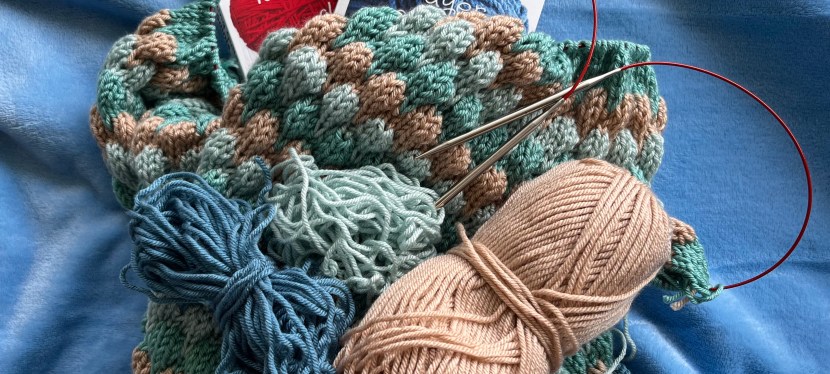
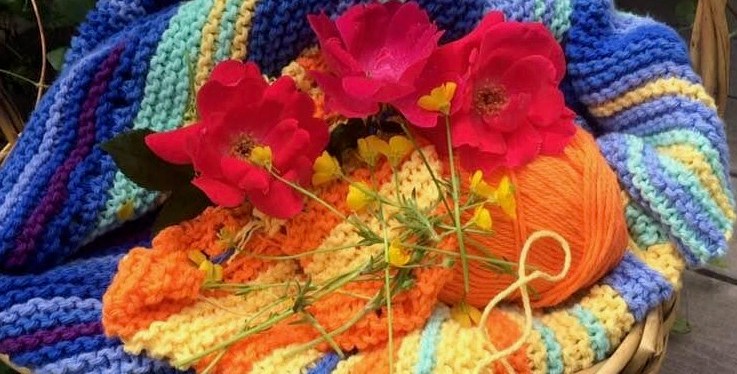
Patterns in Nature, Patterns in Fiber Arts

Why do some knitting patterns just “look right”? Where could you find inspiration for designing your next fiber arts project?

Look no further than Mother Nature herself! Certain patterns are found time and time again in nature. Intuitively, we are already hard-wired and attuned to recognizing these patterns. So if you find yourself stumped for design ideas or a pattern that’s sure to please, here are design elements found in nature and their knitting or other fiber arts equivalents.

The Wave: This pattern lends itself easily to the inherently linear nature of knitting. Most knitting patterns are done in rows, and rows are akin to long, thin waves. These waves can have crests and dips, interruptions and smooth sections – just like many knitting or crochet rows.  If you’re knitting in any kind of garter stitch pattern or with other repetitive lines, you’ve got your wave.

A pattern in nature related to the Wave includes the Meander pattern. Think a pathway, river, or snake. Though our finished products in knitting and other fiber arts usually no longer meander, our yarns certainly meander from our skeins to our needles as we’re working!

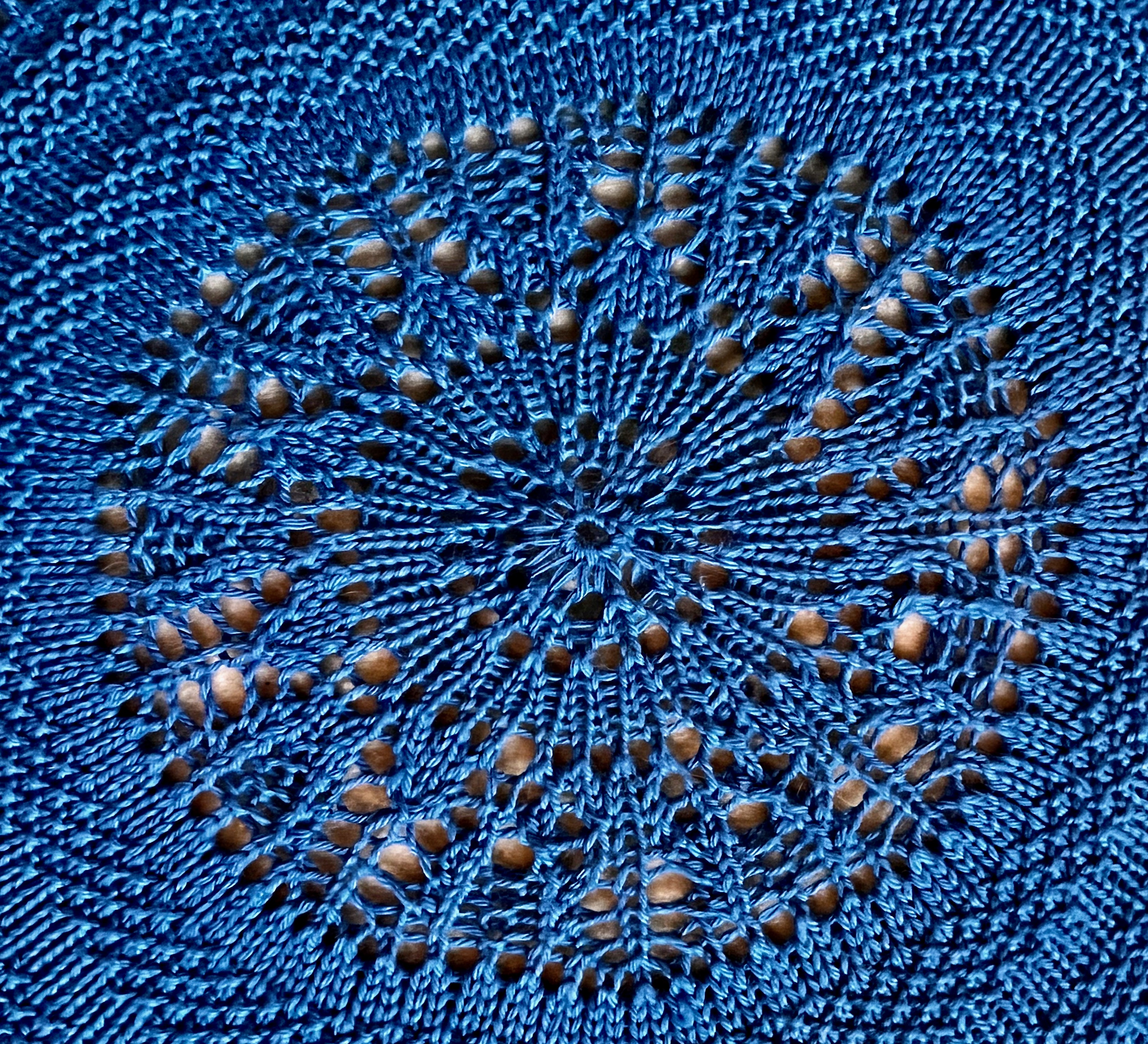
The Burst: Think of the iconic photograph of a drop of milk making a round, crown shaped pattern. Or the shape of a daisy or other flowers or plants “bursting” with a central point. This circular pattern is a bit trickier for knitters. Making a circular pattern with double pointed needles can be fiddly and, in my opinion, is a rather advanced skill. But if you want to knit to impress, this would be your “wow” pattern. This pattern is much easier in crochet, and many crochet patterns feature increasing numbers of stitches starting from a small space. 

The Spiral pattern is similar to the Burst pattern. Both are round patterns, with the spiral meandering around and around instead of making a round burst from a central point. Spirals are more often found in crochet patterns than knitting. 

Fractals: Think branches of a tree or other plant, fractals branch out from a central line, just as tree limbs or leaves branch out from a stem or trunk. We see a lot of fractals in embroidery and other fiber arts using decorative stitches. Many more advanced knitting stitches do feature fractals that mimic plant leaves. These are sure to give your design a nod to nature.

Cells and Bubbles: Cells are the building block of nature, so cell-like designs are often found in all finds of knitting, crochet, and other fiber arts. They may take the form of holes or spaces in our stitches, or we may make block-like patterns in our colorwork or stitching. Think moss stitch in knitting or even basketweave. Bubbles are similar to cell patterns and can give a pattern the feel of fun and joy. 

These patterns are all around us – in our own bodies, in plants, and in the heavens. We know these patterns; we recognize these patterns. Take a look at your favorite fiber arts patterns some time. What do you recognize from the natural world?

Enjoy Your Fiber Arts Designing…and Time in Nature! Cindy

Cynthia Coe is the author of The Prayer Shawl Chronicles, a collection of interrelated short stories about knitters and those they meet through knitting and sharing prayer shawls. 

Be sure to check out my newly published A Prayer Shawl Handbook: Inspiration and Resources for Your Prayer Shawl Ministry, now available in paperback and e-book editions and included in Kindle Unlimited.

It’s All About Color: Crafting Color Symbolism in Every Stitch

Exploring Symbolic Colors in Prayer Shawl Design

When you embark on the journey of creating a prayer shawl – or any other crafting project – the choice of colors goes beyond aesthetics; it can carry profound symbolism. Across various traditions, colors have played a significant role in conveying concepts and stories. Whether you’re crafting for spiritual or personal reasons, understanding the symbolism of colors can add a meaningful layer to your prayer shawl design.

Here’s list of common colors and traditional symbolism associated with each:

  • Red: Passion, Love, and Energy
  • Red symbolizes passion, love, energy, courage, warning, power, celebration, and attention, with its meanings varying across cultures and contexts.
  • White: Celebration and Renewal
  • White, representing celebration and renewal, symbolizes purity, a fresh start, and the illuminating power of light.
  • Purple: Rich Emotions
  • Purple can evoke both warmth and calmness.
  • Blue: Calmness and Spirituality
  • Blue brings a sense of calmness. It suggests elements of water, peace, and the expansive sky.
  • Green: Growth and Abundance
  • The color of growth, green is used after Pentecost. It signifies nature, abundance, and tranquility.
  • Yellow and Gold: Warmth and Cheerfulness
  • Yellow suggests cheerfulness and sunshine, while gold brings a sense of coziness and warmth.
  • Pink: Joy and Playfulness
  • Pink represents joy, youthfulness, and cheerfulness.
  • Brown: Earthy Humility
  • Brown symbolizes humility, reminiscent of monk’s robes. It brings warmth through its connection to nature and soil.
  • Beige: Calming Desert Tones
  • A calming color reminiscent of sand, beige can symbolize time spent in the desert or on the beach.

In moments of uncertainty, neutral tones such as beige, cream, grey, taupe, and sand always make for a beautiful prayer shawl. Consider the soothing, cozy, and comfortable feelings these colors can evoke. After all, your hand-crafted work aims to embrace someone with a heartfelt hug.

Whether you find inspiration in religious symbolism or personal preferences, let your prayer shawl be a reflection of warmth, comfort, and love.

Happy knitting!

Cindy

Cynthia Coe is the author of The Prayer Shawl Chronicles, a collection of interrelated short stories about knitters and those they meet through knitting and sharing prayer shawls. 

Be sure to check out my newly published A Prayer Shawl Handbook: Inspiration and Resources for Your Prayer Shawl Ministry, now available in paperback and e-book editions and included in Kindle Unlimited.

New Year, New Stitches: Crafting Daily Knitting Rituals

It’s a brand new year! Looking for a new way to find a sense of calm and grounding each and every day? Think about starting a daily knitting ritual. By taking up a daily knitting ritual, you are invited to weave the threads of your daily life into a tangible tapestry—a daily celebration in which you find a sense of calm and grounding. 

You can do a temperature blanket, a prayer shawl, or any kind of project that involves a set number of rows or a set time period in which you calmly knit and leave the rest of the world behind. The point is to take a little time each day for quiet – even silent – time of meditative knitting that reminds you to slow down and forget your worries. 

I first began a daily knitting ritual with a “temperature blanket” in 2019. I knitted one ridge of garter stitch each evening without fail, showing the high temperature of the day. What began as a simple commitment to my temperature blanket evolved into a nightly time of peacefulness. Seated in my favorite chair, surrounded by loved ones, I marked the close of each day—a time to reflect, acknowledging that I’ve given my best today, and it’s time to unwind.  

As I knit through the seasons, my knitting echoed the transitions from cold to warm, from short days to the long, sun-soaked afternoons of late spring, then back to cool and later cold days of autumn and early winter. These daily stitches grounded me in the natural rhythms of life—a simple yet profound celebration of life’s perpetual forward motion and renewal.

If you need a pattern, here’s my own…

Temperature Blanket Pattern: 

Materials: I use inexpensive cotton yarn from the big box craft stores, in the same colors for temperatures used by the television weather reports. I use size 8 or 9 knitting circular knitting needles to deal with the large number of stitches used. 

-Cast on 100 stitches, knit one row using the color of January 1

-At the beginning of each month, I knit one row of Yarnovers followed by the number of the month. For instance, for my first row, I would knit: [K2tog, Yarnover, knit 1 stitch]. In February, it would be [K2tog, YO, knit 2]…and so on. I continue this pattern until the end of the row. (You’ll have a couple extra stitches or be short a couple of stitches some months.)

-For the second row of the first day of the month (wrong side), knit using the same color

-For each succeeding day in the month, knit two rows in your chosen color for the temperature of the day. (I used the high temperature. You can use the low temperature, a median temp, or whatever you choose.)

-Your project will be quite long if you continue for 12 months, using worsted weight or larger. You might consider binding off and starting a second blanket after six months. 

And speaking of new creations, I invite you to explore the soothing art of prayer shawl knitting, using my brand new book, “A Prayer Shawl Handbook.” Discover the therapeutic joy of crafting these beautiful shawls, with each stitch infused with intention and care. May “A Prayer Shawl Handbook” inspire you to embark on a heartwarming journey of creating not just garments but moments of solace and connection.

Blessings on your knitting rituals! Cindy

Cynthia Coe is the author of The Prayer Shawl Chronicles, interrelated short stories woven around those who make and receive handmade, prayerfully crafted gifts of prayer shawls. Click this link to order or for more information.