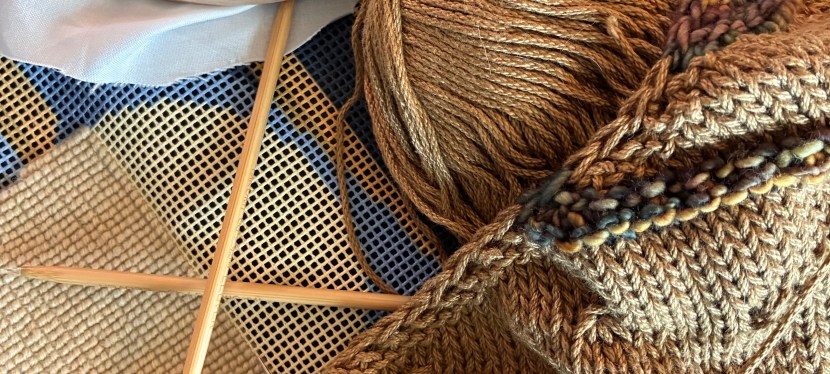
Why You Shouldn’t Be Embarrassed to Do “Granny Crafts”


If you’re a 20-something who knits, crochets, or embroiders—this is for you. Granny Crafts aren’t just for grannies. They’re quiet, powerful tools for stress relief, creativity, and deep comfort through every stage of life.

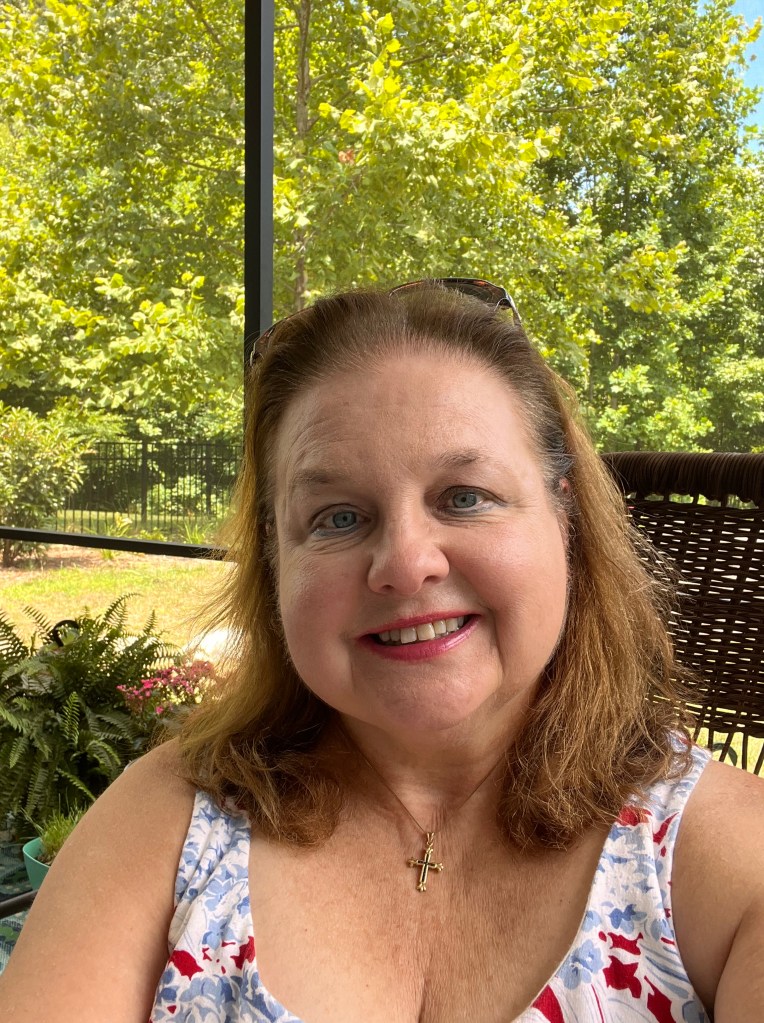
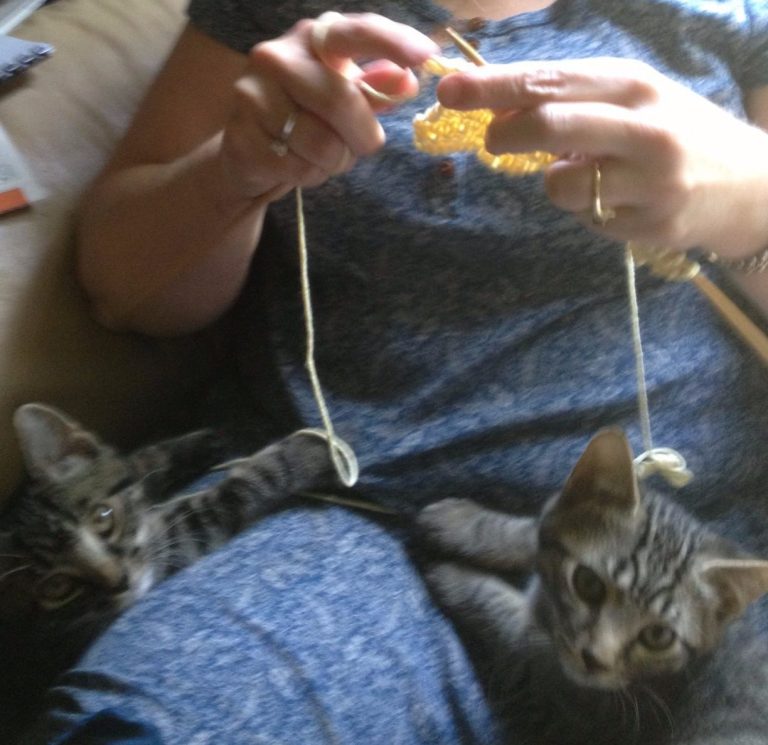
Cindy Knitting with Cats

Dear Young Crafty Kindred Spirit,

Lately, more and more people are talking about how young adults are embracing so-called “Granny Crafts”—and I love it.

If you’re here because you knit, crochet, embroider, or sew—or want to—you’re in good company. I’ve been knitting since I was a teenager myself. But it wasn’t until college, when stress started to weigh heavy on my shoulders, that I really picked it up as a coping mechanism. I’d sit in my dorm room or in a quiet corner of the student center, needles in hand, letting the rhythm of the yarn pull me back from the brink.

Some days, you just want everything—school, jobs, relationships, even the noise of the world—to go away for a while. I get it.

You were born into the digital age. My own kids got their first iPods in middle school and were among the first to start texting. Now, we all carry around little rectangles that buzz and ping and demand our attention 24/7. But here’s the secret: you can turn it off. Just for a few minutes. Really. The world won’t end.

And when you do? That’s when Granny Crafts work their quiet magic.

There’s no algorithm here. No pressure to go viral. No rush to the finish line. When you pick up a needle or a hook, it’s just you, your yarn, and your own rhythm. You can work slowly. Thoughtfully. Or set it down and pick it back up a month later. Granny Crafts are deeply human—analog, if you will. They exist on your terms, not someone else’s timeline.

You may not know it yet, but you’re building something far bigger than a handmade scarf. You’re building a lifelong tool for patience and comfort. Someday, you’ll find yourself stuck in medical waiting rooms. You’ll sit through school pickup lines or kids’ gymnastics practice. You’ll be at hospital bedsides or nursing homes, offering your presence when there’s nothing more you can do. Except this: stitch by stitch, you wait. You love. You breathe.

Granny Crafts give you something to hold on to when the rest of life feels uncertain. They will anchor you when stress comes crashing in, and they will accompany you through every phase of adulthood with grace and beauty.

Welcome to the circle. You’re not alone.

With love and yarn,
Cindy
Knitter, writer, and lifelong lover of “Granny Crafts”

If you’re looking for stories of other women—young, old, and in-between—who have walked that road, I invite you to follow my blog and check out my novels. I write about knitting, community, and faith in a world that is often spinning too fast. Sometimes, we need the quiet power of yarn and human connection to slow it down.

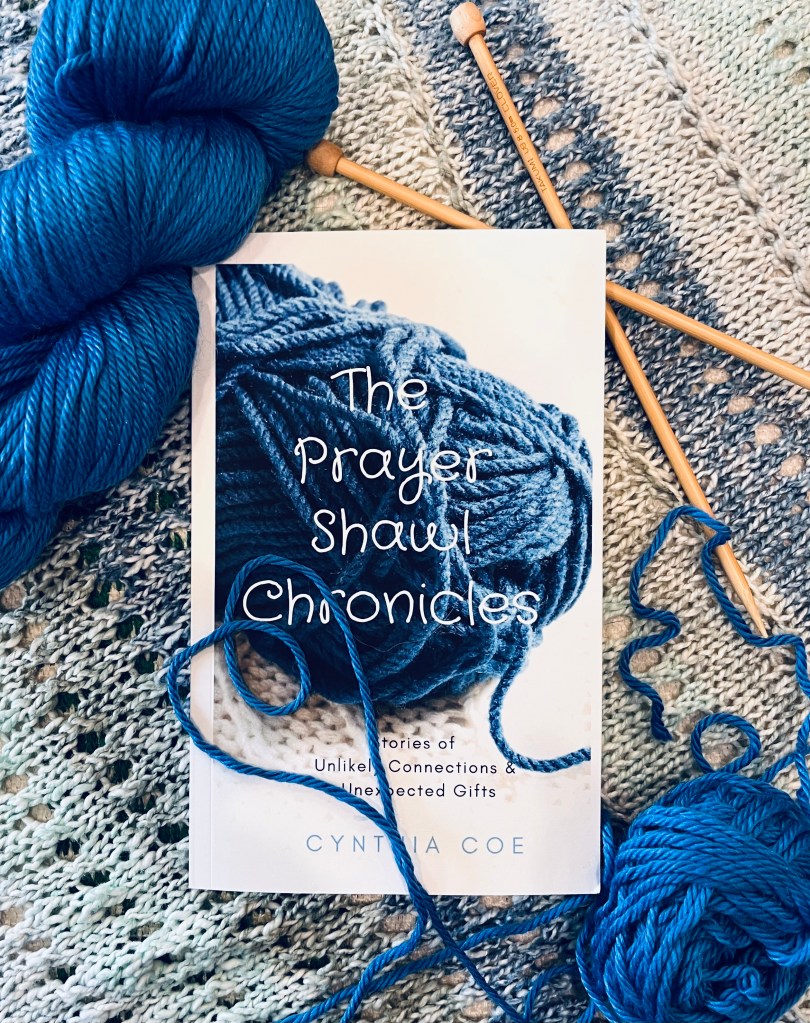
Cynthia Coe is the author of The Prayer Shawl Chronicles, a series of fictional stories woven together by the theme of human connections made through prayer shawls and the craft of knitting. Her newest book is her first historical novel, Knitting Through Time: Stories of How We Learned to Knit. Learn more by visiting her Author Page at this link

Looking for the Perfect Travel Project to Knit?

The Perfect Travel Companion: A Shawl Knitting Project

Planning a long trip and wondering what knitting project to take along? A simple shawl is the perfect choice!

Why a shawl project? Because it’s stress-free, portable, and endlessly adaptable. No need to memorize a complicated pattern or keep track of stitch counts—just cast on and knit. You can use your favorite yarn and continue until you run out or until your shawl reaches the perfect size. It’s an easy, meditative project that keeps your hands busy while you relax and enjoy the journey.

Best of all, your finished shawl might come in handy on the flight home, keeping you cozy in a chilly airplane cabin. Another bonus? If you stop by a local yarn shop and find some “souvenir yarn,” you can start a new project right away! Just remember to pack a pair of knitting needles or pick up a pair that suits your new yarn.

A travel shawl project is all about simplicity, creativity, and making memories—one stitch at a time. Happy knitting and safe travels!

(And to answer the question, “are knitting needles allowed on airplanes?” Absolutely, Yes! I’ve never had a problem. You may be asked to put them up for take-off and landing, but that’s only reasonable and no big deal.)

Here’s my simple go-to shawl pattern:

Simple Travel Shawl Knitting Pattern

This easy-to-knit shawl is perfect for travel—no complicated pattern to memorize, just relaxing, meditative knitting. Use any yarn you love and knit until you reach your desired size or run out of yarn.

Materials:

  • Any weight yarn (choose your favorite!)
  • A pair of knitting needles suitable for your yarn (circular needles recommended for larger shawls)
  • Scissors
  • Tapestry needle for weaving in ends

Instructions:

Cast on: 7 stitches.

Set-up: Knit 2 rows.

Increase pattern:

  • Right Side (RS): Knit 1, increase 1(KFB or your preferred increase). Knit to the next to the last stitch, decrease 1, knit the last stitch.
  • Wrong Side (WS): Knit to the next to the last stitch, increase 1, knit the last stitch

Repeat these two rows until your shawl is the desired size or you run out of yarn.

Customize Your Shawl

You can work the entire shawl in garter stitch (knit every row) for a squishy, textured fabric, or in stockinette stitch (knit RS, purl WS) for a smooth look. Want something unique? Feel free to mix and match any of your favorite memorized stitch patterns to create a one-of-a-kind piece!

Bind off loosely and weave in ends.

Optional: Block your shawl for a more polished finish.

Now you have a cozy, handmade piece—perfect to wear on the journey home!

Happy Travels! Cindy

Cynthia Coe is the author of The Prayer Shawl Chronicles, a collection of interrelated short stories about knitters and those they meet through knitting and sharing prayer shawls. 

Be sure to check out my newly published A Prayer Shawl Handbook: Inspiration and Resources for Your Prayer Shawl Ministry, now available in paperback and e-book editions and included in Kindle Unlimited.

xr:d:DAFrvfJwOOQ:44,j:7117223354181397058,t:23112222

How Did You Learn to Knit? There’s a Story There

My own story of learning to knit is a story of learning a few basics from my mother, then learning so much more on my own and from other women.

How did you learn to knit? You likely could tell the story of a fundamental relationship in your life in answering this question. You may have learned from your mother, your grandmother, or another relative who took the time to spend with you, teaching something that stick with you the rest of your life. Or if you’re younger, this may be a story of finding yourself bored during the pandemic and using tech tools, like an online course, to teach yourself an ancient craft. In any case, as a novelist, I can assure there’s a rich story there.

My own story of learning to knit begins in Kingsport, Tennessee, as a teenager. I learned to cast on, knit, and cast off. She told me the story of making one and only one knitted blanket while my father had surgery on his lung, to remove inhaled debris from his childhood. I imagine her knitting away during the long hours of his surgery and recovery. 

My mother only knew the knit stitch, so I didn’t learn to purl until much later. My mother taught me what she knew, which she almost certainly learned from her own mother. I imagine this grandmother I never knew knitting to calm her fears while my grandfather, a doctor, served in a medical unit in Europe during World War II. 

I continued learning to knit as an undergraduate at the University of Tennessee. I struggled with anxiety and figured out that knitted helped to calm me. I sought out more advanced knitting skills from a local knit shop in Knoxville, The Knit Wits. There, two elderly women taught me how to purl, increase and decrease, and eventually to make an actual sweater. I never looked back. This was a story of finding myself and learning to seek out guidance and knowledge from those outside my own family, as I did elsewhere in my life during those college years. 

By my mid-twenties, I became fully autodidactic. I learned to learn all kinds of things all by myself. That’s one thing I learned in law school – if you’re trying a case on something you know nothing about (medical procedures, auto parts, you name it), you hit the books and figure it out. Knitting was no different. While snowed in from law school one winter, I figured out how to knit cables. I became a self-learning student for life.

What’s your knitting story? What does your story tell you about yourself? 

Stay tuned for my next book in The Prayer Shawl ChroniclesKnitting Through Time: Stories of How We Learned to Knit. In this novel, I imagine how we as a civilization learned to knit over the centuries. This is my first foray into historical fiction, and I’ve had a ball with it. I hope you’ll enjoy it, too! 

Blessings, Cindy

Cynthia Coe is the author of The Prayer Shawl Chronicles, interrelated short stories woven around those who make and receive handmade, prayerfully crafted gifts of prayer shawls. Click this link to order or for more information. 

Beginner, Intermediate, and Advanced in Knitting Patterns – What the Definitions Should Mean!

Spoiler Alert: “Advanced” is reserved for “I couldn’t possibly knit that while watching TV”

Do you ever check the “Level of Difficulty” on a knitting pattern? Have you ever picked up a “beginner” level pattern, only to find it way, way, way beyond your skill level? Or found that an “intermediate” pattern required you to count each and every movement of the yarn you made, and it still didn’t come out right?

Friends, I’ve been there. I would consider myself a fairly experienced knitter, but I enjoy fairly mindless “meditative” knitting, especially while I’m watching TV or listening to an audio book. Recently, I grimaced in annoyance at a pattern that was labeled for “beginners.” This pattern required yarn-overs, yarn-overs on the purl side that required an extra loop that the pattern failed to mention, and slip stitches that were supposed to go over all that. And at beginner level knitter was supposed to navigate all that??? Really???

So here’s my own definitions of what “beginner,” “intermediate,” and “advanced” should mean in patterns for those of us who knit for pleasure:

Beginner means knits and purls only!!! Nothing else! I mean it! Most beginners are still trying to make consistent stitches that don’t look like something the cat got ahold of. The beginner knitter wants to begin and end with the same number stitches on the needle. If you’re a pattern designer and call your pattern “beginner” level, don’t throw in slip stitches, yarnovers, or anything else that needs explaining. Think stockinette stitch and garter stitches, maybe a moss stitch. There’s a lot you can do with these.

Intermediate means a few tricks that don’t require excessive brain power. Intermediate means you’ve mastered the basic knit and purl stitches and can make a piece of fabric you’re not embarrassed to show other people. You’re now ready to throw in a few fancy stitches that will add texture and impress the heck out of your friends, but you do not have to count beyond the number 4.  For pattern designers, this means stuff like increases, decreases, slip stitches if you explain them properly, and yarnovers. If it’s a sweater pattern, you may ask the knitter to pick up stitches for the button band, but you better provide a video.

Advanced means the knitter will need to turn off the TV, mute the phone, and tell everyone to leave her alone for the next hour. For pattern designers, bring it. You may ask the knitter to count in sets of twelve if you want. You may ask the knitter to knit 9 tog with yarn so thin you have to squint to see it. You may include German short rows, whatever those things are. You may ask your knitter to turn the fabric upside down and flip it over twice every two rows. It’s fine. This knitter has been forewarned and is game for anything. 

Pattern designers, take note and proceed accordingly! Tell us what we’re getting into! And in plain English, please!

Love and kisses to designers who think I knit better than I do, Cindy

Cynthia Coe is the author of The Prayer Shawl Chronicles, a collection of interrelated short stories about knitters and those they meet through knitting and sharing prayer shawls. 

Be sure to check out my newly published A Prayer Shawl Handbook: Inspiration and Resources for Your Prayer Shawl Ministry, now available in paperback and e-book editions and included in Kindle Unlimited.

The Rhythms of Knitting – Patterns Are Not Just For Show

Recently, I found myself happily knitting in a 1-2-3, 1-2-3 pattern. I had been a bit down in the dumps, but knitting in this simple pattern actually made me feel better.

In the world of knitting, there’s more to those numbers in your patterns than meets the eye. Beyond the stitch counts and repeats lies a fascinating realm of numerical rhythms that not only enhance the aesthetics of your creations but also contribute to a sense of calm and mindfulness.

Knitting has long been celebrated for its therapeutic qualities, and the incorporation of numerical patterns adds another layer to this experience. Engaging in rhythmic and repetitive activities, like following numerical patterns in knitting, induces a relaxation response. This effect is akin to the calm achieved through meditation. The focus required to execute a pattern, combined with the tactile experience of working with yarn, creates a meditative state that eases stress and fosters mindfulness.

The beauty of the rhythms we experience in knitting lies not just in its visual appeal but in the comfort it brings to the knitter. The predictability and order of this sequence provide a structured flow, allowing the mind to enter a state of relaxation. As you navigate through your project, the rhythmic counting becomes a soothing mantra, transforming the act of knitting into a mindful practice.

Whether you’re a seasoned knitter or just starting, exploring the world of numerical rhythms can add a new dimension to your crafting experience. So, the next time you find yourself immersed in the rhythm of your pattern – whether a simple 1-2-3, 1-2-3 or something far more complex – know that you’re not just creating a beautiful piece – you’re also weaving a tapestry of calmness and mindfulness.

Blessings on your knitting, Cindy

Cynthia Coe is the author of The Prayer Shawl Chronicles, a collection of interrelated short stories about knitters and those they meet through knitting and sharing prayer shawls. 

Be sure to check out my newly published A Prayer Shawl Handbook: Inspiration and Resources for Your Prayer Shawl Ministry, now available in paperback and e-book editions and included in Kindle Unlimited.

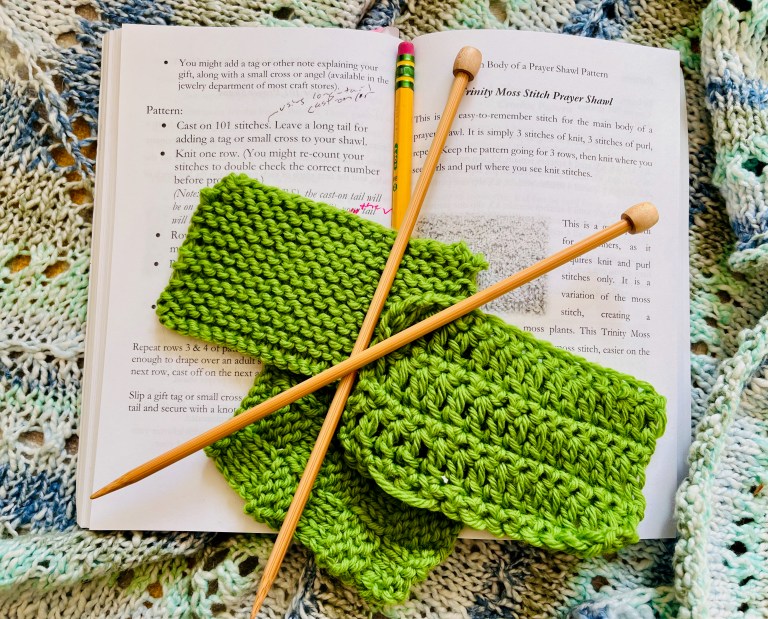
For an easy 1-2-3 pattern like the one described in this blog post, try the “Trinity Moss Stitch” pattern in my new book!

New Year, New Stitches: Crafting Daily Knitting Rituals

It’s a brand new year! Looking for a new way to find a sense of calm and grounding each and every day? Think about starting a daily knitting ritual. By taking up a daily knitting ritual, you are invited to weave the threads of your daily life into a tangible tapestry—a daily celebration in which you find a sense of calm and grounding. 

You can do a temperature blanket, a prayer shawl, or any kind of project that involves a set number of rows or a set time period in which you calmly knit and leave the rest of the world behind. The point is to take a little time each day for quiet – even silent – time of meditative knitting that reminds you to slow down and forget your worries. 

I first began a daily knitting ritual with a “temperature blanket” in 2019. I knitted one ridge of garter stitch each evening without fail, showing the high temperature of the day. What began as a simple commitment to my temperature blanket evolved into a nightly time of peacefulness. Seated in my favorite chair, surrounded by loved ones, I marked the close of each day—a time to reflect, acknowledging that I’ve given my best today, and it’s time to unwind.  

As I knit through the seasons, my knitting echoed the transitions from cold to warm, from short days to the long, sun-soaked afternoons of late spring, then back to cool and later cold days of autumn and early winter. These daily stitches grounded me in the natural rhythms of life—a simple yet profound celebration of life’s perpetual forward motion and renewal.

If you need a pattern, here’s my own…

Temperature Blanket Pattern: 

Materials: I use inexpensive cotton yarn from the big box craft stores, in the same colors for temperatures used by the television weather reports. I use size 8 or 9 knitting circular knitting needles to deal with the large number of stitches used. 

-Cast on 100 stitches, knit one row using the color of January 1

-At the beginning of each month, I knit one row of Yarnovers followed by the number of the month. For instance, for my first row, I would knit: [K2tog, Yarnover, knit 1 stitch]. In February, it would be [K2tog, YO, knit 2]…and so on. I continue this pattern until the end of the row. (You’ll have a couple extra stitches or be short a couple of stitches some months.)

-For the second row of the first day of the month (wrong side), knit using the same color

-For each succeeding day in the month, knit two rows in your chosen color for the temperature of the day. (I used the high temperature. You can use the low temperature, a median temp, or whatever you choose.)

-Your project will be quite long if you continue for 12 months, using worsted weight or larger. You might consider binding off and starting a second blanket after six months. 

And speaking of new creations, I invite you to explore the soothing art of prayer shawl knitting, using my brand new book, “A Prayer Shawl Handbook.” Discover the therapeutic joy of crafting these beautiful shawls, with each stitch infused with intention and care. May “A Prayer Shawl Handbook” inspire you to embark on a heartwarming journey of creating not just garments but moments of solace and connection.

Blessings on your knitting rituals! Cindy

Cynthia Coe is the author of The Prayer Shawl Chronicles, interrelated short stories woven around those who make and receive handmade, prayerfully crafted gifts of prayer shawls. Click this link to order or for more information. 

What To Do with Leftover Luxury Yarn?

I don’t play yarn chicken. Life is too short for that kind of teeth grinding, blood pressure elevating stress in my life. If I’m knitting a nice sweater out of all-wool, cashmere, alpaca, or some other luxury yarn, I make sure I have enough yarn to make the best sweater I can make. 

That leaves a happier problem than running out of yarn (i.e., losing at yarn chicken – frantically trying to finish your project before you run out of yarn). You’re left with a skein or two of really nice yarn you don’t want to just toss in your stash.

What do you make out of just a small amount of luxury yarn? I usually make a simple scarf to go with my newly handknit sweater. A scarf makes a nice accessory for any outfit, and it gives a matching sweater that “wow” factor. Store-bought sweaters almost certainly do not come with matching scarves – only we hand knitters get these lux perks. If this scarf turns out a little short, no problem. Just stitch the ends together, and voila, you have a matching cowl instead. 

Here’s some other items I sometimes make with leftover luxury yarn:

  • Table runners
  • Coasters
  • Placemats or fabrics to place under plants or office items (pencil box, stapler, phone, etc.)
  • Bathmats 
  • For a larger amount of yarn, a shawl or throw blanket

I don’t overthink the design of these handknit extras. In fact, here’s my Go-To Pattern for scarves and any other rectangle-shaped small fabric:

The Five by Five – a Simple Checkerboard pattern, pictured in this blog post.

  • Cast on 20 stitches (for larger items, cast on additional sets of 8 stitches)
  • Row 1: (K4, P4) x 2, K4
  • Row 2: (P4, K4) x 2, P4 
  • Rows 3 & 4: Repeat rows 1 & 2.
  • Row 5: (P4, K4) x 2, P4
  • Row 6: (K4, P4) x 2, K4
  • Rows 7 & 8: Repeat rows 5 & 6. 
  • Continue these 8 rows until you run out of yarn, cast off. 

For more simple patterns, follow me for news of my upcoming book, A Prayer Shawl Handbook, to be published in early December! 

What do YOU do with leftover yarn? Feel free to join the discussion by commenting on this blog or on my Facebook page! Share your great ideas!

Blessings, Cindy

Cynthia Coe is the author of The Prayer Shawl Chronicles, interrelated stories about knitters and those for whom they knit and love. The sequel to this book, The Knitting Guild of All Saints, has been released! Available in paperback and on Kindle, included in Kindle Unlimited. 

Copyright Cynthia Coe 2023. All Rights Reserved.

Confessions of a Hand Knitter: I Still Wear Store-Bought Sweaters

“Did you make that?” Someone asked me recently, admiring a new cardigan with intricate cable work, made of tiny laceweight yarn. “Uh, no,” I replied sheepishly. My admirer gasped. “YOU bought a sweater at a STORE?!”

Yes. I, an avid knitter and maker of pullover and cardigan sweaters, still buy sweaters at stores. 

It all goes down to eyesight. I’ve worn glasses since I was seven years old, moving from nearsightedness as a nerdy child with her head in a book, to a middle-aged woman needing “progressives” to see up close. Knitting with the fine weight yarns I prefer to wear has never been a good fit for me. 

Then there’s the time factor. In my experience, knitting a large garment using fingerling or lace weight yarn takes FOREVER. Between the frustration of squinting to see stitches and the difficulty of correcting mistakes while using threadlike yarn, I’m usually done with dealing with such yarns as the project extends beyond several weeks. 

But I do admire fine weight knitted fabrics, intricate patterns, and complicated cable work. I admire buttons sewn on just-so with an abundance of sturdy thread, ribbon backings on the button bands and perfect pockets. Could I make these garments with such advanced techniques myself? Maybe not. There’s a reason people started manufacturing sweaters, right?

Just last week, I bought a cardigan sweater at a well-known retailer while traveling to New Haven, Connecticut for my son’s wedding. I spied a cream-colored cardigan with abundant bobbles along the sides of the button bands, crisp ribbon facings, elegant gold buttons, and cables that would make me pull my hair out if I attempted to knit them myself. It fit perfectly and felt oh-so-luscious on my arms. So heck yeah, I bought it! 

As a knitter, I confess I am primarily a meditative knitter. I knit to zone out, to find a place and space of calm and peacefulness. I knit to keep my fingers from fidgeting when I want to think or pray or just take a break from the busy-ness of real life.

And I also confess to buying great knit pieces at the store…especially when they’re on sale and look terrific on me!

Peace, Cindy

Cynthia Coe is the author of The Prayer Shawl Chronicles, interrelated stories about knitters and those for whom they knit and love. The sequel to this book, The Knitting Guild of All Saints, has been released! Available in paperback and on Kindle, included in Kindle Unlimited. 

New Knitting & Crochet Books Coming Fall 2023

Hello Crafty Readers! I’m blogging for the first time in a while. I just finished the first draft of a new novel in The Prayer Shawl Chronicles series, so my head and heart have been preoccupied with that these past several months.

My new novel will probably come out some time in 2024, but in the meantime, there’s plenty of new knitting and crochet books to keep all of us occupied. 

I review books for NetGalley, and publishers kindly give me pre-publication peeks of their new books. Here’s what’s on tap for us crafty types (all available for pre-order; click the links for more info):

The Knitting Pattern Writing Handbook by Kristina McGrath and Sarah Walworth (Storey Publishing). Highly recommended if you write your own knitting patterns or plan to in the future. This little book tells you all you need to know to put your own patterns out into the world. Concise, plain language. Invaluable if you sell patterns online; helpful if you just want to share patterns with friends or understand what all those abbreviations mean. 

A Year of Knitting Stitches by Tabetha Hedrick (Globe Pequot, Stackpole Books). This is an excellent collection of knitting stitch patterns. I’ve used a couple in the past and always found several stitches that became “keepers.” This will definitely sit on my desk next year; the perfect gift for a knitter.

A Year of Crochet Stitches by Jill Wright (Globe Pequot, Stackpole Books). This is an equally excellent collection of crochet stitches for those of us who enjoy making up our own patterns or just want something different and all our own. In this collection, stitches are nicely organized by type of stitch (e.g. all kinds of bobble stitches). Perfect for the intermediate and advanced crocheter and an excellent gift idea.

Oversize Fashion Crochet by Salena Baca (Globe Pequot, Stackpole Books). This is a collection of only 6 patterns of oversized sweaters, a poncho, and other bulky garments. While this is a limited group of patterns, I found them all do-able and attractive for the average crafter. The schematics and drawings of how to assemble the garments were particularly good. 

More blogging to come, now that my next novel is on the back burner for a bit!

Happy Crafting, Cindy

Cynthia Coe is the author of The Prayer Shawl Chronicles, interrelated short stories woven around those who make and receive handmade, prayerfully crafted gifts of prayer shawls. Click this link to order or for more information. 

Knitting on Vacation: What to Pack

Spring is here, and many of us will soon head out on fun vacations. You, of course, will take your knitting. What else would you do, sitting in the sun or with a gorgeous view in front of you, and plenty of time on your hands? Yes, you’ll definitely need your knitting. 

What to pack? As a well-traveled, experienced Knitter, here’s my list:

  • Yarn, but not too much. You’ll need enough yarn to get you through your vacation and back, but don’t feel you need to pack enough for the next six months. I am always tempted to pack waaaaay too much, taking up space I could better use for clothes, shoes, or souvenirs on the way back. 
    • Think about how well your project fits your destination. Heavy wool at the beach? Not a great fit, in my opinion. If you’re going someplace warm, light cotton yarns will keep you from sweltering underneath your project and will work best thrown in a beach bag and exposed to sand and water. Going to a ski resort? Pack the heavy wool and let your project keep your knees warm.
    • Can your yarn be replaced? Think about the “what ifs.” If you lose your luggage, spill red wine on your yarn, or some other disaster befalls your yarn, will it be the end of the world for you? Think about taking inexpensive and easily replaced yarn when travelling.
    • How’s your eyesight and attention level on vaca? You’ll likely be on the move (and hopefully, pleasantly distracted) when knitting on vacation, so consider a larger weight yarn you can knit in less-than-ideal lighting and with lots of other things going on. Vacation is a time to zone out, so give yourself that option. 
  • Knitting Needles, But Only What You Really Need. Yes, you need to be prepared. But not for every single project you could possibly make on vacation. Again, check your pattern before leaving town and make sure you have the right size. Believe me, trying to find knitting needles while on the road is difficult and takes up time you could be spending doing something fun. If you’re not sure on what size you need, start your project at home or at least make a swatch. 
    • Circular Needles Travel Better. Remember the time you lost a straight knitting needle in the sofa cushions? It happens. Don’t let it happen on an airplane, in a rental car, or who-knows-where and you can’t find it and can’t replace it. With circular knitting needles, you’re far less likely to lose a single knitting needle and thus ruining your vacation.
    • Airline Travel? Yes, you can travel with knitting needles. TSA says so. I’ve never had a problem in decades of airline travel. Some airlines may ask you to put away your knitting needles during take-off and landing. Be considerate and do so. Do so anyway; these are sharp sticks we’re talking about. Also, I take point protectors with me and use them on the plane when I’m not knitting, just to be safe. 
  • Scissors, but not on the plane. You would think you could take a tiny pair of dull scissors on the plane, but not those sharp-pointed knitting needles, right? WRONG. TSA in Knoxville has taken possession of several small pairs of scissors and a couple of really cute Swiss-Army knives from me over the last couple of years (including the ones with the sweet Edelweiss flowers on them!!!!). But they’ve never even questioned my knitting needles. Go figure. I think you could probably pack a pair of scissors in your checked luggage (the bags you may or may not see again), but do so at risk of losing them. Prepare to buy a cheap pair of nail clippers or something else with a blade once you get to your destination or clear security. Most cotton yarns can be cut with a good yank, just sayin.’
  • Patterns – store it on your phone. Hit the easy button on this. You don’t want to haul around a pattern book with you, and paper copies get lost and damaged beyond recognition. Take a photo of your pattern and keep it on your phone, at least as a back-up. If you need to refer to it while you’re in the air (and your phone is supposed to be off), jot it down on a sticky note or inside a paperback book you also plan to take. 
  • Other Stuff? Keep it Simple. Remember, you’re on vacation! Knitting should be stress free and simply something to help you relax and pass away the time in the airport or just while zoning out, listening to the waves hit the beach. Yes, of course, take whatever stitch holders or whatever you know you will need, but only take what you absolutely must have. Leave the rest at home!

I hope all my readers get to enjoy their Knitting Someplace Special this coming spring and summer! Blessings, Cindy

Cynthia Coe is the author of The Prayer Shawl Chronicles, interrelated stories about knitters and those for whom they knit and love. The sequel to this book, The Knitting Guild of All Saints, has been released! Available in paperback and on Kindle, included in Kindle Unlimited.