
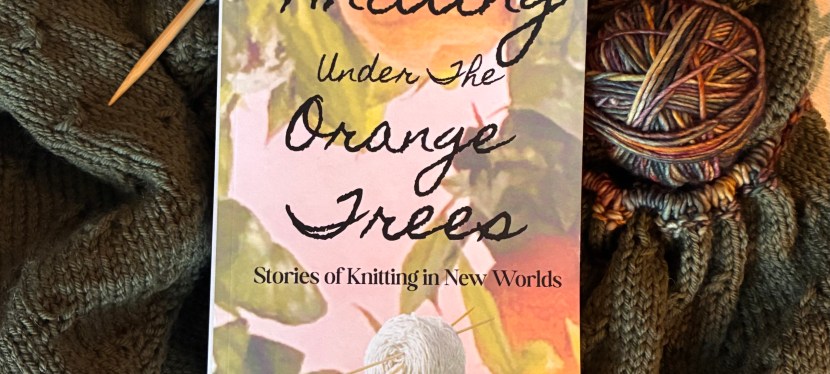
Knitting didn’t arrive in the Americas by accident—it traveled hand to hand, carried by women across oceans and generations.
As knitters, we know that techniques don’t live in books alone. They live in muscle memory, in watching someone else’s hands, in doing the same small motions over and over until they become part of us. Long before knitting patterns were printed or standardized, knitting moved through the world the same way people did—by necessity, memory, and care.
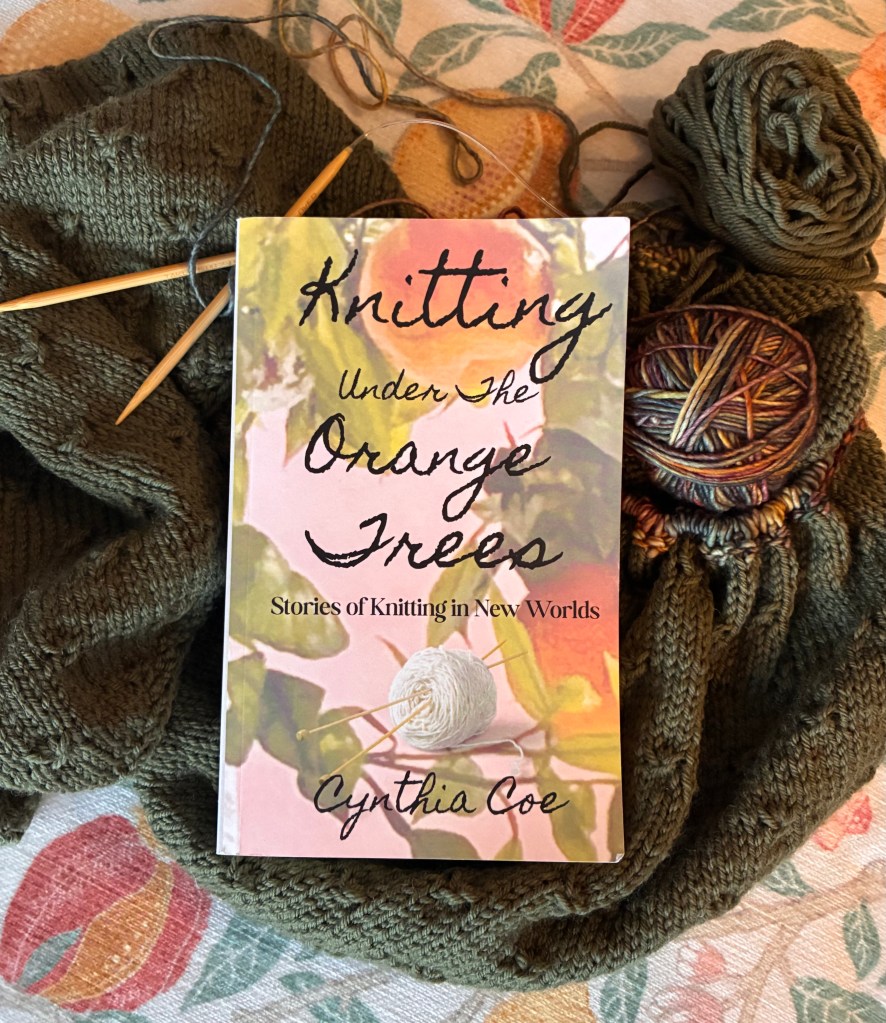
That history is what inspired my newest historical novel, Knitting Under the Orange Trees.
The story imagines how knitting traveled from Europe to the Americas during the sixteenth century—not through official records or trade documents, but through the daily lives of women. Women who packed little more than what they could carry. Women who brought practical skills with them: how to make clothing, how to keep others warm, how to create something familiar in an unfamiliar place.
In Knitting Under the Orange Trees, knitting is not a hobby. It is essential work. It happens in homes, convents, on ships, and in new settlements where warmth and clothing could mean survival. The novel explores how textile knowledge—quiet, often overlooked—helped shape early communities in the New World.
If you’ve read Knitting Through Time, this novel continues that world and deepens its history. If you haven’t, you can enter the series here, just as you would a new project: by picking up the needles and beginning.
Knitting has always been more than yarn and stitches. It is a way women have cared for one another, preserved knowledge, and carried home with them—no matter how far they traveled.
🧶✨ Knitting Under the Orange Trees is now available in paperback and e-book editions at this link. It is also included in Kindle Unlimited.
You can explore Knitting Under the Orange Trees and the full Knitting Through Time series at this link. ✨🧶
I hope you enjoy this book! I truly LOVED writing it!
Blessings, Cindy
Cynthia Coe is an author, blogger, and avid knitter. Her books are available in paperback and e-reader edition on Amazon.com. Visit her Author page and follow this blog for more info and news.


 Sycamore Cove Knitting