Keep Knitting Fresh and Interesting – Learn New Skills

Feeling in a rut? Do you find yourself knitting the same patterns over and over again? It’s time to switch things up! 

If you’re like me, you have several “go to” patterns you can do in your sleep…or certainly while watching your favorite show on TV. You know exactly how many stitches to cast on, how much yarn the project will take, and which size needles to use. But you may also have umpteen of this finished project – with too many blankets, shawls, pullover sweaters, or whatever this “go to” project is – filling up closets or going unused. 

If this is you, it might be time to learn a new knitting skill. Yes, it will be hard at first. Yes, you will make mistakes and will likely have to frog the thing at least once. But the upside is that you’ll have a new technique in your toolkit of knitting designs and skills. You might even have a new favorite project on your hands.

The best way to learn a new project, at least for me, is to purchase a kit that includes an understandable pattern and exactly the amount and type of yarn you’ll need to complete the project. I had been reluctant to buy kits in the past, scarred by memories of paint-by-number art kits in childhood that never had enough paint to finish the project. But happily, the knitting projects I’ve bought in the last several years have had more than enough yarn to complete projects.  (And I’ve bought numerous knitting kits from a wide variety of companies, especially during the pandemic).
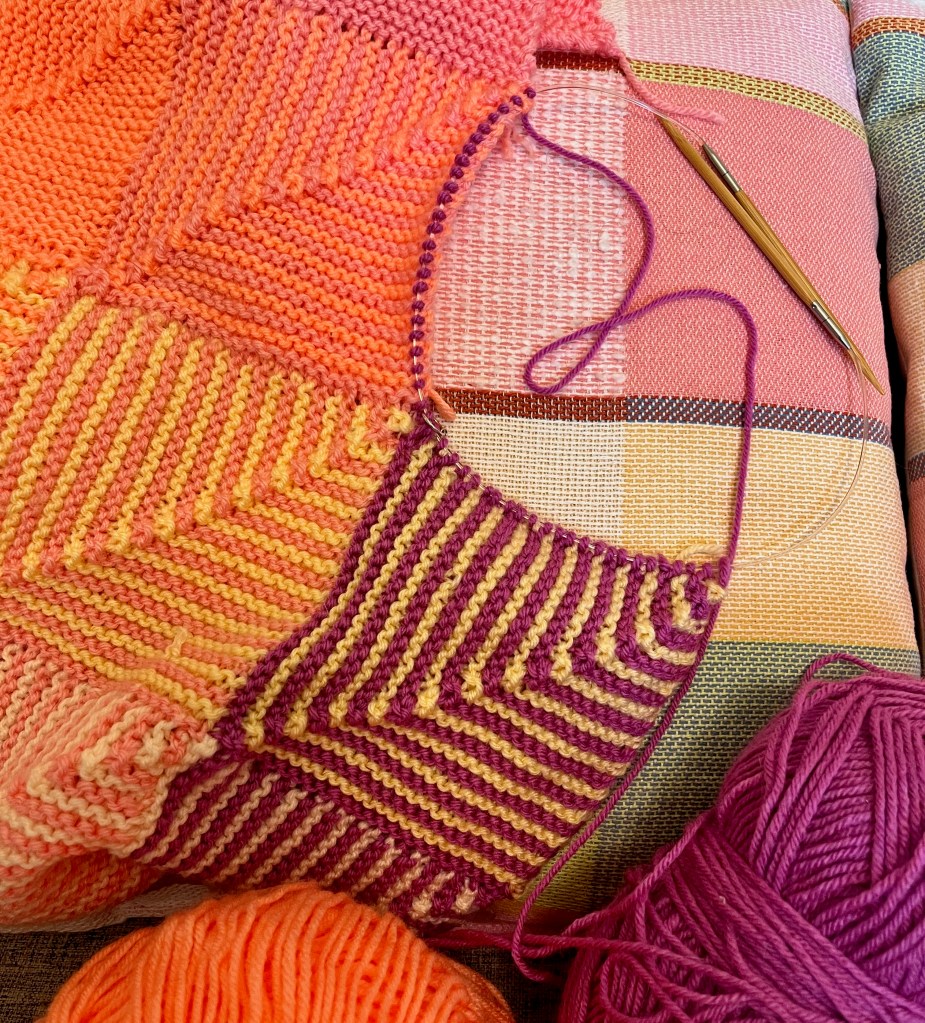
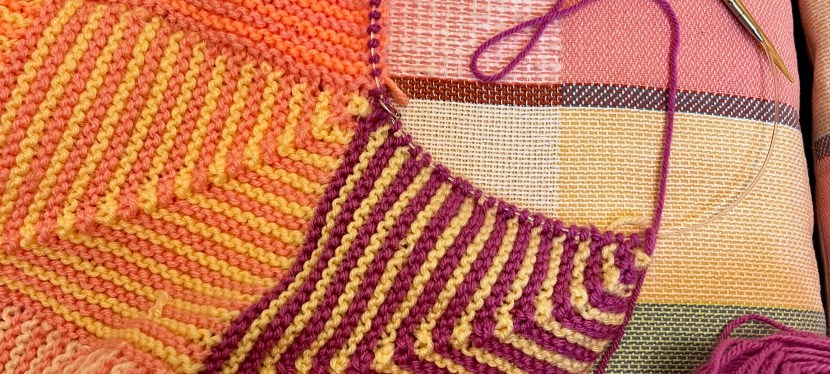
My latest new-to-me knitting skill is the mitered square technique. I found the technique a little trippy – you start with a straight line, and by decreasing in the middle of the row, you end up with a square. Who comes up with this stuff??? I’ve enjoyed making a blanket using this stitch, with some simple colorwork to mix it up as well. Yes, it took me a couple of tries to get it right, but I can now do it like a pro. I’ll definitely use the technique again to make placemats, bath rugs and other household items requiring a fairly sturdy fabric.

Of course, some kits I’ve tried have ended up as “never again” projects. One cardigan sweater kit I bought required me to flip the project around six times and use short rows for some purpose I could not discern. But even the “never again” projects keep knitting interesting and my brain continuing to learn. 

As much as I enjoy simple, meditative knitting projects, I always enjoy a new challenge, too. We all need to keep our minds and souls fresh, active, and open to new experiences!

Knitting Blessings, Cindy

Cynthia Coe is the author of The Prayer Shawl Chronicles, a series of fictional stories woven together by the theme of human connections made through prayer shawls and the craft of knitting. Her newest book is her first historical novel, Knitting Through Time: Stories of How We Learned to Knit. Learn more by visiting her Author Page at this link

RIP Knit Club Kits – But I’m Still Enjoying You Lots

Back in a different time and place  – 2018 – I discovered Knitting kits. These high quality knitting kits opened a whole new world of knitting for me. I started using real wool and other “luxury” all-natural fibers for the first time, and my knitting skill increased by leaps and bounds. 

My late husband gifted me my first kit for Christmas at the end of 2018 (after a helpful nudge from me, of course). I blogged about this kit in 2019, “Knitting Kits – Worth the Money?” I learned a new and previously-unknown-to-me technique, mosaic knitting, along with several other more advanced techniques.

Reader, I fell in love. I went on to purchase several more kits from Kitterly and learned to make Raglan sweaters, additional mosaic colorwork techniques, and even German short rows (gasp!). Having achieved at least an “advanced intermediate” level of knitting, I proceeded on, discovering kits and videos on Bluprint and monthly subscription kits with Knitcrate. Oh my, did my knitting skills level up! 

Then 2020 happened. The bottom fell out of all these lovely knitting kit companies. Kitterly quietly went out of business – or at least they quit sending out ads and emails. Bluprint’s more publicized demise suddenly put me in the position of “buy them now or not at all,” and I quickly purchased a number of high quality kits at pennies on the dollar. My stash went from one basket to three baskets to a situation of wondering where I would even store all these kits I knew I wouldn’t get to for a long time.

Knitcrate hung in until just last month. I think most of its customers saw the handwriting on the wall, with an astonishing 80% clearance sale in late 2022 signaling that the end was nigh. Like with Bluprint, I recognized this was crunch time. I could get terrific deals on gorgeous alpaca, wool, and even silk-blend yarns. Then, it would all be gone.

So here I am, in early 2023, finally getting to one of those Bluprint kits I bought for next-to-nothing over two years ago. I’m still learning lots and increasing my skills, making an oversized Raglan sweater with complicated cables and a shawl collar. It’s sad, seeing references to “online resources” through my former Bluprint account. Those online resources just aren’t there anymore. I’m really, really glad I bought so many kits when I did and even more glad I have the print copies of the patterns in my hands. 

Meanwhile, I’ve got an entire cabinet of yarns I’ve purchased through Knitcrate over the last couple of years. While those yarn purchases seemed extravagant at the time, I rationalized that I was getting high quality products at terrific deals. Yes, I was. That fact is truer now than when I made the purchases in the first place.

RIP Kitterly, Bluprint, and especially Knitcrate, with its monthly surprise packages and friendly online community of crafters. I’m still enjoying your kits. I’m still enjoying your yarns. And with a mammoth stash of clearance sale kits stocked up, I will continue to enjoy and learn from you for several years to come. 

Cynthia Coe is the author of The Prayer Shawl Chronicles, interrelated stories about knitters and those for whom they knit and love. The sequel to this book, The Knitting Guild of All Saints, has been released! Available in paperback and on Kindle, included in Kindle Unlimited. 

Are you using a kit subscription or other knitting kit you love? Feel free to give them a shout-out in the comments. I have no dog in the hunt, and I’m happy to help out knit companies who need the business! 

Getting More Knit From The Kit – Using Leftover Yarn From Knitting Kits

Have you finished a knitting project and had yarn left over? This happens frequently to me. If it’s inexpensive yarn, I usually put it in a bin I keep for donations. Once a year, I give this bin to a school, camp, or summer program for crafting by children. But if it’s expensive yarn I really like, I want to make something else from it.

I recently began knitting from kits ordered online. I’ve done two kits by Kitterly (www.Kitterly.com), and I just started my first kit by KnitCrate (www.KnitCrate.com). When I first started knitting from kits, I feared I’d get to the end of a pricey project and not have enough yarn to finish. Happily, I can now report that both of the Kitterly kits I’ve done left me with plenty of leftover yarn. (The verdict’s still out on KnitCrate, but so far, so good. I’m impressed with all the extra patterns I get with their kits.)

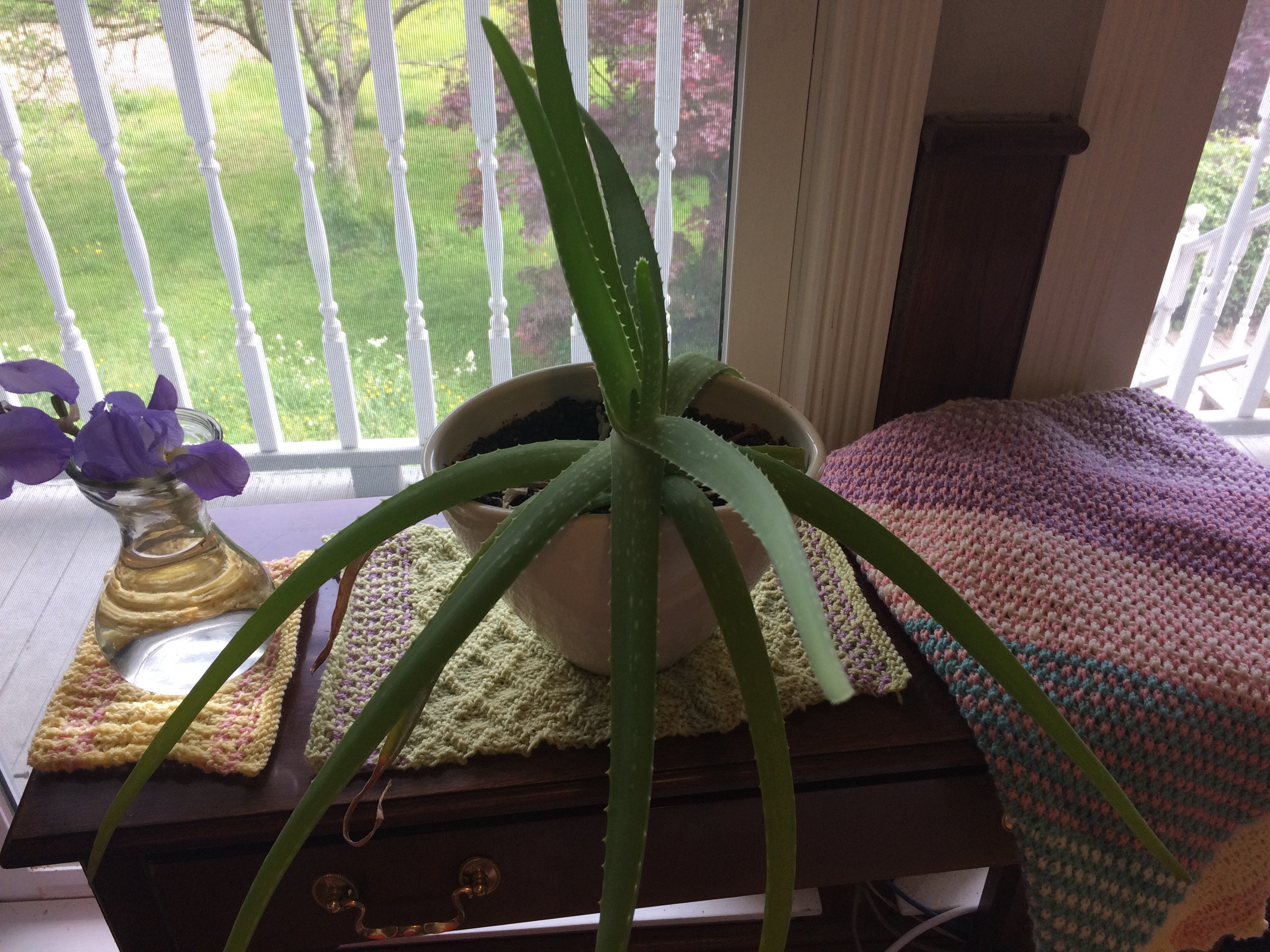
What do you do with a good hank of expensive, high-quality yarn that’s too big to simply toss out? After working through a Kitterly shawl kit, I had enough to make both a narrow runner for use on a credenza and a large coaster. I also re-used the colorwork pattern on my “extra” items, since the pattern was still in my head. These small projects made nice transitions after spending a couple of weeks on the main shawl project. I also felt better getting three projects out of an expensive kit, instead of just one. (Honestly, I may end up using the runner and coaster more than the shawl!)

Knitting is a frugal craft. We make high quality items rather than buy cheap ones at the store. Knitters are the kind of people who look for good value for their money and don’t like to see nice materials go to waste. By getting “more knit for the kit,” knitters both use their awesome creativity to make something useful and get maximum value for their purchases. 

What do you do with leftover yarn?

Happy Crafting! Cindy

Cynthia Coe is a writer, book reviewer, and avid knitter. Her books and blog posts can be found on her Amazon Author Page.

Knitting Kits – Worth The Money?

My knitting skills hit a plateau recently, and I decided to try one of the new knitting kits now available through the miracles of online shopping. I’ll admit, I was wary. Would I really get everything I needed for a finished piece of knitting in one shipment? Scarred by childhood memories of cheap craft kits that didn’t have enough paint or whatever to actually finish a project – leaving me with an unfinished and totally wasted craft – I nevertheless jumped into the new world of knitting kits.

My husband actually pushed me into my first knitting kit with a pricey shawl kit for Christmas. At around $80, it impressed me as a rather lavish gift for two skeins of yarn and a pattern I had to print out myself. But the yarn turned out to be quite nice – 100% wool, generously large skeins, and no kinks or knots that you usually get with yarn from the big box stores. And lo and behold, the kit included more than enough to finish my project. I even had enough of the contrast color to use in another project.

More importantly, I upped my knitting skills significantly. I learned a new way to make shawls, a new way to use colorwork in my knitting, and mastered the picot bind-off (which I wouldn’t have dared tackle of my own accord). I impressed myself with how well and how much I learned in the course of one project.

So was it worth the eighty bucks? Maybe so. Instead of aimless shopping for a massive bag of yarn at the big box store, I got just enough for the project, with no random skeins left over and wasted. In the long run, I could see spending less on kits overall than on the impulse purchases of yarn that sit in a closet for years. But what sold me on the kit was that I actually learned a lot and became a better knitter. That’s worth a lot. I just started my second kit, and I’m growing more confident with new skills already.

For me, the knitting kits are a lot like the meal kits – Blue Apron, Plated, etc. You get just what you need, and you don’t have a lot of leftovers to deal with. Best yet, at the end of the process, you’ll look like a star.  

Cynthia Coeis a writer, book reviewer, and avid knitter. Her books and blog posts can be found on her Amazon Author Page.