How Knitting Traveled to the Americas (and Inspired My New Novel)

Knitting didn’t arrive in the Americas by accident—it traveled hand to hand, carried by women across oceans and generations.

As knitters, we know that techniques don’t live in books alone. They live in muscle memory, in watching someone else’s hands, in doing the same small motions over and over until they become part of us. Long before knitting patterns were printed or standardized, knitting moved through the world the same way people did—by necessity, memory, and care.
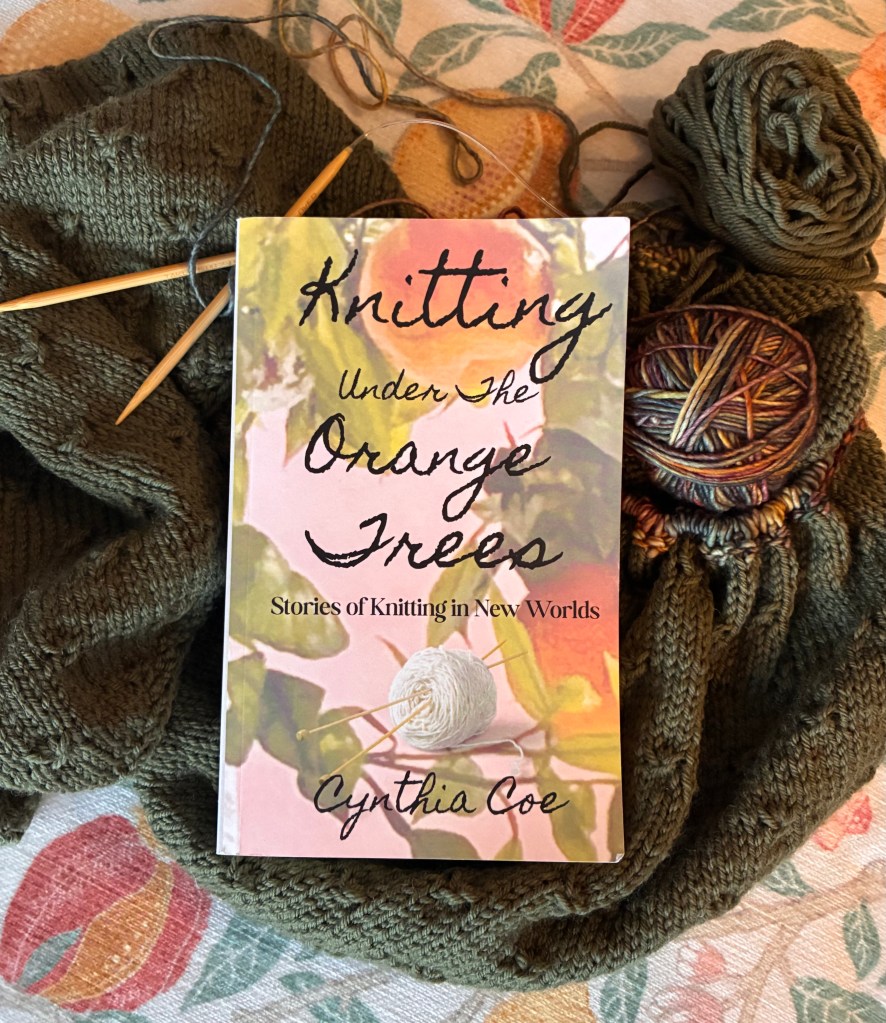
That history is what inspired my newest historical novel, Knitting Under the Orange Trees.

The story imagines how knitting traveled from Europe to the Americas during the sixteenth century—not through official records or trade documents, but through the daily lives of women. Women who packed little more than what they could carry. Women who brought practical skills with them: how to make clothing, how to keep others warm, how to create something familiar in an unfamiliar place.

In Knitting Under the Orange Trees, knitting is not a hobby. It is essential work. It happens in homes, convents, on ships, and in new settlements where warmth and clothing could mean survival. The novel explores how textile knowledge—quiet, often overlooked—helped shape early communities in the New World.

If you’ve read Knitting Through Time, this novel continues that world and deepens its history. If you haven’t, you can enter the series here, just as you would a new project: by picking up the needles and beginning.

Knitting has always been more than yarn and stitches. It is a way women have cared for one another, preserved knowledge, and carried home with them—no matter how far they traveled.

🧶✨ Knitting Under the Orange Trees is now available in paperback and e-book editions at this link. It is also included in Kindle Unlimited.

You can explore Knitting Under the Orange Trees and the full Knitting Through Time series at this link.  ✨🧶

I hope you enjoy this book! I truly LOVED writing it!

Blessings, Cindy

Cynthia Coe is an author, blogger, and avid knitter. Her books are available in paperback and e-reader edition on Amazon.com. Visit her Author page and follow this blog for more info and news.

Women’s History and the History of Fabric-Making (Spoiler Alert: It’s the Same Thing)

Did you know that if you lived just a couple of hundred years ago – and any time before that – and you’re a woman, you would have spent much of your life making fabric? Yes, we as women still do much of the cooking and cleaning in our families, though the men in our lives and households do much, much more than they did prior to the 1970’s. We still cook, and some of us even enjoy it.

Many of us still enjoy making fabrics by knitting, crocheting, or weaving. We might enjoy sewing, making quits, or even making our own clothes. But up until recently in human history, the making of fabric was no hobby. It was work and important work at that. And if you were a woman, it would have been one of your primary occupations.

As I’ve researched the history of knitting for my next book in The Prayer Shawl Chronicles, I’ve discovered these truths, and it’s changed the way I look at fabrics. In our current culture, we barely give a thought to the fabrics we wear, use to bathe, sit upon, or trod upon. Yet someone made these fabrics. The raw materials came from some place, somewhere in the world. Someone – likely other women, working in not great conditions and for low wages – worked at the factories that turn out the cotton, synthetic, wool, silk, and all other fabrics we likely take for granted.

In my novels, you’ll see characters knitting for solace, for quiet time, and as an aid to spirituality. Yet in real life, women also knitted to survive the cold, to keep themselves and their families warm. I hope to convey this reality in my next novels, and I hope you’ll take a moment to appreciate all those mechanized and digitized looms, yarn spinners, and dying machines that means we as 21st century women get to simply knit…for fun. 

Interested in the history of fabric making? Here are my go-to recommendations: 

The History of Fabrics and Cloth Making

Women’s Work, The First 20,000 Years: Women, Cloth, and Society in Early Times by Elizabeth Wayland Barber (W.W. Norton & Company, Inc., 1995).

Fabric: The Hidden History of the Material World by Victoria Finlay (Pegasus Books, 2022).

The Fabric of Civilization: How Textiles Made the World by Virginia Postrel (Basic Books, 2020).

Worn: A People’s History of Clothing by Sofi Thanhauser (Vintage Books, 2022).

Happy Reading! Cindy

Follow this blog for impending news of a new novel in The Prayer Shawl Chronicles!

Cynthia Coe is the author of The Prayer Shawl Chronicles, a collection of interrelated short stories about knitters and those they meet through knitting and sharing prayer shawls. 

Be sure to check out my newly published A Prayer Shawl Handbook: Inspiration and Resources for Your Prayer Shawl Ministry, now available in paperback and e-book editions and included in Kindle Unlimited.