How Knitting Traveled to the Americas (and Inspired My New Novel)

Knitting didn’t arrive in the Americas by accident—it traveled hand to hand, carried by women across oceans and generations.

As knitters, we know that techniques don’t live in books alone. They live in muscle memory, in watching someone else’s hands, in doing the same small motions over and over until they become part of us. Long before knitting patterns were printed or standardized, knitting moved through the world the same way people did—by necessity, memory, and care.
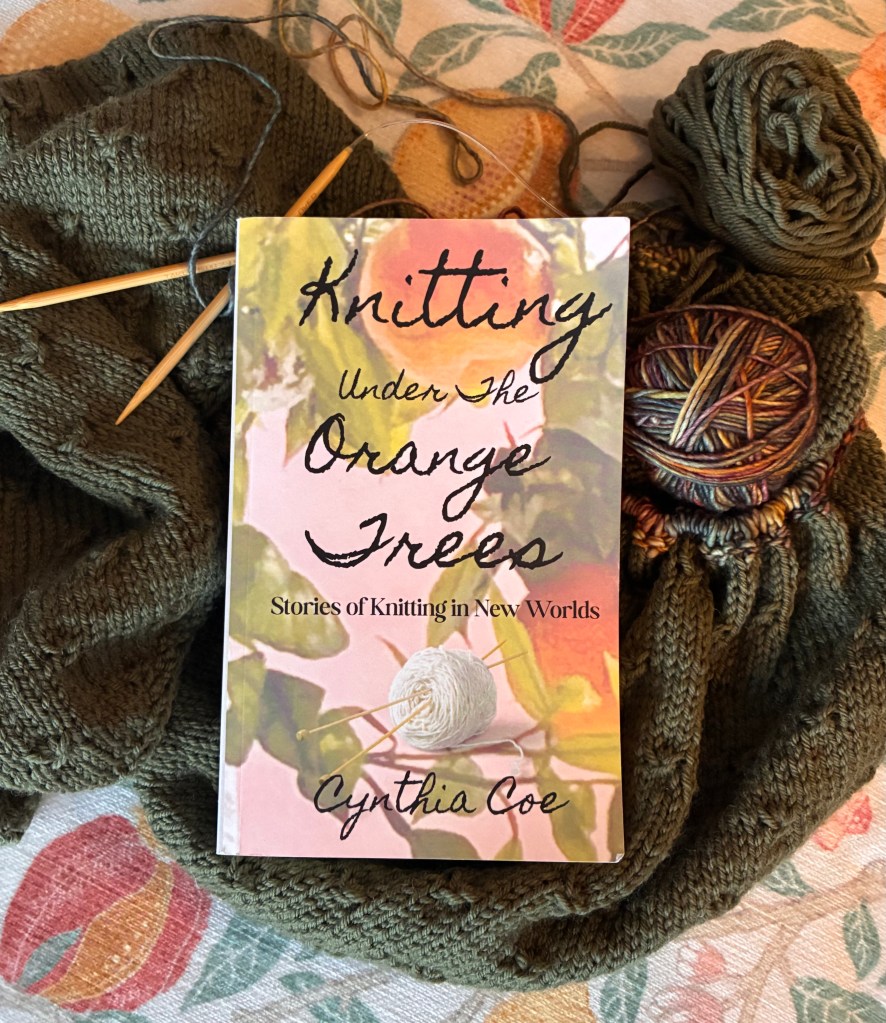
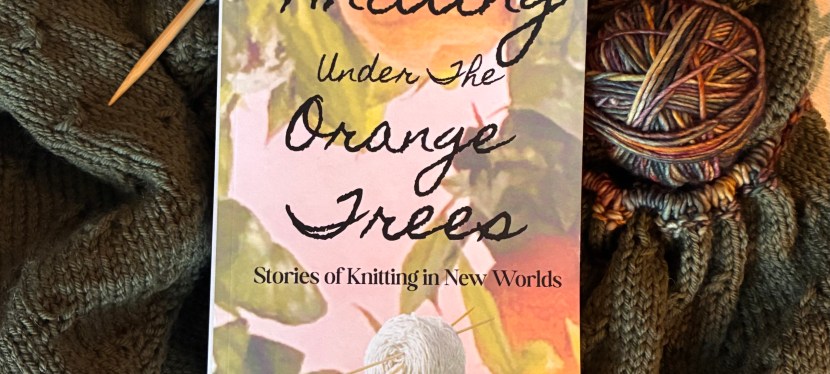
That history is what inspired my newest historical novel, Knitting Under the Orange Trees.

The story imagines how knitting traveled from Europe to the Americas during the sixteenth century—not through official records or trade documents, but through the daily lives of women. Women who packed little more than what they could carry. Women who brought practical skills with them: how to make clothing, how to keep others warm, how to create something familiar in an unfamiliar place.

In Knitting Under the Orange Trees, knitting is not a hobby. It is essential work. It happens in homes, convents, on ships, and in new settlements where warmth and clothing could mean survival. The novel explores how textile knowledge—quiet, often overlooked—helped shape early communities in the New World.

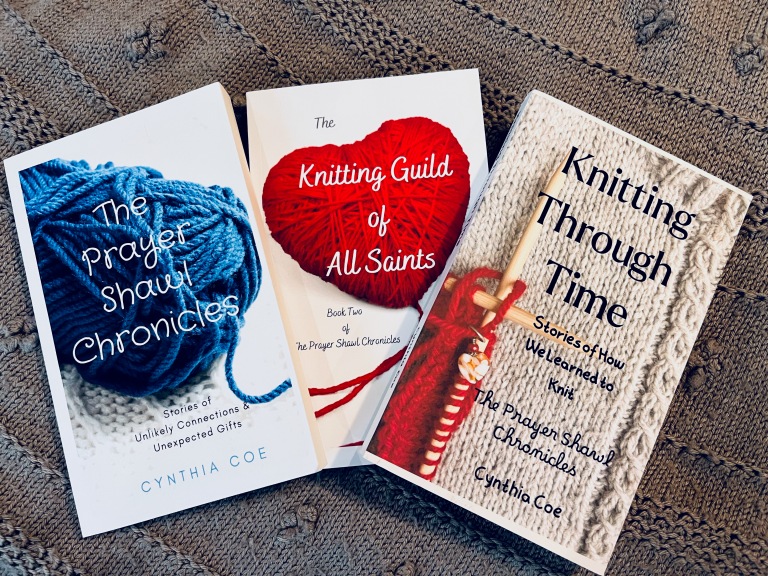
If you’ve read Knitting Through Time, this novel continues that world and deepens its history. If you haven’t, you can enter the series here, just as you would a new project: by picking up the needles and beginning.

Knitting has always been more than yarn and stitches. It is a way women have cared for one another, preserved knowledge, and carried home with them—no matter how far they traveled.

🧶✨ Knitting Under the Orange Trees is now available in paperback and e-book editions at this link. It is also included in Kindle Unlimited.

You can explore Knitting Under the Orange Trees and the full Knitting Through Time series at this link.  ✨🧶

I hope you enjoy this book! I truly LOVED writing it!

Blessings, Cindy

Cynthia Coe is an author, blogger, and avid knitter. Her books are available in paperback and e-reader edition on Amazon.com. Visit her Author page and follow this blog for more info and news.
Creative Detours (and the next book in the Prayer Shawl Chronicles)

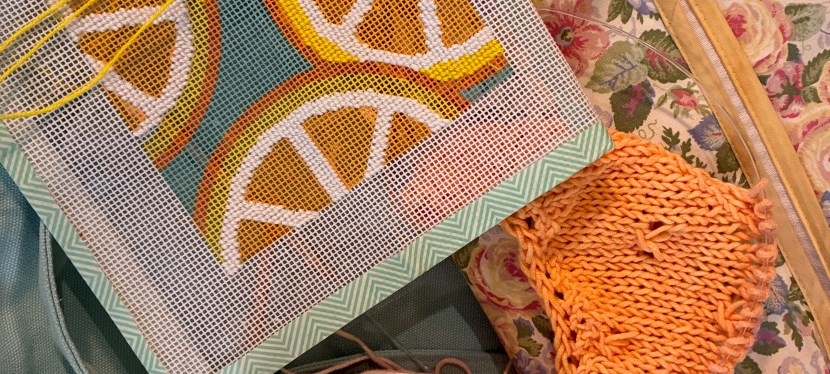
Sometimes even knitters need a break. I’ve set down my needles for a bit and picked up needlepoint — a portable, colorful craft that feels like fingerpainting with thread. After finishing the next-to-last draft of my new Prayer Shawl Chronicles novel, my brain needs a rest.

Do you ever get tired of knitting, even if it’s your primary hobby?

I’ve hit one of those times when I want to do “something else” for a little while — much like when I take a break from my beloved dance aerobics to do yoga, beach walks, or try something new. I always circle back to dance aerobics, and I always circle back to knitting.

Right now, though, I’m rediscovering needlepoint. It’s small, portable, and easy to do — almost like fingerpainting with thread and a needle. On a recent trip to Québec and Montréal, I tucked a little project into my bag and enjoyed the mindful rhythm of stitching in quiet moments. There’s something deeply satisfying about the relatively mindless rhythm of needlepoint: no designing, no choosing patterns, no counting stitches. Just color and thread.

And here’s the real reason for this creative detour: my brain is fried. I’ve just finished the next-to-last draft of my new novel — the upcoming book in The Prayer Shawl Chronicles series. This story travels from Bruges to Sevilla, then across the ocean to Peru and Florida… and it has worn me out!

So for now, I’m resting my writer’s mind with a few easy stitches. But you know me — I’ll be back to knitting soon enough… 🧶…as soon as I finish the final draft of my new novel!

Cynthia Coe is the author of The Prayer Shawl Chronicles, a series of fictional stories woven together by the theme of human connections made through prayer shawls and the craft of knitting. Her newest book is her first historical novel, Knitting Through Time: Stories of How We Learned to Knit. Learn more by visiting her Author Page at this link

Creativity as a Spiritual Practice—Whether You Knit or Not

Whether you knit, write, bake, or daydream—your creative life might be more spiritual than you think.

In my life, creativity has always been more than a hobby. It’s a way of slowing down, listening deeply, and connecting with something greater than myself. Whether I’m holding knitting needles, writing a chapter, or just dreaming up new ideas, the creative process becomes, for me, a kind of prayer.

I’ve found that creativity invites us into stillness. Into presence. Into wonder. It doesn’t have to look like a finished project or a gallery-worthy painting. It can be quiet, even hidden—a moment of beauty in an ordinary day. Maybe it’s the way colors come together on your needles. Or the way a sentence finally says what your heart has been holding.

You don’t have to be a knitter to experience this. Whether you bake bread, write sermons, arrange flowers, doodle in the margins, or simply take time to notice the sacredness in the world around you—that’s creativity. And when we approach it with reverence, it becomes spiritual.

As a writer and lifelong maker, I often explore how creativity weaves its way through both daily life and sacred space. I reflect on themes of faith, prayer, and making meaning—on and off the page. Creativity, after all, isn’t about perfection. It’s about presence.

If that speaks to you, I invite you to follow more of my reflections at www.sycamorecove.org or on Facebook at www.Facebook.com/CynthiaCoeAuthor. I’d love to share this journey with you.


Cynthia Coe is the author of The Prayer Shawl Chronicles, a series of fictional stories woven together by the theme of human connections made through prayer shawls and the craft of knitting. Her newest book is her first historical novel, Knitting Through Time: Stories of How We Learned to Knit. Learn more by visiting her Author Page at this link

What Knitting Taught Me About Writing

When I tell people I write about knitting, they tend to giggle or smirk. Yes, I’m a writer, and I’m a knitter. For me, knitting and writing involve similar processes. Both take a long time and can’t be rushed. Both can produce something intricate or something simple. Most importantly, both are crafts. You practice, you continually get better. You learn new skills and develop your own personal style and ways of doing things.

Here’s what I’ve learned about Writing from my Knitting:

  • Projects take a long time to complete. You handle them one stitch at a time. You pick up the needles every day and do some work on your project. Same with writing – you sit down and write a page or two every day. Eventually, you have a book length manuscript.
  • Ripping out is sometimes necessary. Ripping out a piece of knitting is not fun. You can lose stitches and lose your mind. You might have to rip your work out several times before you get it right. Same with writing. If you have a problem in your work and know it, you’re going to have to stop, make some cuts, and revise. None of this is fun, but you know in your heart you’ll feel better about the final product once you do it.
  • It’s the intricate work that makes your work shine. Plain stockinette is fine, but it’s the fancy cables or other intricate stitchery that grab people’s attention and show what you’re made of. Same with writing. My work involves interrelated short stories and lots of characters whose stories weave in and out of each other. Would it be easier to tell one straightforward story? Sure, but it’s this intricate interweaving of stories that add a richness and depth to my writing.
  • Crafting skills count. All of them. To make a sweater or a pair of socks, you need lots of skills – casting on, picking up stitches, mattress stitching a sleeve together, casting off. You need to master ALL of these skills; you don’t sub them out to somebody else. I’ve come to believe that writing should be the same process. After saying “enough” to the soul-crushing rejections of the New York publishing industry, I learned to publish my own work. I do it all – choose the font, design the book covers, character development, revisions – just like I do with a large knitting project. For me, it’s all part of the craft of producing a book. I don’t sub out tying up loose ends, do I? Virginia Woolf typeset her own manuscripts, after all, and self-published. 
  • Sometimes you need to set your work aside. We’ve all gotten sick and tired of knitting projects. You get frustrated by difficult patterns or just plain bored or exasperated. The same thing happens with large writing projects. You think you’re going nowhere, you’re out of ideas, the project looks too big and unwieldy for you to possibly complete. Sometimes you just need to take a break. And then, when you’re ready, you pick up that work-in-progress again, settle into well-honed skills, and you think, “I’m so glad to be back.” You move forward, and you’re so glad you did. You’re doing what you do best.

Happy Knitting (or Writing! Or Both!), Cindy

Cynthia Coe is the author of The Prayer Shawl Chronicles, interrelated stories about knitters and those for whom they knit and love. The sequel to this book, The Knitting Guild of All Saints, has been released! Available in paperback and on Kindle, included in Kindle Unlimited.