Creative Detours (and the next book in the Prayer Shawl Chronicles)

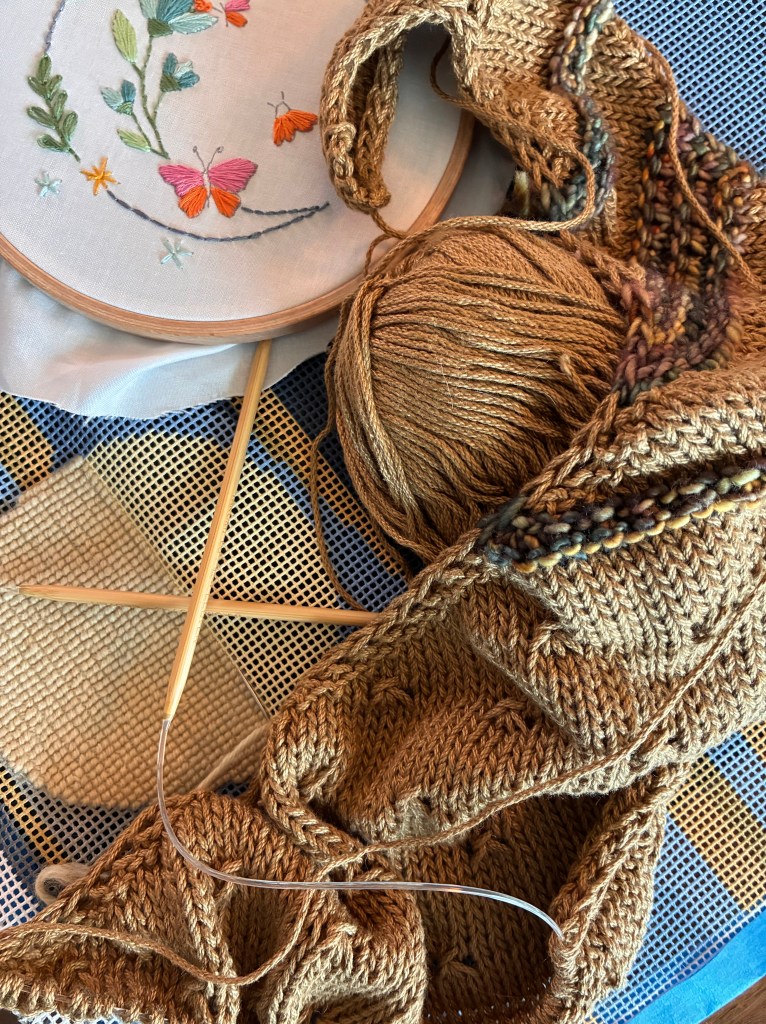
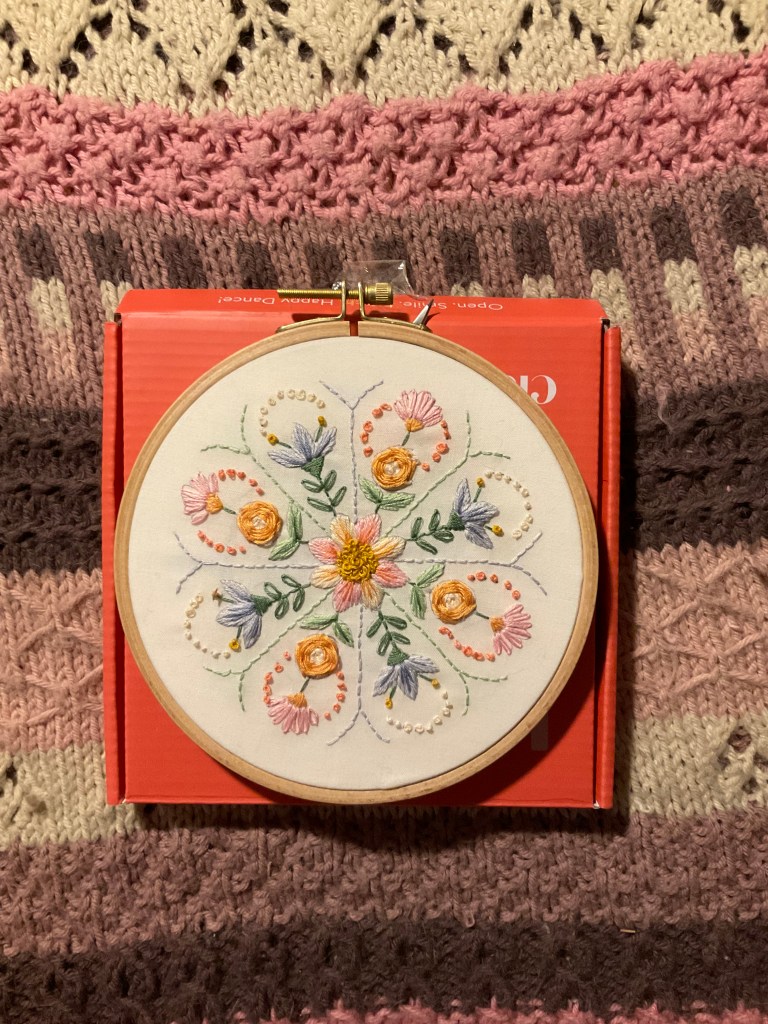
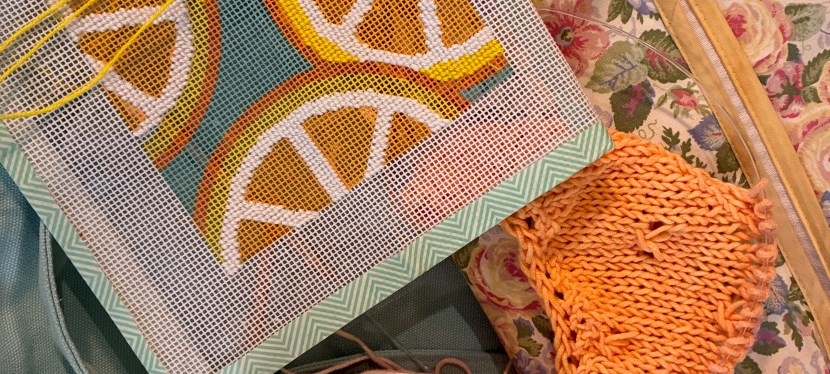
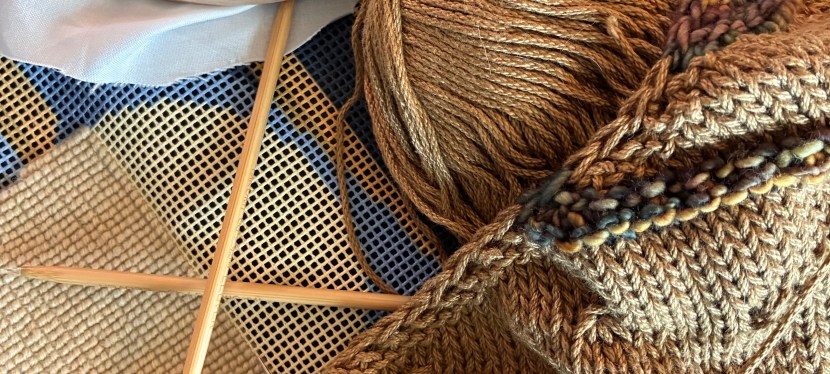
Sometimes even knitters need a break. I’ve set down my needles for a bit and picked up needlepoint — a portable, colorful craft that feels like fingerpainting with thread. After finishing the next-to-last draft of my new Prayer Shawl Chronicles novel, my brain needs a rest.

Do you ever get tired of knitting, even if it’s your primary hobby?

I’ve hit one of those times when I want to do “something else” for a little while — much like when I take a break from my beloved dance aerobics to do yoga, beach walks, or try something new. I always circle back to dance aerobics, and I always circle back to knitting.

Right now, though, I’m rediscovering needlepoint. It’s small, portable, and easy to do — almost like fingerpainting with thread and a needle. On a recent trip to Québec and Montréal, I tucked a little project into my bag and enjoyed the mindful rhythm of stitching in quiet moments. There’s something deeply satisfying about the relatively mindless rhythm of needlepoint: no designing, no choosing patterns, no counting stitches. Just color and thread.

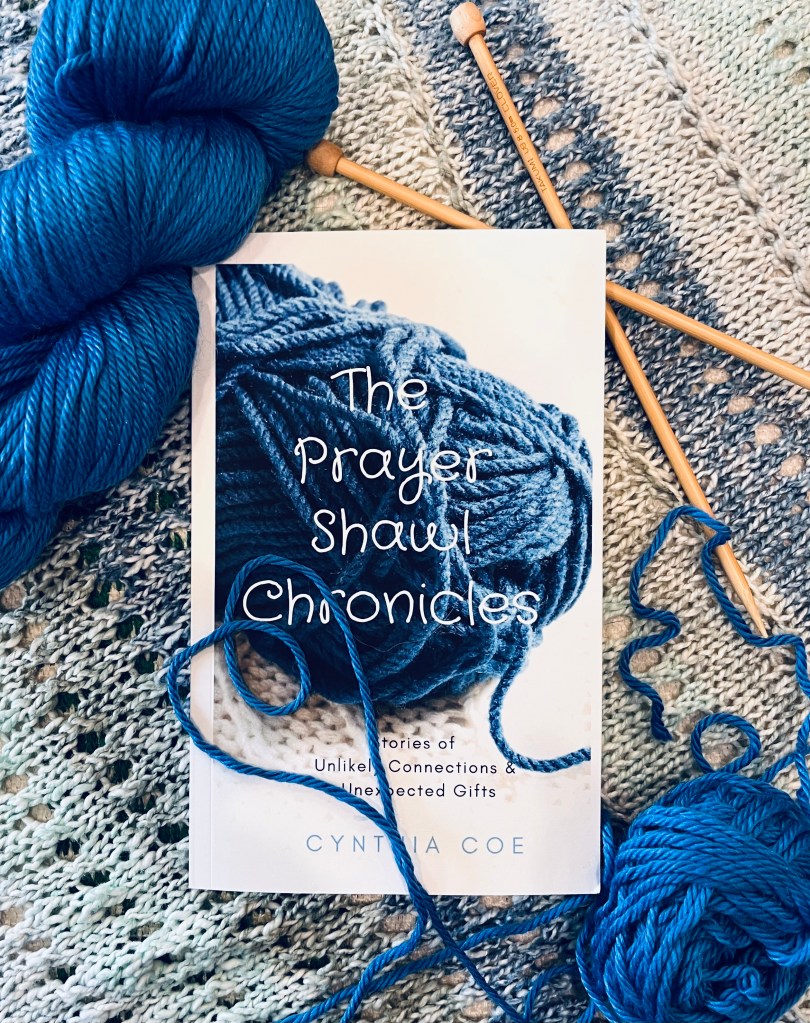
And here’s the real reason for this creative detour: my brain is fried. I’ve just finished the next-to-last draft of my new novel — the upcoming book in The Prayer Shawl Chronicles series. This story travels from Bruges to Sevilla, then across the ocean to Peru and Florida… and it has worn me out!

So for now, I’m resting my writer’s mind with a few easy stitches. But you know me — I’ll be back to knitting soon enough… 🧶…as soon as I finish the final draft of my new novel!

Cynthia Coe is the author of The Prayer Shawl Chronicles, a series of fictional stories woven together by the theme of human connections made through prayer shawls and the craft of knitting. Her newest book is her first historical novel, Knitting Through Time: Stories of How We Learned to Knit. Learn more by visiting her Author Page at this link

Why You Shouldn’t Be Embarrassed to Do “Granny Crafts”


If you’re a 20-something who knits, crochets, or embroiders—this is for you. Granny Crafts aren’t just for grannies. They’re quiet, powerful tools for stress relief, creativity, and deep comfort through every stage of life.

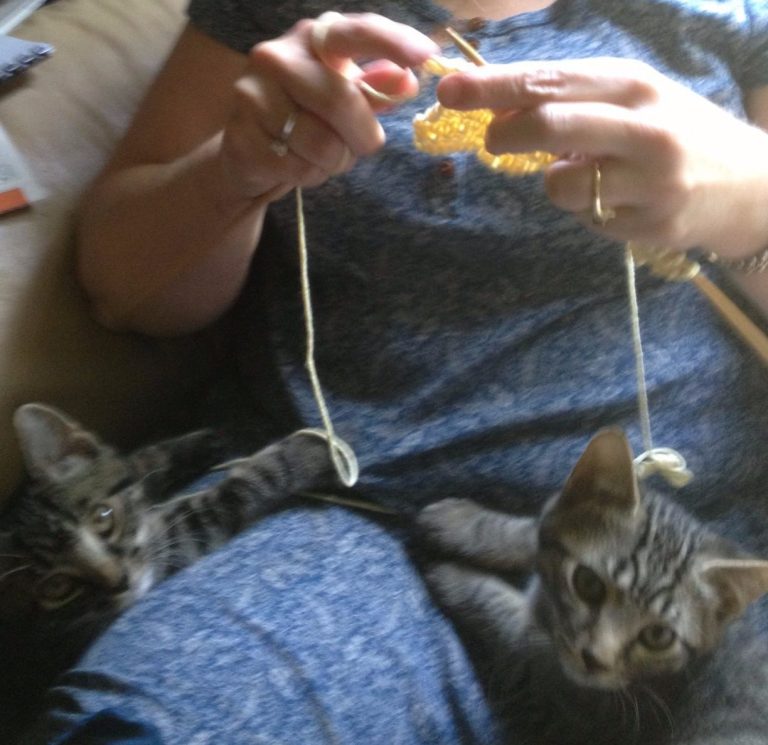
Cindy Knitting with Cats

Dear Young Crafty Kindred Spirit,

Lately, more and more people are talking about how young adults are embracing so-called “Granny Crafts”—and I love it.

If you’re here because you knit, crochet, embroider, or sew—or want to—you’re in good company. I’ve been knitting since I was a teenager myself. But it wasn’t until college, when stress started to weigh heavy on my shoulders, that I really picked it up as a coping mechanism. I’d sit in my dorm room or in a quiet corner of the student center, needles in hand, letting the rhythm of the yarn pull me back from the brink.

Some days, you just want everything—school, jobs, relationships, even the noise of the world—to go away for a while. I get it.

You were born into the digital age. My own kids got their first iPods in middle school and were among the first to start texting. Now, we all carry around little rectangles that buzz and ping and demand our attention 24/7. But here’s the secret: you can turn it off. Just for a few minutes. Really. The world won’t end.

And when you do? That’s when Granny Crafts work their quiet magic.

There’s no algorithm here. No pressure to go viral. No rush to the finish line. When you pick up a needle or a hook, it’s just you, your yarn, and your own rhythm. You can work slowly. Thoughtfully. Or set it down and pick it back up a month later. Granny Crafts are deeply human—analog, if you will. They exist on your terms, not someone else’s timeline.

You may not know it yet, but you’re building something far bigger than a handmade scarf. You’re building a lifelong tool for patience and comfort. Someday, you’ll find yourself stuck in medical waiting rooms. You’ll sit through school pickup lines or kids’ gymnastics practice. You’ll be at hospital bedsides or nursing homes, offering your presence when there’s nothing more you can do. Except this: stitch by stitch, you wait. You love. You breathe.

Granny Crafts give you something to hold on to when the rest of life feels uncertain. They will anchor you when stress comes crashing in, and they will accompany you through every phase of adulthood with grace and beauty.

Welcome to the circle. You’re not alone.

With love and yarn,
Cindy
Knitter, writer, and lifelong lover of “Granny Crafts”

If you’re looking for stories of other women—young, old, and in-between—who have walked that road, I invite you to follow my blog and check out my novels. I write about knitting, community, and faith in a world that is often spinning too fast. Sometimes, we need the quiet power of yarn and human connection to slow it down.

Cynthia Coe is the author of The Prayer Shawl Chronicles, a series of fictional stories woven together by the theme of human connections made through prayer shawls and the craft of knitting. Her newest book is her first historical novel, Knitting Through Time: Stories of How We Learned to Knit. Learn more by visiting her Author Page at this link

Creativity as a Spiritual Practice—Whether You Knit or Not

Whether you knit, write, bake, or daydream—your creative life might be more spiritual than you think.

In my life, creativity has always been more than a hobby. It’s a way of slowing down, listening deeply, and connecting with something greater than myself. Whether I’m holding knitting needles, writing a chapter, or just dreaming up new ideas, the creative process becomes, for me, a kind of prayer.

I’ve found that creativity invites us into stillness. Into presence. Into wonder. It doesn’t have to look like a finished project or a gallery-worthy painting. It can be quiet, even hidden—a moment of beauty in an ordinary day. Maybe it’s the way colors come together on your needles. Or the way a sentence finally says what your heart has been holding.

You don’t have to be a knitter to experience this. Whether you bake bread, write sermons, arrange flowers, doodle in the margins, or simply take time to notice the sacredness in the world around you—that’s creativity. And when we approach it with reverence, it becomes spiritual.

As a writer and lifelong maker, I often explore how creativity weaves its way through both daily life and sacred space. I reflect on themes of faith, prayer, and making meaning—on and off the page. Creativity, after all, isn’t about perfection. It’s about presence.

If that speaks to you, I invite you to follow more of my reflections at www.sycamorecove.org or on Facebook at www.Facebook.com/CynthiaCoeAuthor. I’d love to share this journey with you.


Cynthia Coe is the author of The Prayer Shawl Chronicles, a series of fictional stories woven together by the theme of human connections made through prayer shawls and the craft of knitting. Her newest book is her first historical novel, Knitting Through Time: Stories of How We Learned to Knit. Learn more by visiting her Author Page at this link

Knitting and the Spontaneity and Relaxation of Travel

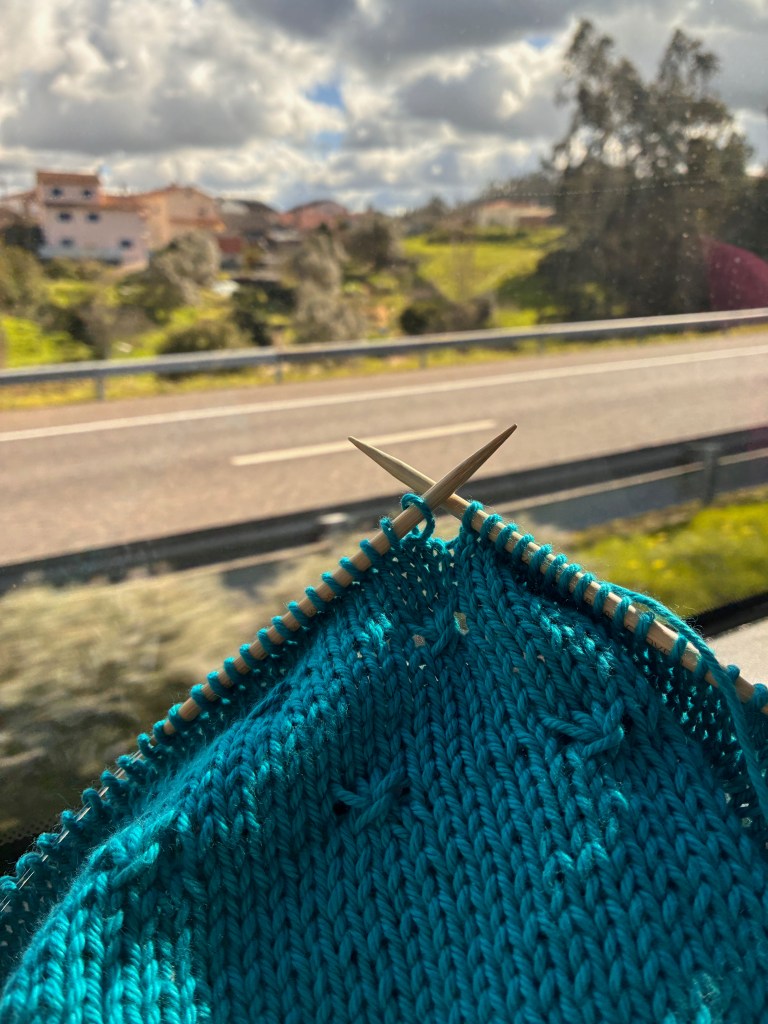
I just returned from a vacation tour of Portugal. Some of my most relaxing moments involved sitting on the bus, knitting and watching the budding vineyards and olive orchards of the Portuguese countryside go by.

This was my first big trip overseas by myself. I had gone with school groups, with family, and with my husband, but never alone. And I loved it.

I found a tour company that offered “solo” tours for those of us who are widowed, divorced, or traveling alone for any reason. I eagerly booked a trip to Portugal, a place I had never been. That was part of the fun, discovering and exploring a country I knew little about and making memories solely mine.

As a knitter, I naturally researched and found yarn shops in Porto and Lisbon, thinking I’d pay them a visit and maybe blog and post photos of these new-to-me shops. However, that didn’t happen. My tour kept me on my feet and exploring all kinds of sights, sounds, and activities I would never have discovered on my own. I took naps during the few hours of downtime in those cities, never getting around to finding those yarn stores.

Yet I found a wonderful yarn store without any planning or looking at all. While walking around a lovely pedestrian street in the old part of Coimbra, an ancient university town, I happened to find one right smack in front of me. I stepped in to find two entire walls of the shop stuffed with bins of brightly colored Portuguese wool, available for far less than I would have paid in the US. I eagerly purchased three skeins of wool yarn in a mustard yellow color, the same used to decorate tiles and houses in this town and in many other parts of Portugal. I learned that the use of this yellow color was introduced by the Moors centuries ago to symbolize happiness and sunshine – just the color to symbolize my adventure here, too.

Why only three skeins? I wanted a project just for this trip. I wanted a small, manageable knitting project I could work on in the bus, as I relaxed at the hotel before going to bed, and maybe even on the long plane ride going home. And that it was. I made a shawl, using a memorized pattern and favorite stitch combinations, constructing my own personal souvenir of a green and pleasant land feeding me with healthy and delicious food, green wines, and the charm of centuries past.

I will have this shawl for the rest of my life, the sunny yellow of the wool reminding me of a perfect day in Coimbra, eating pastel de nata (custard pastries!) and milky coffee for lunch, strolling the streets with new friends and happening upon a yarn shop, walking down cobblestone streets to visit a cathedral I swear I’d already seen while writing a scene in a novel under construction.

I’ll remember quiet drives on that big comfortable bus with a seat to myself, calming and pleasantly knitting that yellow shawl, glancing up now and then to see the vineyards budding in the springtime, my mind forgetting anything anywhere else.

With blessings for calm, quiet knitting…wherever you may find yourself, Cindy


Cynthia Coe is the author of The Prayer Shawl Chronicles, a series of fictional stories woven together by the theme of human connections made through prayer shawls and the craft of knitting. Her newest book is her first historical novel, Knitting Through Time: Stories of How We Learned to Knit. Learn more by visiting her Author Page at this link

Knitting Together Faith, History, and Community: The Prayer Shawl Chronicles Series

Knitting is much more than crafting a beautiful piece of fabric. It’s about weaving together threads that, on their own, may seem ordinary, but when intertwined, form something greater—something full of meaning and purpose. That’s exactly how I view my series, The Prayer Shawl Chronicles.

While each book stands alone, much like individual strands of yarn, together they create a rich, interconnected story that spans generations, cultures, and the deep role of faith in our communities. My goal with this series has always been to show how knitting, community, and faith intertwine, much like the stitches of a prayer shawl, creating warmth and connection where it’s needed most.

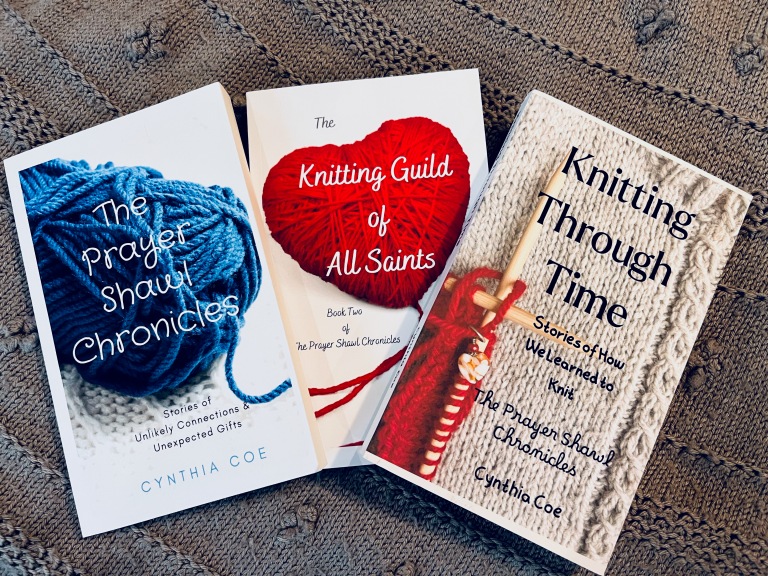
In the first book, The Prayer Shawl Chronicles, we dive into the close-knit (pun intended!) relationships within a small church, where knitting isn’t just a craft—it’s a form of spiritual and emotional support. The women of the church use their knitting needles to form bonds, offer prayers, and express love.

The second book, The Knitting Guild of All Saints, broadens this view, taking readers deeper into the history of a community knit together by faith and a shared love of creating. The guild connects across time, showing how past and present come together to form a lasting legacy through their works of kindness, friendship, and artistry.

Finally, Knitting Through Time steps fully into historical fiction, weaving a tale that travels through different eras, illustrating how the act of knitting—and faith—has long been a thread that connects generations. It’s a tribute to those who came before us and the ways they influenced not just their world, but ours today.

I encourage you to read each of these books not only for their stand-alone stories but also to experience how they interlace into one powerful narrative of faith, knitting, and community. These are stories of people much like us, who find strength in faith and fellowship—and who just so happen to have a love for knitting along the way!

Happy reading, and as always, happy knitting!

Cindy

Cynthia Coe is the author of The Prayer Shawl Chronicles, a series of fictional stories woven together by the theme of human connections made through prayer shawls and the craft of knitting. Her newest book is her first historical novel, Knitting Through Time: Stories of How We Learned to Knit. Learn more by visiting her Author Page at this link

How Did Knitting Become A Worldwide Craft? Quick and Fun History Lessons on How We All Learned to Knit

When you think of where knitting originated, you might guess the Netherlands, Norway, Scotland, or some other cold place. But Spain and Egypt? Really???

Where did the beloved craft of knitting get started? When I first picked up a history of knitting, I imagined knitting began somewhere around the North Atlantic, like the Scandinavian countries. The word “knitting” comes from the Old English word *cnyttan,* which means “to knot.” This term is derived from the Old Norse word *knúta,* meaning “knot” or “tie.” Over time, the term evolved into the modern English word “knitting.”

Does this mean the Old Norse developed knitting? Nope. Western Europe got its knitting from the Spanish. History Lesson! Through a whole bunch of royal marriages, Spain got control of Belgium and the Netherlands in the early 16th century. What does that have to do with knitting? The Spanish brought their culture – including knitting – to the low countries when they set up their courts and started a hearty trading economy between Spain and the low countries and the rest of the known world at that time. Spain ruled the waves during this time in history.

My book, Knitting Through Time, imagines how exactly all this knitting knowledge got from Egypt to Spain to Belgium to Britain to America. No one knows exactly how this happened, but yours truly used the power of historical fiction to take a stab at suggesting likely possibilities. 

Where did the Spanish get knitting? History Lesson Number Two! The first evidence we have of knitting in human history was in Egypt, of all places. (Yes, it’s hot there, but they had wool and figured out how to make socks earlier than anyone else. Think “cold nights in the desert.”) And then…History Lesson Number Three!..in 711 A.D., the Moors of the Middle East and North Africa (including Egypt) invaded Spain. The Moors took their knitting with them and left a solid culture of knitting there with the Visigoths, eventually intermarrying with them to form the modern Spanish culture. 

After writing this book, I felt I had left out a huge hole in the history of knitting that came from South America. Many of our luxury yarns now come from Peru, Uruguay, and other places in South America. Crafters in these countries have long, proud histories of gorgeous, advanced knitting techniques using high quality wool from sheep and alpaca they raise. So they likely developed their own knitting techniques, right? Nope. Spain again. 

When the Spanish invaded South America (much like the Moors invaded Spain centuries before), they took their knitting with them. It’s likely that the Roman Catholic nuns who set up shop to teach the indigenous peoples European ways of doing things introduced the craft of knitting to South American peoples. While weaving with wool was widely practiced to make beautiful garments and household items in South America since the beginning of human history there, the knitting skills now widely practiced there came from the Spanish. 

So the next time you think of knitting as a product of cold weather cultures – Norway, Scotland, Holland – think warm thoughts instead. The History of Knitting is all about Spain! 

Happy Knitting Through History! Cindy

Cynthia Coe is the author of The Prayer Shawl Chronicles, a series of fictional stories woven together by the theme of human connections made through prayer shawls and the craft of knitting. Her newest book is her first historical novel, Knitting Through Time: Stories of How We Learned to Knit. Learn more by visiting her Author Page at this link

Introducing “Knitting Through Time” – Book 3 of The Prayer Shawl Chronicles

How did human beings learn to knit? Historians have no idea! So I made up a whole book of stories -based on historical facts- to suggest how we as a civilization learned how to make fabric from two sticks and a ball of yarn.

Who invented knitting? No one has any idea. Knitting first appeared in Egypt, as far we can tell. It next showed up in Spain, then spread throughout western Europe and onto the Americas as Europeans settled and colonized the New World. But how exactly did all that happen? What’s the story?

Those are the questions I set about answering in my latest novel, Knitting Through Time. As a fan of early Christian history and of the “Desert Mothers,” I had to think these women could have had a hand in the development of knitting. After all, they lived in Egypt about the time knitting developed, had lots of time on their hands, and did in fact do a bit of crafting to support themselves. So of course, one of my main characters is an aristocratic woman from Rome, Seraphina, who goes out into the Egyptian desert (wearing a blue silk dress, servants in tow) and has a fortuitous accident that just might have invented our beloved craft of knitting. (She also grows spiritually by leaps and bounds and befriends one of the famous saints.)

The action of my novel also takes place in Toledo, Spain, as the Moorish invasion of this region almost certainly brings knitting to Europe. But how exactly did that happen? In my imagined version of history, a young Visigoth girl named Hilda learned about knitting after the Moors put her to work washing their socks. Her descendants then took knitting to Bruges, Belgium and beyond as the Spanish court set up shop in Northern Europe. From there, the Dutch knitters of the Netherlands may very well have taken knitting to New Amsterdam and the Americas. A storyline featuring Anna, a young widow begrudgingly living with a community of Beguines in Amsterdam, shows how she and her knitting needles ended up in what is now New York City. (Who are the Beguines? You’ll find out!)

And how is this all connected to the first two novels in the Prayer Shawl Chronicles? Remember Nan, the “Quiet One” in book one and a late addition to the Prayer Shawl Guild of All Saints Church in book two? She takes center stage in book 3 and tells us how she learned to knit at the famous Woodstock festival in 1969 and what happened next. She ends up in Amsterdam, Bruges, Paris, and Egypt, too! How? You’ll have to read the book. 

Tying all these stories together is a fun twist I wove throughout the book. You won’t know exactly what it is until the last couple of pages. So if you read something in the book and think, “that’s weird,” stay tuned! It will make sense at the end. (And…pssst!…if you read the thumbnail histories in the very back of the book, you MIGHT get a glimmer of this mysterious twist I put in the book.)

As a history major at the University of Tennessee a long, long time ago, I absolutely LOVED writing this book. With all the new online tools available now, I could research all kinds of obscure facts easy, peasy and within moments. I have actually visited almost all of the locations in this book (Toledo, Bruges, Amsterdam, New York, Paris), so it was a pleasure to write a book that tied together all these journeys made over a lifetime. 

I hope you enjoy reading my new book as much as I enjoyed writing it! If you’re part of a book club or church group, there’s Questions for Discussion at the end of the book. (I’m a former Christian education curriculum developer; it’s what I do.) If you’re a history buff, I’ve also included a section at the back of the book giving brief descriptions of what was going on at the times and places portrayed in the book, along with a discussion of the Desert Mothers and Fathers of Egypt and the Beguines of western Europe.

Happy Reading and Happy Knitting! Cindy

Cynthia Coe is the author of The Prayer Shawl Chronicles, a series of fictional stories woven together by the theme of human connections made through prayer shawls and the craft of knitting. Her newest book is her first historical novel, Knitting Through Time: Stories of How We Learned to Knit. Learn more by visiting her Author Page at this link

Women’s History and the History of Fabric-Making (Spoiler Alert: It’s the Same Thing)

Did you know that if you lived just a couple of hundred years ago – and any time before that – and you’re a woman, you would have spent much of your life making fabric? Yes, we as women still do much of the cooking and cleaning in our families, though the men in our lives and households do much, much more than they did prior to the 1970’s. We still cook, and some of us even enjoy it.

Many of us still enjoy making fabrics by knitting, crocheting, or weaving. We might enjoy sewing, making quits, or even making our own clothes. But up until recently in human history, the making of fabric was no hobby. It was work and important work at that. And if you were a woman, it would have been one of your primary occupations.

As I’ve researched the history of knitting for my next book in The Prayer Shawl Chronicles, I’ve discovered these truths, and it’s changed the way I look at fabrics. In our current culture, we barely give a thought to the fabrics we wear, use to bathe, sit upon, or trod upon. Yet someone made these fabrics. The raw materials came from some place, somewhere in the world. Someone – likely other women, working in not great conditions and for low wages – worked at the factories that turn out the cotton, synthetic, wool, silk, and all other fabrics we likely take for granted.

In my novels, you’ll see characters knitting for solace, for quiet time, and as an aid to spirituality. Yet in real life, women also knitted to survive the cold, to keep themselves and their families warm. I hope to convey this reality in my next novels, and I hope you’ll take a moment to appreciate all those mechanized and digitized looms, yarn spinners, and dying machines that means we as 21st century women get to simply knit…for fun. 

Interested in the history of fabric making? Here are my go-to recommendations: 

The History of Fabrics and Cloth Making

Women’s Work, The First 20,000 Years: Women, Cloth, and Society in Early Times by Elizabeth Wayland Barber (W.W. Norton & Company, Inc., 1995).

Fabric: The Hidden History of the Material World by Victoria Finlay (Pegasus Books, 2022).

The Fabric of Civilization: How Textiles Made the World by Virginia Postrel (Basic Books, 2020).

Worn: A People’s History of Clothing by Sofi Thanhauser (Vintage Books, 2022).

Happy Reading! Cindy

Follow this blog for impending news of a new novel in The Prayer Shawl Chronicles!

Cynthia Coe is the author of The Prayer Shawl Chronicles, a collection of interrelated short stories about knitters and those they meet through knitting and sharing prayer shawls. 

Be sure to check out my newly published A Prayer Shawl Handbook: Inspiration and Resources for Your Prayer Shawl Ministry, now available in paperback and e-book editions and included in Kindle Unlimited.

How Did You Learn to Knit? There’s a Story There

My own story of learning to knit is a story of learning a few basics from my mother, then learning so much more on my own and from other women.

How did you learn to knit? You likely could tell the story of a fundamental relationship in your life in answering this question. You may have learned from your mother, your grandmother, or another relative who took the time to spend with you, teaching something that stick with you the rest of your life. Or if you’re younger, this may be a story of finding yourself bored during the pandemic and using tech tools, like an online course, to teach yourself an ancient craft. In any case, as a novelist, I can assure there’s a rich story there.

My own story of learning to knit begins in Kingsport, Tennessee, as a teenager. I learned to cast on, knit, and cast off. She told me the story of making one and only one knitted blanket while my father had surgery on his lung, to remove inhaled debris from his childhood. I imagine her knitting away during the long hours of his surgery and recovery. 

My mother only knew the knit stitch, so I didn’t learn to purl until much later. My mother taught me what she knew, which she almost certainly learned from her own mother. I imagine this grandmother I never knew knitting to calm her fears while my grandfather, a doctor, served in a medical unit in Europe during World War II. 

I continued learning to knit as an undergraduate at the University of Tennessee. I struggled with anxiety and figured out that knitted helped to calm me. I sought out more advanced knitting skills from a local knit shop in Knoxville, The Knit Wits. There, two elderly women taught me how to purl, increase and decrease, and eventually to make an actual sweater. I never looked back. This was a story of finding myself and learning to seek out guidance and knowledge from those outside my own family, as I did elsewhere in my life during those college years. 

By my mid-twenties, I became fully autodidactic. I learned to learn all kinds of things all by myself. That’s one thing I learned in law school – if you’re trying a case on something you know nothing about (medical procedures, auto parts, you name it), you hit the books and figure it out. Knitting was no different. While snowed in from law school one winter, I figured out how to knit cables. I became a self-learning student for life.

What’s your knitting story? What does your story tell you about yourself? 

Stay tuned for my next book in The Prayer Shawl ChroniclesKnitting Through Time: Stories of How We Learned to Knit. In this novel, I imagine how we as a civilization learned to knit over the centuries. This is my first foray into historical fiction, and I’ve had a ball with it. I hope you’ll enjoy it, too! 

Blessings, Cindy

Cynthia Coe is the author of The Prayer Shawl Chronicles, interrelated short stories woven around those who make and receive handmade, prayerfully crafted gifts of prayer shawls. Click this link to order or for more information. 

Write Your Own Knitting Patterns? Yes, You Can!

Inside: My story of how I wrote my first knitting patterns

You’ve made lovely hand-knitted sweaters and scarves. You have a go-to blanket pattern etched in your head. You constantly hear, “what pattern is that?” and you sheepishly say, “uh…I just made it up.” Then you hear, “no kidding? You should publish that!”

Yes, you should. And with a plethora of self-publishing and crafty platforms available to everyone, you absolutely can publish anything you want, including your own knitting patterns.

But how to get started?

Reader, I faced this problem just a couple of months ago. In writing my upcoming new book, “A Prayer Shawl Handbook,” I knew I had to provide some basic prayer shawl patterns for my readers to truly call this book a comprehensive handbook for this crafting ministry. 

A Sneak Preview of Cindy’s Upcoming New Book, “A Prayer Shawl Handbook”

I have several “go-to” prayer shawl patterns in my head – patterns I don’t even think about and can simply cast-on and knit. But write these down???? Gasp. I’m not a technical writer by any stretch of the imagination. Fiction writing and knitting pattern writing are not, in my poor little mind, in the same skill set. 

How to get started? Try. Sit yourself down, pull out a pencil and a blank sheet of paper, and take your first stab at it. 

What about formatting your pattern?

Fortunately, a new book called “The Knitting Pattern Handbook: How to Write Great Patterns That Knitters Will Love to Make” by Kristina McGrath and Sarah Walworth has just been published, and I was fortunate enough to be given an advance copy for review by the publisher.  What timing! I gulped down this little book and decided, yes, I could do this.

I cast on my favorite memorized patterns and took notes as I went along. I ripped out, re-figured, crumbled up and tossed some early drafts in the trash can. But I persevered until I got some basic prayer shawl patterns knocked out, along with three prayer patch patterns. 

Yes, there are formats you need to use and abbreviations you need to adhere to. You probably recognized them from your own knitting projects you’ve made from other people’s patterns. You just need to focus on these things and make sure you’re consistent.

My tip: don’t skip steps or assume the reader of the pattern knows everything there is to know about knitting. Especially if your patterns are geared towards beginners (which mine are), something you think is obvious may not be. 

Get friends to help proof and test your draft patterns

This is where it gets really terrifying, in my experience. You hand off your draft pattern to a trusted fellow knitter and see if they come up with what you came up with. They may say, “this makes no sense whatsoever.” They may say, “I just don’t understand what you mean by a yarn-over. What is that?” You go back to the drawing board and explain the details you thought you included but didn’t. 

The authors of the new Knitting Pattern Handbook suggest that you hire technical editors and pay them for proofing and revising your patterns. Did I do this? No. I’m just starting out, and I can’t justify shelling out a lot of money for some basic patterns. Friends who knit told me what I needed to know. If I get the notion to start designing intricate sweaters in five different sizes, I’ll certainly re-think and probably get professional help. But as a newbie knitting designer, that’s not where I am.

Everybody starts with the basics

Where I am as a knitting designer is at the beginning. I have some basic patterns that are great for beginners and for simple “meditative” knitting. These are patterns I’d like to share with my readers, so I will. 

If you, too, have some basic knitting patterns you’d like to at least share with friends, go for it! If you’d like to get into the knitting design business and make a few bucks (or a lot!), go for that, too! Every knitting designer starts somewhere, likely with a nice, basic design. And you can, too!

Blessings on your knitting designs, no matter how intricate or basic! Cindy

Cynthia Coe is the author of The Prayer Shawl Chronicles, interrelated short stories woven around those who make and receive handmade, prayerfully crafted gifts of prayer shawls. Click this link to order or for more information. 

Follow me and subscribe for news of my upcoming new books!

As an Amazon Associate and Author, I provide links to products (including books I have written) and earn a very small fee if you click on the links and buy something. There is no additional charge to you!