How Knitting Traveled to the Americas (and Inspired My New Novel)

Knitting didn’t arrive in the Americas by accident—it traveled hand to hand, carried by women across oceans and generations.

As knitters, we know that techniques don’t live in books alone. They live in muscle memory, in watching someone else’s hands, in doing the same small motions over and over until they become part of us. Long before knitting patterns were printed or standardized, knitting moved through the world the same way people did—by necessity, memory, and care.
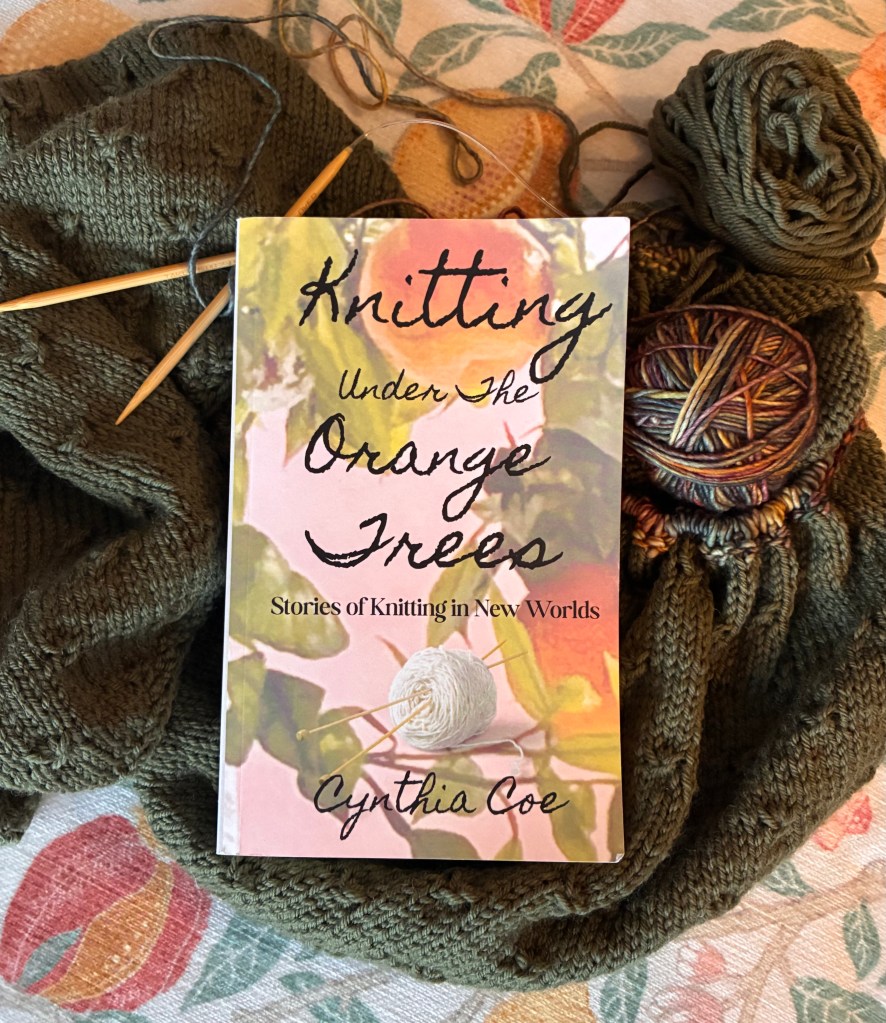
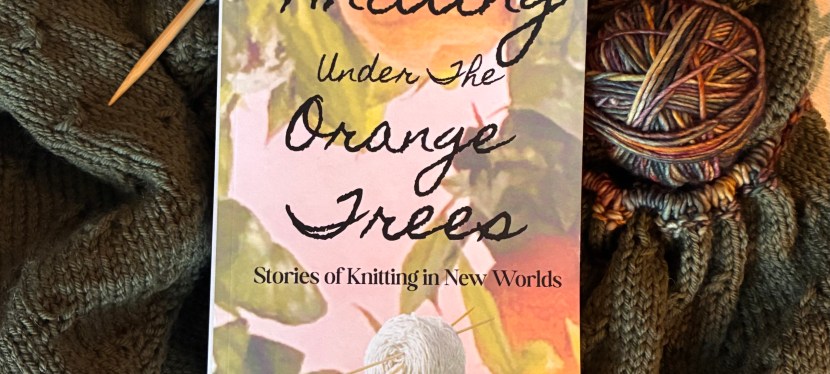
That history is what inspired my newest historical novel, Knitting Under the Orange Trees.

The story imagines how knitting traveled from Europe to the Americas during the sixteenth century—not through official records or trade documents, but through the daily lives of women. Women who packed little more than what they could carry. Women who brought practical skills with them: how to make clothing, how to keep others warm, how to create something familiar in an unfamiliar place.

In Knitting Under the Orange Trees, knitting is not a hobby. It is essential work. It happens in homes, convents, on ships, and in new settlements where warmth and clothing could mean survival. The novel explores how textile knowledge—quiet, often overlooked—helped shape early communities in the New World.

If you’ve read Knitting Through Time, this novel continues that world and deepens its history. If you haven’t, you can enter the series here, just as you would a new project: by picking up the needles and beginning.

Knitting has always been more than yarn and stitches. It is a way women have cared for one another, preserved knowledge, and carried home with them—no matter how far they traveled.

🧶✨ Knitting Under the Orange Trees is now available in paperback and e-book editions at this link. It is also included in Kindle Unlimited.

You can explore Knitting Under the Orange Trees and the full Knitting Through Time series at this link.  ✨🧶

I hope you enjoy this book! I truly LOVED writing it!

Blessings, Cindy

Cynthia Coe is an author, blogger, and avid knitter. Her books are available in paperback and e-reader edition on Amazon.com. Visit her Author page and follow this blog for more info and news.

The History in Our Knitting Hands

Knitting isn’t just a craft — it’s a way of holding onto history, one stitch at a time.

When we think of “history,” our minds usually go to big things: wars, presidents, protests, politics. But I’ve always been drawn to another kind of history — the quiet kind. The kind that unfolds not in the headlines, but in our homes, in our habits, and in our hands.

This is the history of daily life — what historians sometimes call “social history.” It’s the way people cook, gather, raise children, earn a living, and yes, knit. These are the changes that truly shape how we live, and I believe they matter just as much (if not more) than what’s in the textbooks.

Take the pandemic. Almost overnight, we changed how we shop, work, and interact. We got used to takeout and tracked packages, remote work and video calls. But we also learned to treasure quiet, in-person moments — time with loved ones, and time with ourselves.

As a knitter, I couldn’t help but notice something else: people returned to crafts. Knitting, crocheting, sewing — all the “granny crafts” came back into fashion. These slow, thoughtful traditions gave us something tangible to hold onto in a world that felt unsteady.

That’s no accident. In every time of upheaval, people turn to the familiar. And handcrafts like knitting carry history with them — not the kind of history with dates and battles, but the kind that teaches patience, resilience, and care.

We’ve seen this before. When factories replaced handwork, when knitting mills replaced home spinners, when the internet replaced handwritten letters — we gained speed, but we lost something too. We lost the rhythm of slow work. The connection between hands and heart. The quiet pride of making something, stitch by stitch.

The history I care about most lives in everyday changes like these.
That’s why I write about them, and why I keep knitting through them.

So if you’re someone who’s ever picked up a pair of needles and felt like you were joining a long line of women (and men) who made beauty out of necessity — you’re not just crafting. You’re preserving a kind of history. And that’s something worth holding onto.

Cynthia Coe is the author of The Prayer Shawl Chronicles, a series of fictional stories woven together by the theme of human connections made through prayer shawls and the craft of knitting. Her newest book is her first historical novel, Knitting Through Time: Stories of How We Learned to Knit. Learn more by visiting her Author Page at this link

As an Amazon Associate and Author, I provide links to products (including books I have written) and earn a very small fee if you click on the links and buy something. There is no additional charge to you!

Patterns in Nature, Patterns in Fiber Arts

Why do some knitting patterns just “look right”? Where could you find inspiration for designing your next fiber arts project?

Look no further than Mother Nature herself! Certain patterns are found time and time again in nature. Intuitively, we are already hard-wired and attuned to recognizing these patterns. So if you find yourself stumped for design ideas or a pattern that’s sure to please, here are design elements found in nature and their knitting or other fiber arts equivalents.

The Wave: This pattern lends itself easily to the inherently linear nature of knitting. Most knitting patterns are done in rows, and rows are akin to long, thin waves. These waves can have crests and dips, interruptions and smooth sections – just like many knitting or crochet rows.  If you’re knitting in any kind of garter stitch pattern or with other repetitive lines, you’ve got your wave.

A pattern in nature related to the Wave includes the Meander pattern. Think a pathway, river, or snake. Though our finished products in knitting and other fiber arts usually no longer meander, our yarns certainly meander from our skeins to our needles as we’re working!

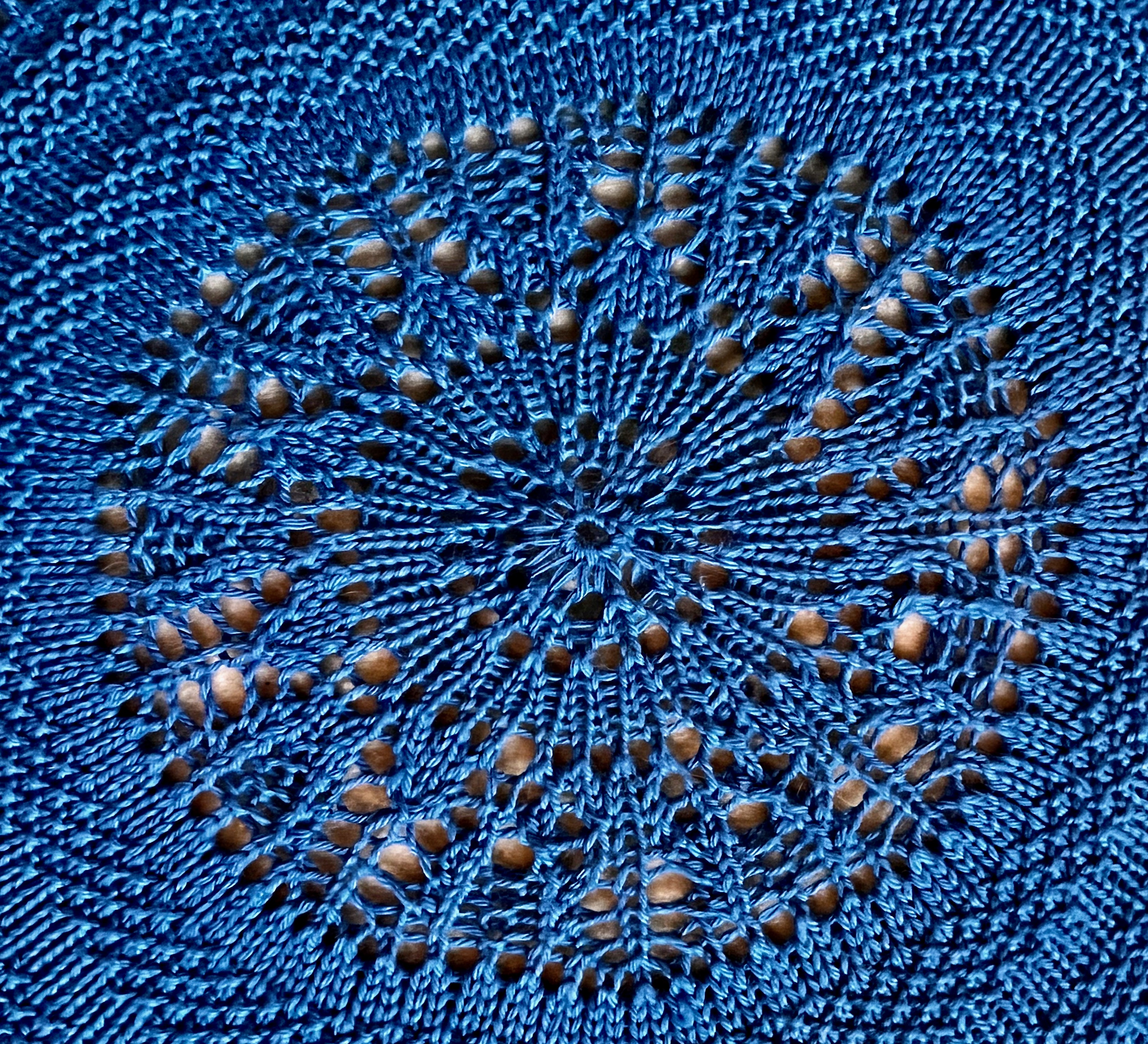
The Burst: Think of the iconic photograph of a drop of milk making a round, crown shaped pattern. Or the shape of a daisy or other flowers or plants “bursting” with a central point. This circular pattern is a bit trickier for knitters. Making a circular pattern with double pointed needles can be fiddly and, in my opinion, is a rather advanced skill. But if you want to knit to impress, this would be your “wow” pattern. This pattern is much easier in crochet, and many crochet patterns feature increasing numbers of stitches starting from a small space. 

The Spiral pattern is similar to the Burst pattern. Both are round patterns, with the spiral meandering around and around instead of making a round burst from a central point. Spirals are more often found in crochet patterns than knitting. 

Fractals: Think branches of a tree or other plant, fractals branch out from a central line, just as tree limbs or leaves branch out from a stem or trunk. We see a lot of fractals in embroidery and other fiber arts using decorative stitches. Many more advanced knitting stitches do feature fractals that mimic plant leaves. These are sure to give your design a nod to nature.

Cells and Bubbles: Cells are the building block of nature, so cell-like designs are often found in all finds of knitting, crochet, and other fiber arts. They may take the form of holes or spaces in our stitches, or we may make block-like patterns in our colorwork or stitching. Think moss stitch in knitting or even basketweave. Bubbles are similar to cell patterns and can give a pattern the feel of fun and joy. 

These patterns are all around us – in our own bodies, in plants, and in the heavens. We know these patterns; we recognize these patterns. Take a look at your favorite fiber arts patterns some time. What do you recognize from the natural world?

Enjoy Your Fiber Arts Designing…and Time in Nature! Cindy

Cynthia Coe is the author of The Prayer Shawl Chronicles, a collection of interrelated short stories about knitters and those they meet through knitting and sharing prayer shawls. 

Be sure to check out my newly published A Prayer Shawl Handbook: Inspiration and Resources for Your Prayer Shawl Ministry, now available in paperback and e-book editions and included in Kindle Unlimited.