The History in Our Knitting Hands

Knitting isn’t just a craft — it’s a way of holding onto history, one stitch at a time.

When we think of “history,” our minds usually go to big things: wars, presidents, protests, politics. But I’ve always been drawn to another kind of history — the quiet kind. The kind that unfolds not in the headlines, but in our homes, in our habits, and in our hands.

This is the history of daily life — what historians sometimes call “social history.” It’s the way people cook, gather, raise children, earn a living, and yes, knit. These are the changes that truly shape how we live, and I believe they matter just as much (if not more) than what’s in the textbooks.

Take the pandemic. Almost overnight, we changed how we shop, work, and interact. We got used to takeout and tracked packages, remote work and video calls. But we also learned to treasure quiet, in-person moments — time with loved ones, and time with ourselves.

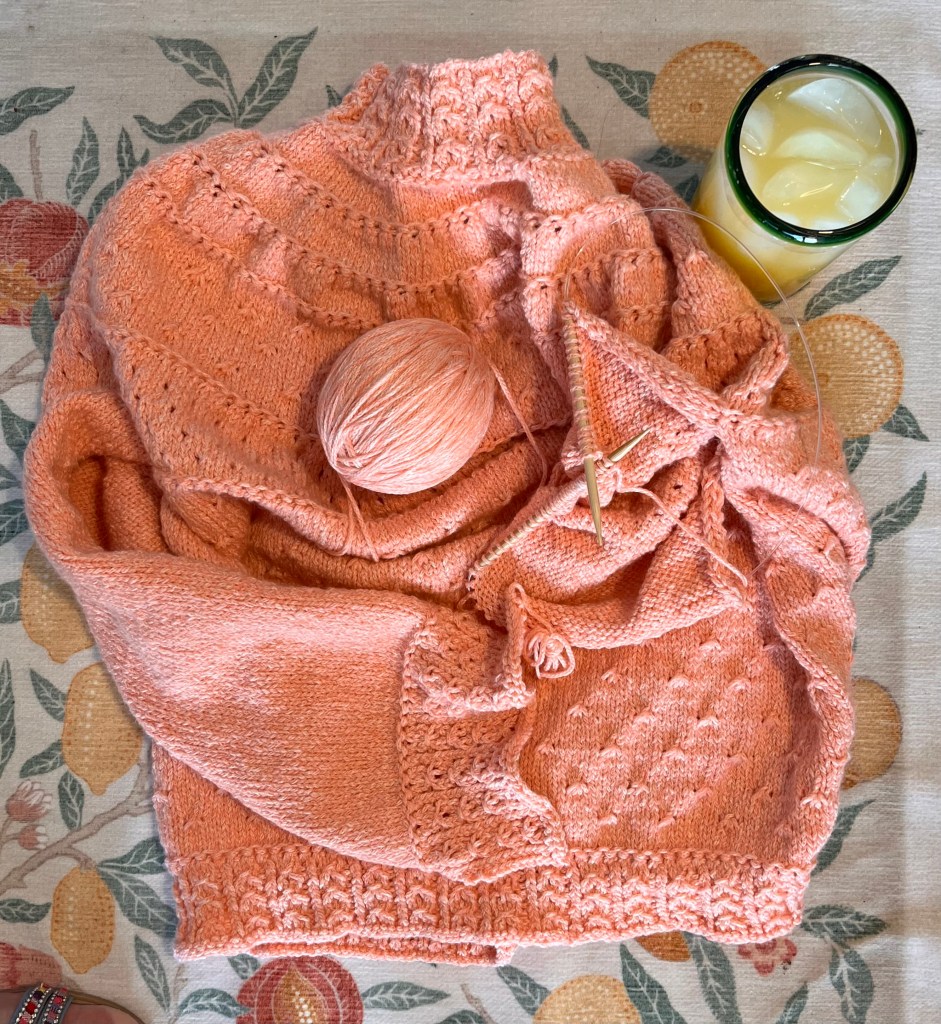
As a knitter, I couldn’t help but notice something else: people returned to crafts. Knitting, crocheting, sewing — all the “granny crafts” came back into fashion. These slow, thoughtful traditions gave us something tangible to hold onto in a world that felt unsteady.

That’s no accident. In every time of upheaval, people turn to the familiar. And handcrafts like knitting carry history with them — not the kind of history with dates and battles, but the kind that teaches patience, resilience, and care.

We’ve seen this before. When factories replaced handwork, when knitting mills replaced home spinners, when the internet replaced handwritten letters — we gained speed, but we lost something too. We lost the rhythm of slow work. The connection between hands and heart. The quiet pride of making something, stitch by stitch.

The history I care about most lives in everyday changes like these.
That’s why I write about them, and why I keep knitting through them.

So if you’re someone who’s ever picked up a pair of needles and felt like you were joining a long line of women (and men) who made beauty out of necessity — you’re not just crafting. You’re preserving a kind of history. And that’s something worth holding onto.

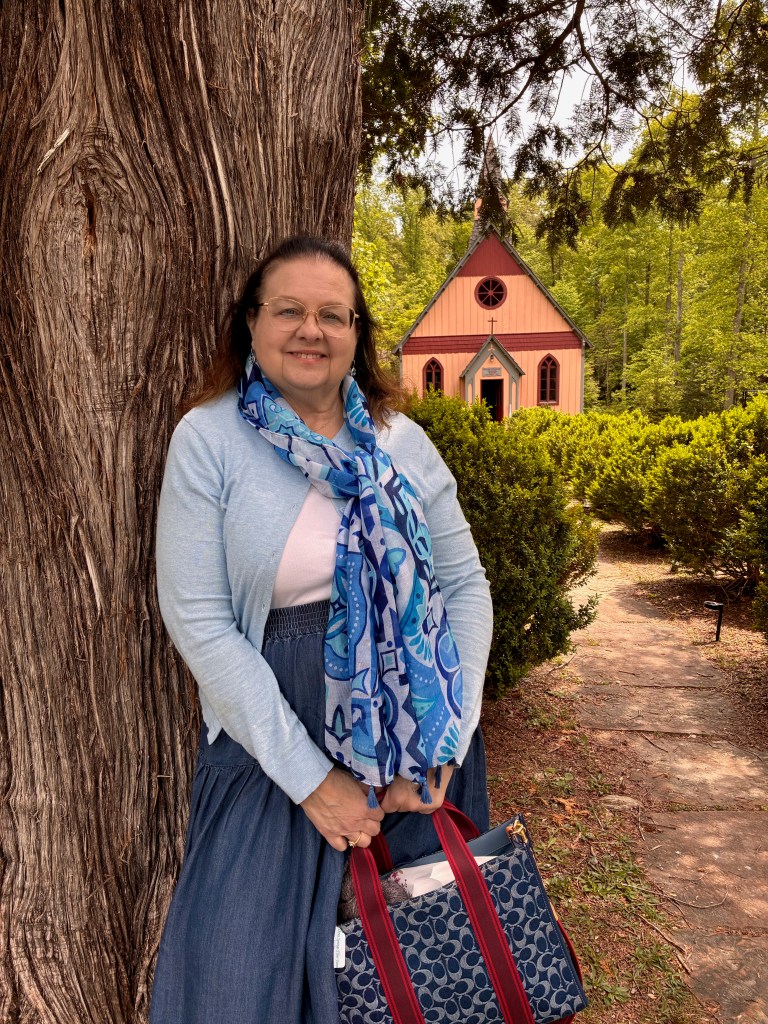
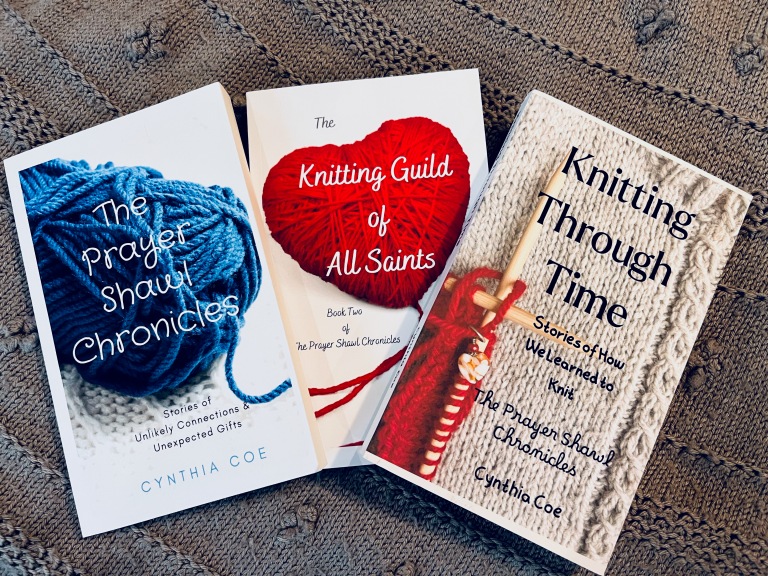
Cynthia Coe is the author of The Prayer Shawl Chronicles, a series of fictional stories woven together by the theme of human connections made through prayer shawls and the craft of knitting. Her newest book is her first historical novel, Knitting Through Time: Stories of How We Learned to Knit. Learn more by visiting her Author Page at this link

As an Amazon Associate and Author, I provide links to products (including books I have written) and earn a very small fee if you click on the links and buy something. There is no additional charge to you!

Why You Shouldn’t Be Embarrassed to Do “Granny Crafts”


If you’re a 20-something who knits, crochets, or embroiders—this is for you. Granny Crafts aren’t just for grannies. They’re quiet, powerful tools for stress relief, creativity, and deep comfort through every stage of life.

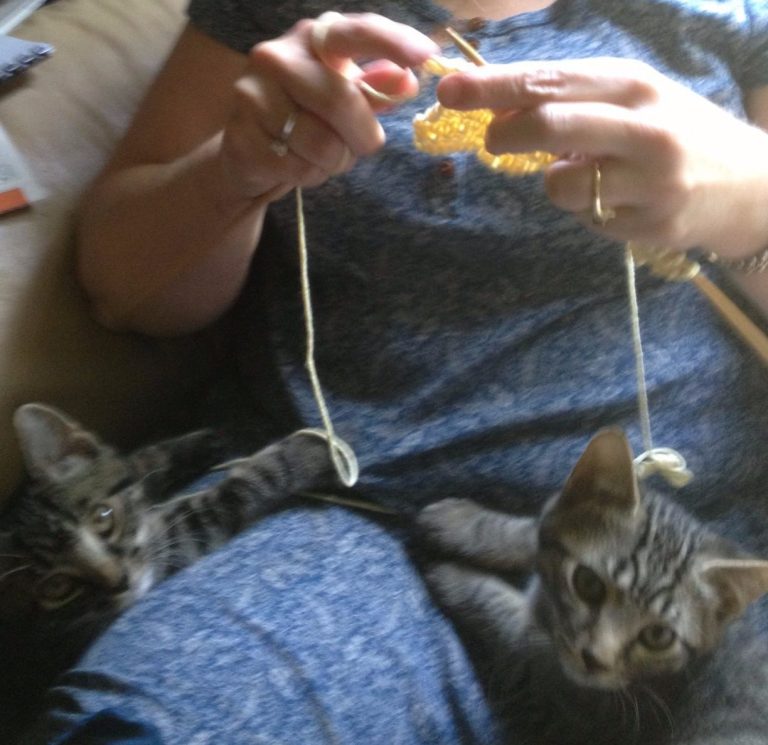
Cindy Knitting with Cats

Dear Young Crafty Kindred Spirit,

Lately, more and more people are talking about how young adults are embracing so-called “Granny Crafts”—and I love it.

If you’re here because you knit, crochet, embroider, or sew—or want to—you’re in good company. I’ve been knitting since I was a teenager myself. But it wasn’t until college, when stress started to weigh heavy on my shoulders, that I really picked it up as a coping mechanism. I’d sit in my dorm room or in a quiet corner of the student center, needles in hand, letting the rhythm of the yarn pull me back from the brink.

Some days, you just want everything—school, jobs, relationships, even the noise of the world—to go away for a while. I get it.

You were born into the digital age. My own kids got their first iPods in middle school and were among the first to start texting. Now, we all carry around little rectangles that buzz and ping and demand our attention 24/7. But here’s the secret: you can turn it off. Just for a few minutes. Really. The world won’t end.

And when you do? That’s when Granny Crafts work their quiet magic.

There’s no algorithm here. No pressure to go viral. No rush to the finish line. When you pick up a needle or a hook, it’s just you, your yarn, and your own rhythm. You can work slowly. Thoughtfully. Or set it down and pick it back up a month later. Granny Crafts are deeply human—analog, if you will. They exist on your terms, not someone else’s timeline.

You may not know it yet, but you’re building something far bigger than a handmade scarf. You’re building a lifelong tool for patience and comfort. Someday, you’ll find yourself stuck in medical waiting rooms. You’ll sit through school pickup lines or kids’ gymnastics practice. You’ll be at hospital bedsides or nursing homes, offering your presence when there’s nothing more you can do. Except this: stitch by stitch, you wait. You love. You breathe.

Granny Crafts give you something to hold on to when the rest of life feels uncertain. They will anchor you when stress comes crashing in, and they will accompany you through every phase of adulthood with grace and beauty.

Welcome to the circle. You’re not alone.

With love and yarn,
Cindy
Knitter, writer, and lifelong lover of “Granny Crafts”

If you’re looking for stories of other women—young, old, and in-between—who have walked that road, I invite you to follow my blog and check out my novels. I write about knitting, community, and faith in a world that is often spinning too fast. Sometimes, we need the quiet power of yarn and human connection to slow it down.

Cynthia Coe is the author of The Prayer Shawl Chronicles, a series of fictional stories woven together by the theme of human connections made through prayer shawls and the craft of knitting. Her newest book is her first historical novel, Knitting Through Time: Stories of How We Learned to Knit. Learn more by visiting her Author Page at this link

Creativity as a Spiritual Practice—Whether You Knit or Not

Whether you knit, write, bake, or daydream—your creative life might be more spiritual than you think.

In my life, creativity has always been more than a hobby. It’s a way of slowing down, listening deeply, and connecting with something greater than myself. Whether I’m holding knitting needles, writing a chapter, or just dreaming up new ideas, the creative process becomes, for me, a kind of prayer.

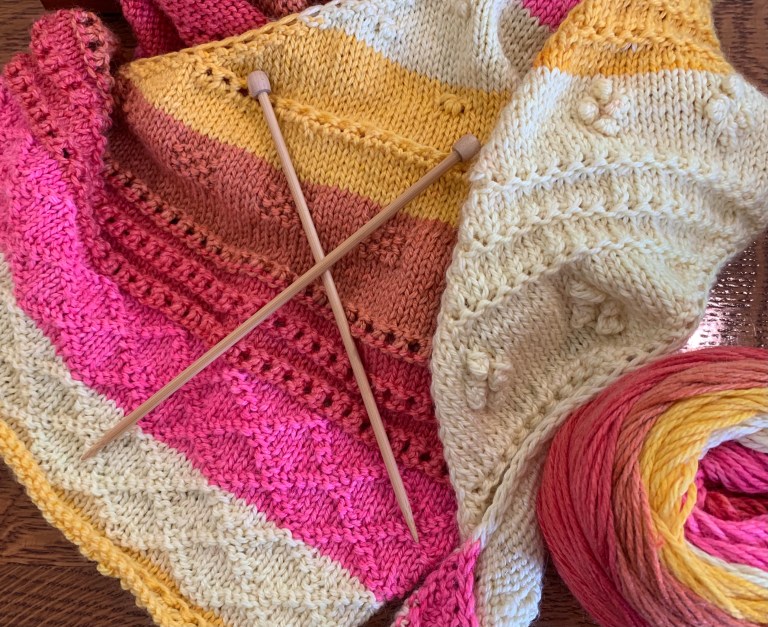
I’ve found that creativity invites us into stillness. Into presence. Into wonder. It doesn’t have to look like a finished project or a gallery-worthy painting. It can be quiet, even hidden—a moment of beauty in an ordinary day. Maybe it’s the way colors come together on your needles. Or the way a sentence finally says what your heart has been holding.

You don’t have to be a knitter to experience this. Whether you bake bread, write sermons, arrange flowers, doodle in the margins, or simply take time to notice the sacredness in the world around you—that’s creativity. And when we approach it with reverence, it becomes spiritual.

As a writer and lifelong maker, I often explore how creativity weaves its way through both daily life and sacred space. I reflect on themes of faith, prayer, and making meaning—on and off the page. Creativity, after all, isn’t about perfection. It’s about presence.

If that speaks to you, I invite you to follow more of my reflections at www.sycamorecove.org or on Facebook at www.Facebook.com/CynthiaCoeAuthor. I’d love to share this journey with you.


Cynthia Coe is the author of The Prayer Shawl Chronicles, a series of fictional stories woven together by the theme of human connections made through prayer shawls and the craft of knitting. Her newest book is her first historical novel, Knitting Through Time: Stories of How We Learned to Knit. Learn more by visiting her Author Page at this link

More Than Yarn and Needles

How every stitch—from cozy garments to prayer shawls—carries meaning in our culture

When we think of knitting today, we often think of coziness—warmth, comfort, and care woven into every stitch. In our 21st-century minds, knitting conjures images of home, love, and handmade gifts. But the symbolism of knitted items runs far deeper and more complex through human culture.

For years, knitting was stereotypically linked to elderly women in rocking chairs. While that image may feel quaint, it’s also dismissive—and increasingly outdated. Starting in the 1980s, knitting underwent a cultural revival. Young women reclaimed the craft through groups like Stitch ‘n Bitch, with bold new designs and creative freedom. Even celebrities like Julia Roberts and Patrick Stewart took up the needles, fueling a resurgence in quality yarns and artisan tools.

What sparked this return to slow, handmade work? In a fast-paced, high-tech world, many of us began craving simpler, tactile experiences. Knitting offered a chance to unplug, create with our hands, and make something uniquely our own. Whether it’s a simple scarf or an intricate lace shawl, every project becomes a kind of meditation—and a way to say, “I made this for you.”

Another beautiful expression of meaning through knitting is the prayer shawl movement. Beginning in 1997 as part of a seminary project, prayer shawls were envisioned as tangible signs of care and spiritual support. Without set patterns or specific religious rules, these shawls quickly found their way into churches, hospitals, and homes of every faith. Each one is as unique as the person who knits it—and the one who receives it.

From cozy comfort to quiet spiritual presence, knitted items continue to speak—sometimes loudly, sometimes softly—but always with meaning.

Happy Knitting! Cindy

Cynthia Coe is the author of The Prayer Shawl Chronicles, a series of fictional stories woven together by the theme of human connections made through prayer shawls and the craft of knitting. Her newest book is her first historical novel, Knitting Through Time: Stories of How We Learned to Knit. Learn more by visiting her Author Page at this link