Why You Shouldn’t Be Embarrassed to Do “Granny Crafts”


If you’re a 20-something who knits, crochets, or embroiders—this is for you. Granny Crafts aren’t just for grannies. They’re quiet, powerful tools for stress relief, creativity, and deep comfort through every stage of life.

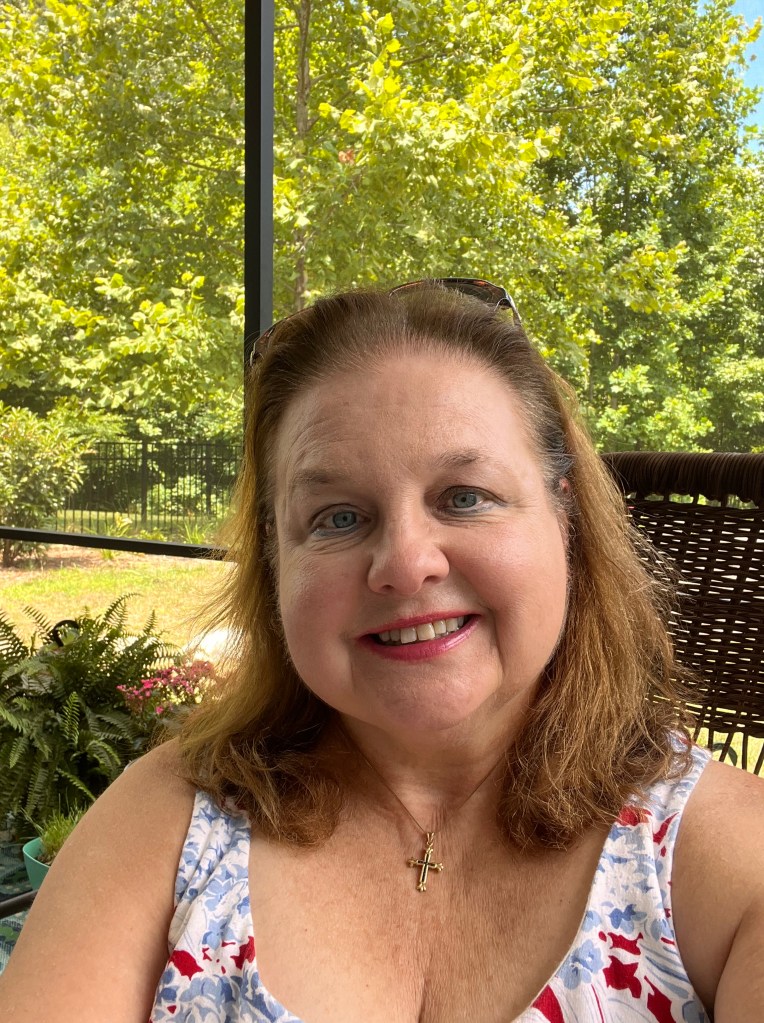
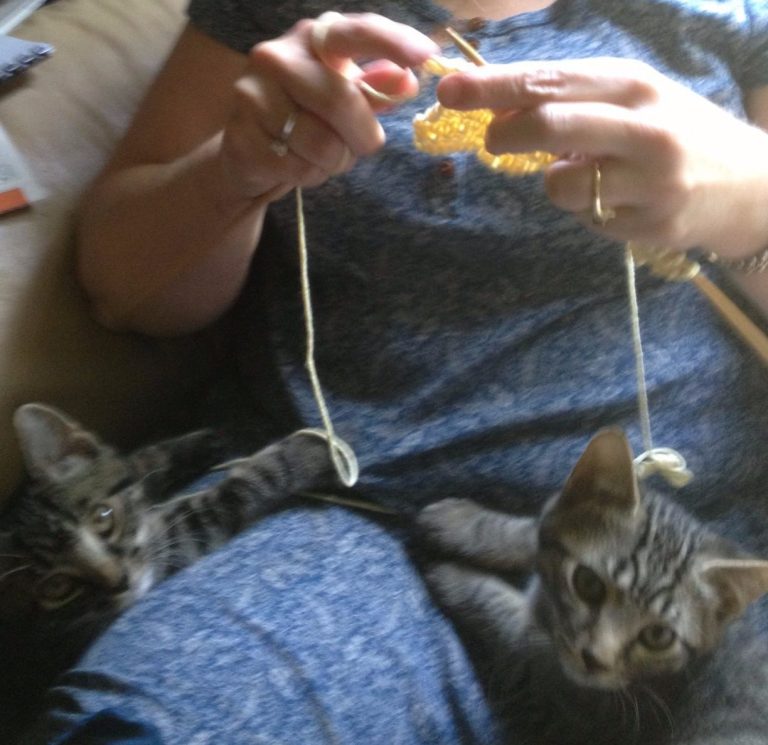
Cindy Knitting with Cats

Dear Young Crafty Kindred Spirit,

Lately, more and more people are talking about how young adults are embracing so-called “Granny Crafts”—and I love it.

If you’re here because you knit, crochet, embroider, or sew—or want to—you’re in good company. I’ve been knitting since I was a teenager myself. But it wasn’t until college, when stress started to weigh heavy on my shoulders, that I really picked it up as a coping mechanism. I’d sit in my dorm room or in a quiet corner of the student center, needles in hand, letting the rhythm of the yarn pull me back from the brink.

Some days, you just want everything—school, jobs, relationships, even the noise of the world—to go away for a while. I get it.

You were born into the digital age. My own kids got their first iPods in middle school and were among the first to start texting. Now, we all carry around little rectangles that buzz and ping and demand our attention 24/7. But here’s the secret: you can turn it off. Just for a few minutes. Really. The world won’t end.

And when you do? That’s when Granny Crafts work their quiet magic.

There’s no algorithm here. No pressure to go viral. No rush to the finish line. When you pick up a needle or a hook, it’s just you, your yarn, and your own rhythm. You can work slowly. Thoughtfully. Or set it down and pick it back up a month later. Granny Crafts are deeply human—analog, if you will. They exist on your terms, not someone else’s timeline.

You may not know it yet, but you’re building something far bigger than a handmade scarf. You’re building a lifelong tool for patience and comfort. Someday, you’ll find yourself stuck in medical waiting rooms. You’ll sit through school pickup lines or kids’ gymnastics practice. You’ll be at hospital bedsides or nursing homes, offering your presence when there’s nothing more you can do. Except this: stitch by stitch, you wait. You love. You breathe.

Granny Crafts give you something to hold on to when the rest of life feels uncertain. They will anchor you when stress comes crashing in, and they will accompany you through every phase of adulthood with grace and beauty.

Welcome to the circle. You’re not alone.

With love and yarn,
Cindy
Knitter, writer, and lifelong lover of “Granny Crafts”

If you’re looking for stories of other women—young, old, and in-between—who have walked that road, I invite you to follow my blog and check out my novels. I write about knitting, community, and faith in a world that is often spinning too fast. Sometimes, we need the quiet power of yarn and human connection to slow it down.

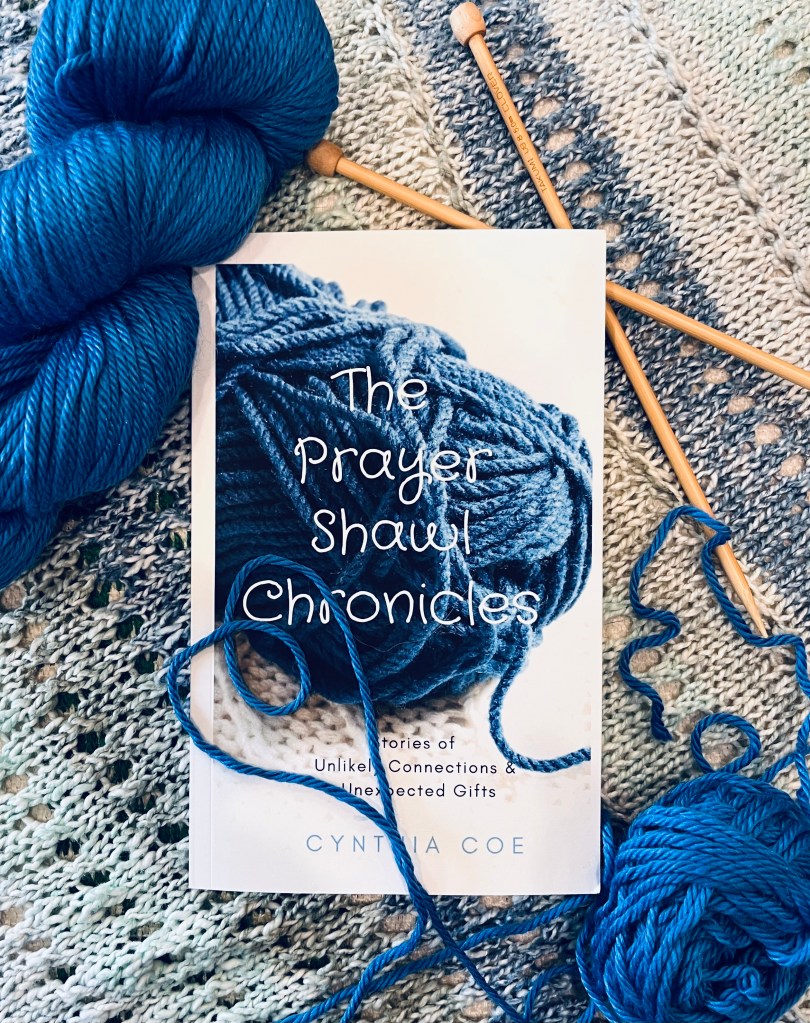
Cynthia Coe is the author of The Prayer Shawl Chronicles, a series of fictional stories woven together by the theme of human connections made through prayer shawls and the craft of knitting. Her newest book is her first historical novel, Knitting Through Time: Stories of How We Learned to Knit. Learn more by visiting her Author Page at this link

Knitting and the Spontaneity and Relaxation of Travel

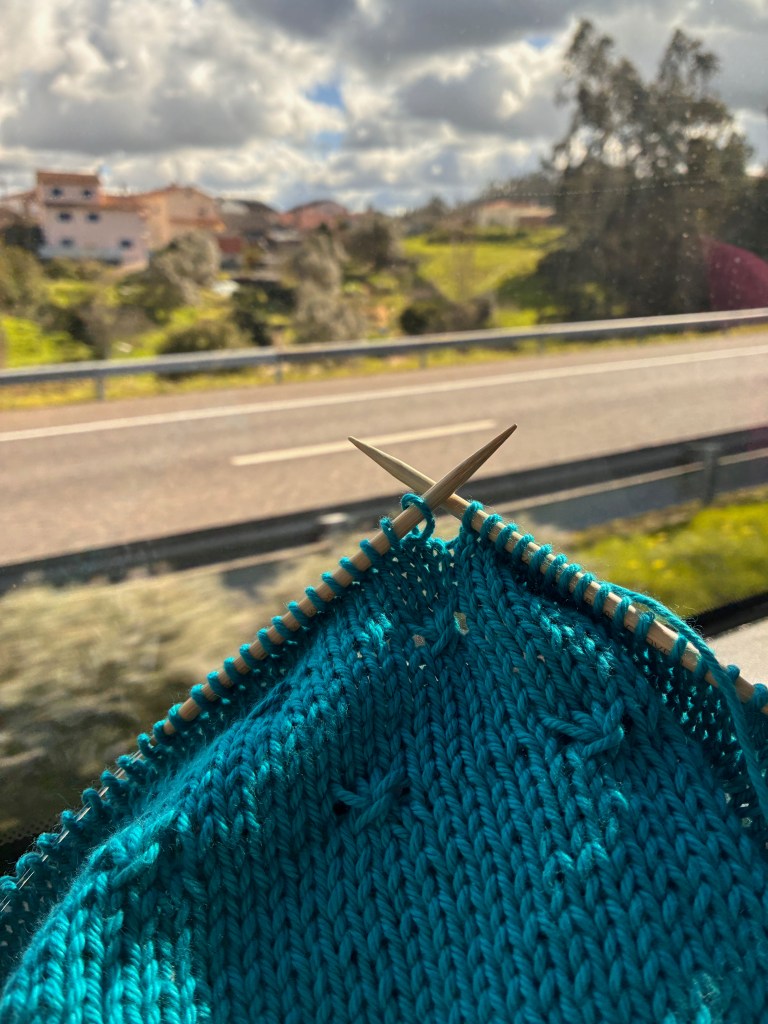
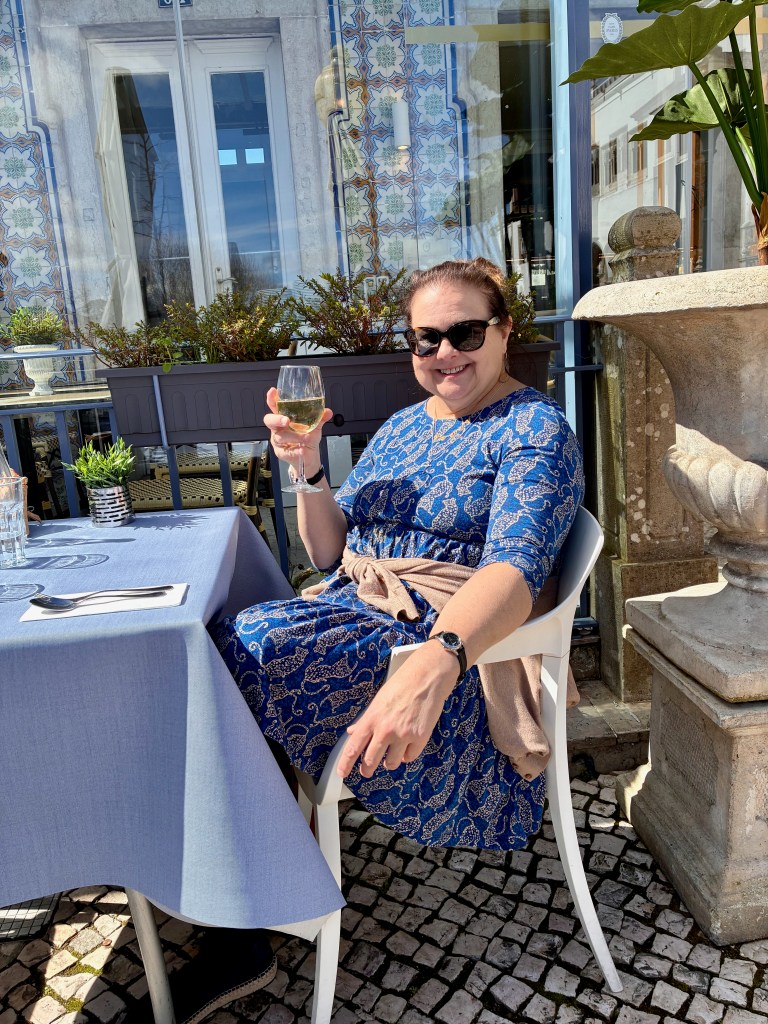
I just returned from a vacation tour of Portugal. Some of my most relaxing moments involved sitting on the bus, knitting and watching the budding vineyards and olive orchards of the Portuguese countryside go by.

This was my first big trip overseas by myself. I had gone with school groups, with family, and with my husband, but never alone. And I loved it.

I found a tour company that offered “solo” tours for those of us who are widowed, divorced, or traveling alone for any reason. I eagerly booked a trip to Portugal, a place I had never been. That was part of the fun, discovering and exploring a country I knew little about and making memories solely mine.

As a knitter, I naturally researched and found yarn shops in Porto and Lisbon, thinking I’d pay them a visit and maybe blog and post photos of these new-to-me shops. However, that didn’t happen. My tour kept me on my feet and exploring all kinds of sights, sounds, and activities I would never have discovered on my own. I took naps during the few hours of downtime in those cities, never getting around to finding those yarn stores.

Yet I found a wonderful yarn store without any planning or looking at all. While walking around a lovely pedestrian street in the old part of Coimbra, an ancient university town, I happened to find one right smack in front of me. I stepped in to find two entire walls of the shop stuffed with bins of brightly colored Portuguese wool, available for far less than I would have paid in the US. I eagerly purchased three skeins of wool yarn in a mustard yellow color, the same used to decorate tiles and houses in this town and in many other parts of Portugal. I learned that the use of this yellow color was introduced by the Moors centuries ago to symbolize happiness and sunshine – just the color to symbolize my adventure here, too.

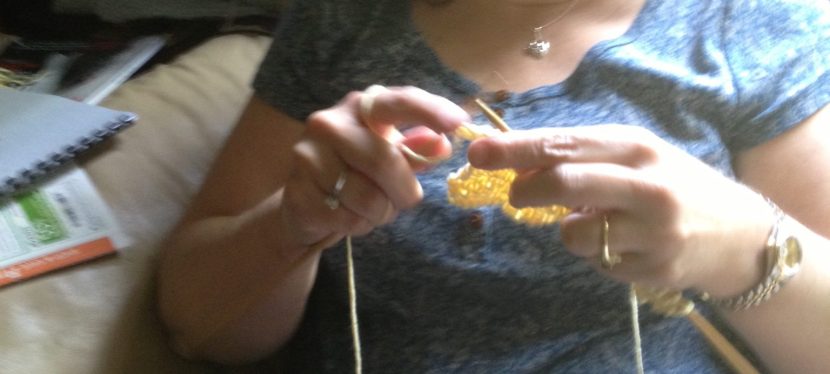
Why only three skeins? I wanted a project just for this trip. I wanted a small, manageable knitting project I could work on in the bus, as I relaxed at the hotel before going to bed, and maybe even on the long plane ride going home. And that it was. I made a shawl, using a memorized pattern and favorite stitch combinations, constructing my own personal souvenir of a green and pleasant land feeding me with healthy and delicious food, green wines, and the charm of centuries past.

I will have this shawl for the rest of my life, the sunny yellow of the wool reminding me of a perfect day in Coimbra, eating pastel de nata (custard pastries!) and milky coffee for lunch, strolling the streets with new friends and happening upon a yarn shop, walking down cobblestone streets to visit a cathedral I swear I’d already seen while writing a scene in a novel under construction.

I’ll remember quiet drives on that big comfortable bus with a seat to myself, calming and pleasantly knitting that yellow shawl, glancing up now and then to see the vineyards budding in the springtime, my mind forgetting anything anywhere else.

With blessings for calm, quiet knitting…wherever you may find yourself, Cindy


Cynthia Coe is the author of The Prayer Shawl Chronicles, a series of fictional stories woven together by the theme of human connections made through prayer shawls and the craft of knitting. Her newest book is her first historical novel, Knitting Through Time: Stories of How We Learned to Knit. Learn more by visiting her Author Page at this link

Christmas Crafting is the Opposite of Christmas Shopping

Click, it’s in your shopping basket. Click, you’ve paid for it. Your purchase will appear on your doorstep in two days without any further effort on your part. 

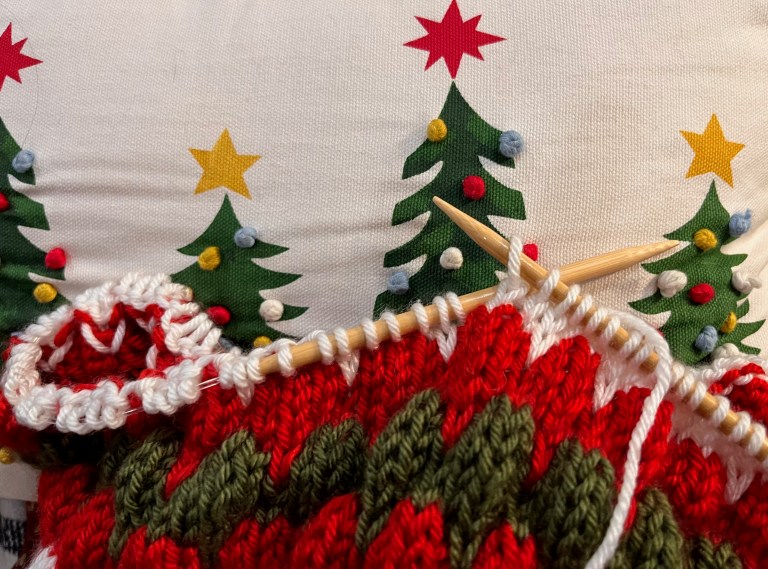
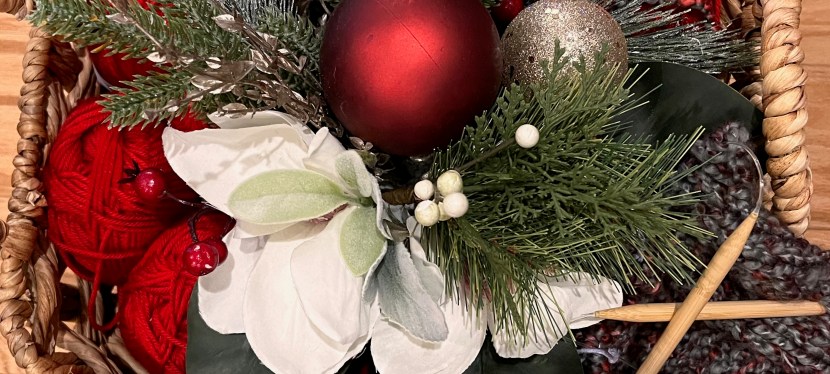
I bought a pair of shoes on deep discount this morning, at breakfast and as easy as pressing digital buttons on my phone while still half asleep. As I later picked up my knitting needles to work on a Christmas blanket project, I couldn’t help but think how my Christmas knitting differed so starkly from my Christmas shopping.

My Christmas knitting project will not be finished in two days. It will probably not be finished by Christmas, in fact. And that’s okay. It’s the slow, calming process that matters to me most. How many “clicks” will it take? Thousands, and that’s kinda the point, too. 

The clicking of my phone generally does nothing for me but momentarily serve my impulses to acquire yet another shiny new object I really don’t need. Am I calmer afterwards? Not really. I might get a temporary hit of joy for a minute or two, along with some satisfaction two days later when my item arrives. 

On the opposite end of the spectrum of satisfaction, the clicking of my knitting needles keeps me calmer and lowers my blood pressure for several hours, at least. After a half hour of crafting with real materials and with all my fingers (not just the right index finger), my mind is cleared to move on to creative work, planning, or just strategizing to get through the rest of the day. 

Crafting highs last much, much longer than online shopping highs. Shopping highs rank right up there with sugar highs for the rebound drops in any joy or satisfaction you got for your so-called efforts. But after crafting for a bit, the calm and satisfaction of actually making something stays with you for a good, long while. And if that satisfaction starts to flag, just pick up those knitting needles again and knit another row. Or just pick up your project and admire what you’ve done, all by yourself. Better yet, show your work to a friend and watch the utter amazement in someone else’s eyes, flabbergasted that you can turn skeins of yarn into a sweater just as nice as whatever they just paid for with their own meager clicking on their phone.

Slow down this Christmas and Advent season. Save your clicking for something that will last, something that will give you fulfillment, a sense of true peace, and maybe even a unique and meaningful gift for someone else. 

With blessings for peace and calm this holiday season, Cindy

Cynthia Coe is the author of The Prayer Shawl Chronicles, a series of fictional stories woven together by the theme of human connections made through prayer shawls and the craft of knitting. Her newest book is her first historical novel, Knitting Through Time: Stories of How We Learned to Knit. Learn more by visiting her Author Page at this link

Keep Knitting Fresh and Interesting – Learn New Skills

Feeling in a rut? Do you find yourself knitting the same patterns over and over again? It’s time to switch things up! 

If you’re like me, you have several “go to” patterns you can do in your sleep…or certainly while watching your favorite show on TV. You know exactly how many stitches to cast on, how much yarn the project will take, and which size needles to use. But you may also have umpteen of this finished project – with too many blankets, shawls, pullover sweaters, or whatever this “go to” project is – filling up closets or going unused. 

If this is you, it might be time to learn a new knitting skill. Yes, it will be hard at first. Yes, you will make mistakes and will likely have to frog the thing at least once. But the upside is that you’ll have a new technique in your toolkit of knitting designs and skills. You might even have a new favorite project on your hands.

The best way to learn a new project, at least for me, is to purchase a kit that includes an understandable pattern and exactly the amount and type of yarn you’ll need to complete the project. I had been reluctant to buy kits in the past, scarred by memories of paint-by-number art kits in childhood that never had enough paint to finish the project. But happily, the knitting projects I’ve bought in the last several years have had more than enough yarn to complete projects.  (And I’ve bought numerous knitting kits from a wide variety of companies, especially during the pandemic).

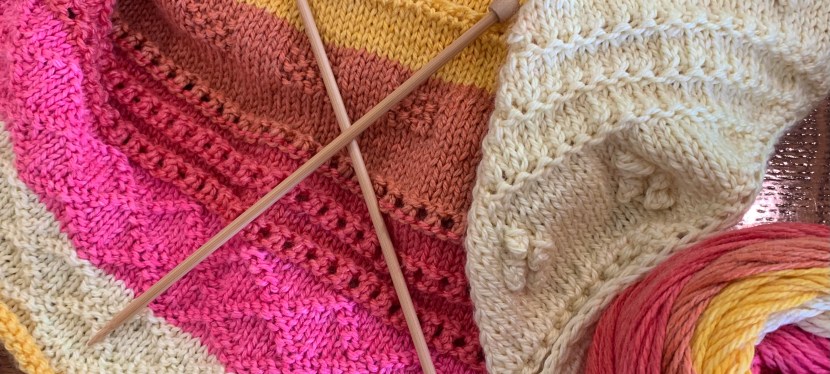
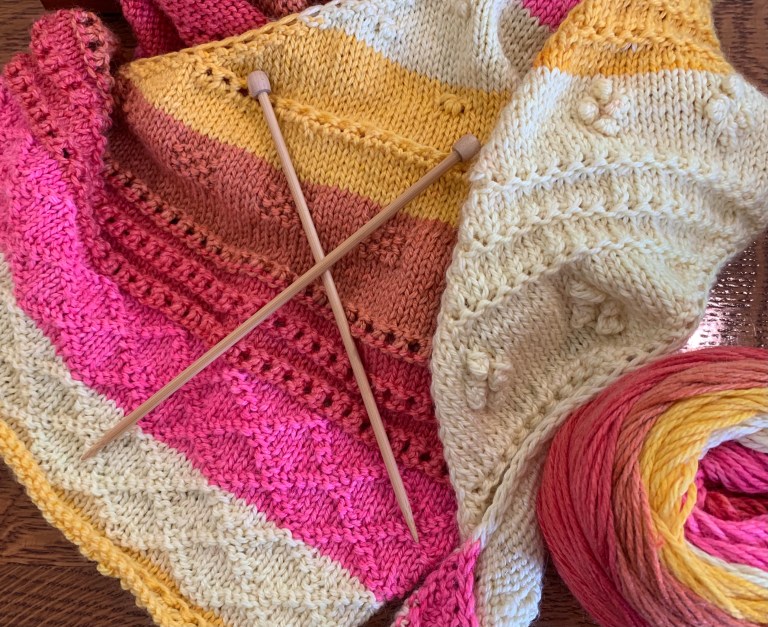
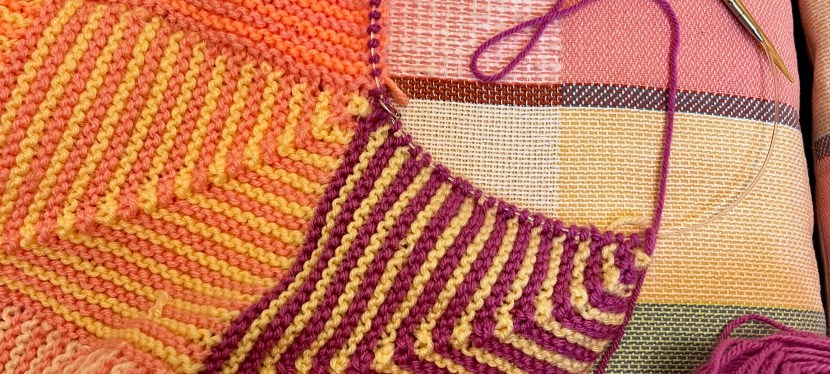
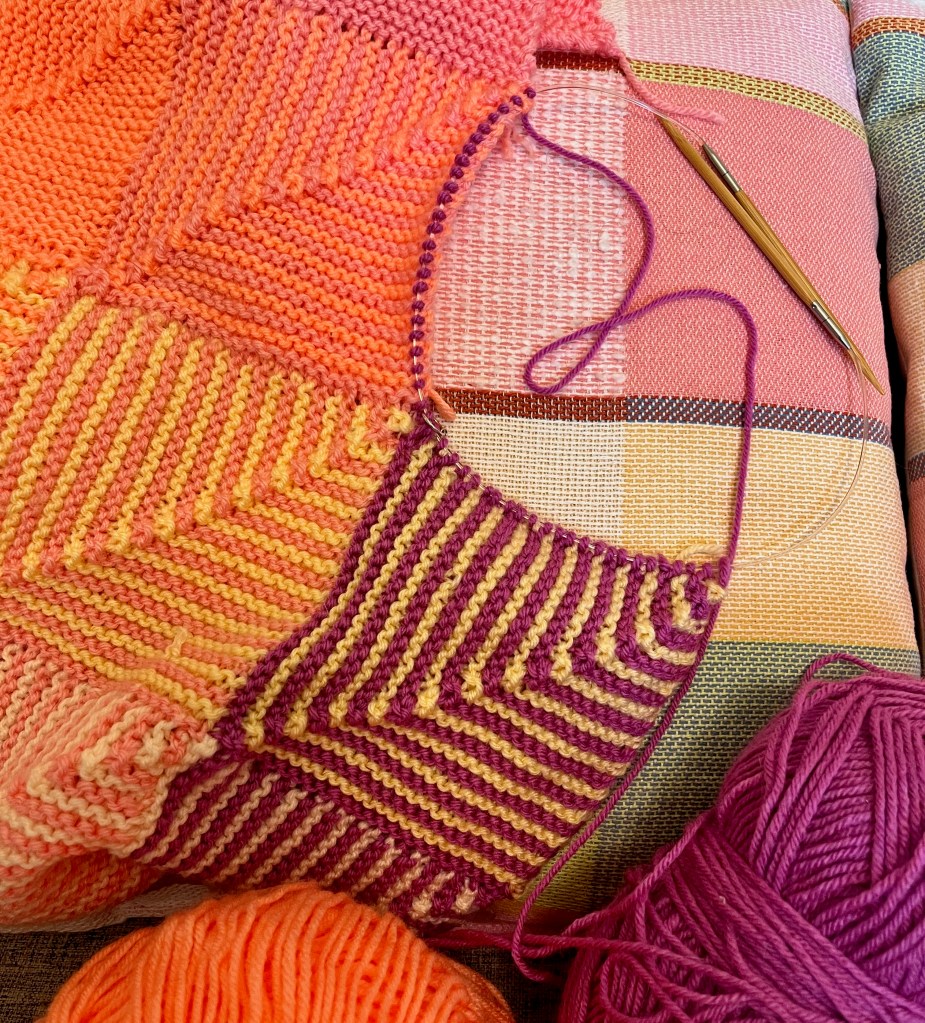
My latest new-to-me knitting skill is the mitered square technique. I found the technique a little trippy – you start with a straight line, and by decreasing in the middle of the row, you end up with a square. Who comes up with this stuff??? I’ve enjoyed making a blanket using this stitch, with some simple colorwork to mix it up as well. Yes, it took me a couple of tries to get it right, but I can now do it like a pro. I’ll definitely use the technique again to make placemats, bath rugs and other household items requiring a fairly sturdy fabric.

Of course, some kits I’ve tried have ended up as “never again” projects. One cardigan sweater kit I bought required me to flip the project around six times and use short rows for some purpose I could not discern. But even the “never again” projects keep knitting interesting and my brain continuing to learn. 

As much as I enjoy simple, meditative knitting projects, I always enjoy a new challenge, too. We all need to keep our minds and souls fresh, active, and open to new experiences!

Knitting Blessings, Cindy

Cynthia Coe is the author of The Prayer Shawl Chronicles, a series of fictional stories woven together by the theme of human connections made through prayer shawls and the craft of knitting. Her newest book is her first historical novel, Knitting Through Time: Stories of How We Learned to Knit. Learn more by visiting her Author Page at this link

The Rhythms of Knitting – Patterns Are Not Just For Show

Recently, I found myself happily knitting in a 1-2-3, 1-2-3 pattern. I had been a bit down in the dumps, but knitting in this simple pattern actually made me feel better.

In the world of knitting, there’s more to those numbers in your patterns than meets the eye. Beyond the stitch counts and repeats lies a fascinating realm of numerical rhythms that not only enhance the aesthetics of your creations but also contribute to a sense of calm and mindfulness.

Knitting has long been celebrated for its therapeutic qualities, and the incorporation of numerical patterns adds another layer to this experience. Engaging in rhythmic and repetitive activities, like following numerical patterns in knitting, induces a relaxation response. This effect is akin to the calm achieved through meditation. The focus required to execute a pattern, combined with the tactile experience of working with yarn, creates a meditative state that eases stress and fosters mindfulness.

The beauty of the rhythms we experience in knitting lies not just in its visual appeal but in the comfort it brings to the knitter. The predictability and order of this sequence provide a structured flow, allowing the mind to enter a state of relaxation. As you navigate through your project, the rhythmic counting becomes a soothing mantra, transforming the act of knitting into a mindful practice.

Whether you’re a seasoned knitter or just starting, exploring the world of numerical rhythms can add a new dimension to your crafting experience. So, the next time you find yourself immersed in the rhythm of your pattern – whether a simple 1-2-3, 1-2-3 or something far more complex – know that you’re not just creating a beautiful piece – you’re also weaving a tapestry of calmness and mindfulness.

Blessings on your knitting, Cindy

Cynthia Coe is the author of The Prayer Shawl Chronicles, a collection of interrelated short stories about knitters and those they meet through knitting and sharing prayer shawls. 

Be sure to check out my newly published A Prayer Shawl Handbook: Inspiration and Resources for Your Prayer Shawl Ministry, now available in paperback and e-book editions and included in Kindle Unlimited.

For an easy 1-2-3 pattern like the one described in this blog post, try the “Trinity Moss Stitch” pattern in my new book!

Knitting for Daily Delight: The Joy of a Daily Shawl Practice

We all know that knitting can be a relaxing and enjoyable hobby. It’s not just about creating beautiful garments for others; you can also knit something special for yourself. Imagine the joy of making a shawl just for you, without any specific spiritual practice in mind. Self-care and taking a little time for yourself are essential for a happy life. With a daily shawl practice, you can weave a touch of delight into your daily routine.

The Daily Shawl Ritual

This practice is all about having fun and adding a daily dose of creativity to your life. You can decide to set aside some time each day to knit a few rows or a specific pattern repetition. It’s a simple way to make time for yourself and celebrate your love for knitting.

You might want a little structure for this daily knitting practice. In recent years, many knitters have embraced personal knitting challenges, like “temperature blankets” that represent each day’s temperature with a unique color. Others have created blankets that track train delays, their daily moods, or noteworthy events. These creative projects become a delightful daily ritual, a moment to reflect on different aspects of life.

Feel free to choose colors based on your mood, the season, or even random picks. You can switch things up and create a pattern that’s uniquely yours, without any strict rules.

Creating a Comfortable Space

As a dedicated knitter, you can choose to create a cozy knitting nook that makes you feel happy and relaxed. Maybe you have a favorite chair or a spot with a great view. You can add some scented candles, colorful decorations, or anything that brings you joy. It’s your personal knitting paradise!

As you look up from your knitting, you’ll be reminded of the joy and creativity that knitting brings into your life. It’s a way to stay focused on enjoying your knitting time, instead of worrying about everyday chores.

The Real Joy

The real joy here is the daily act of knitting, not just the end product. It’s about embracing a fun and lighthearted daily ritual that brings joy. You’ll find yourself looking forward to this special knitting time, and it can even become a delightful part of your daily routine.

Blessings, Cindy

Cynthia Coe is the author of The Prayer Shawl Chronicles, interrelated stories about knitters and those for whom they knit and love. The sequel to this book, The Knitting Guild of All Saints, has been released! Available in paperback and on Kindle, included in Kindle Unlimited. 

Be sure to follow me for an upcoming announcement of a new book for makers of Prayer Shawls!

Knit A Prayer Shawl For Yourself – Take Care of Your Own Soul

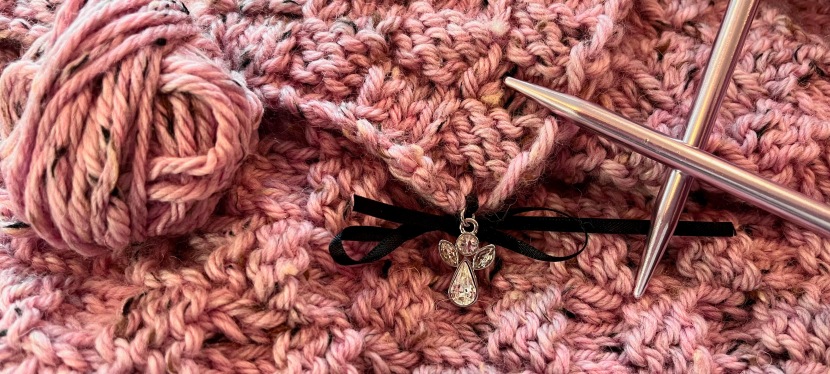
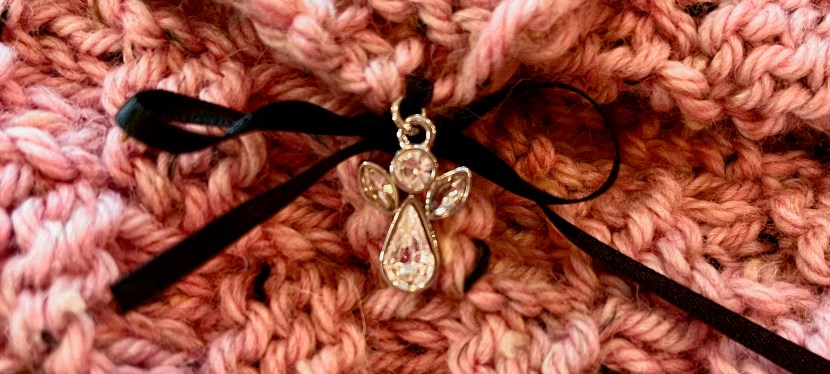
A couple weeks ago, while taking a class at a local yarn shop, I spotted some blush pink, wool yarn with tiny black flecks spun into it. The yarn spoke to me – the soft pink reminded me of early springtime here in Southern Appalachia, with the soft pinks of cherry trees soon making their appearance. The black flecks reminded me of the black ashes I would soon have traced in the shape of a cross on my forehead for Ash Wednesday. 

After hearing a call to personal growth during the Ash Wednesday service last week, I decided to make a prayer shawl just for me with this pink and black flecked yarn. I had made numerous prayer shawls for others this past year, but I reminded myself that my soul needed attention, too. Those of us active in our churches tend to find ourselves very busy ministering to other people. We serve as greeters and lectors, pack up Christmas gifts for the homeless, attend committee meetings and generally lend a listening ear or a warm hug to those in need in our communities. Lent is a time not to forget all those tasks, but to remember that you need to work on yourself, too. 

My personal prayer shawl, like those I make for others, uses a simple pattern I don’t have to think about. I’m using a triple moss stitch – 3 knits, 3 purls, repeat – so that I can both zone out of day-to-day life but still stay alert enough to think and focus on my spiritual issues. We all need a fairly simple pattern for our lives, I think. We need structure and a pattern that doesn’t overwhelm us, one that keeps us from veering into chaos. But we need to keep ourselves alert and at least a little challenged as well. 

This Lent, as I sit quietly knitting my pale pink prayer shawl, speckled with the black ashes of Lent, I think about how far I’ve come since becoming widowed 2 years ago. I also think about the challenges and personal growth I still need to work on. Like the progress on my personal prayer shawl, I’ve made much progress, and I’m developing into a recognizable shape. But I’ve still got a good bit of work in front of me. With God’s help, each day this Lenten season, I’ll spend a few minutes each day in quiet knitting and prayer.  I’ll work on the fabric of my life, watching it grow and stretch into something complete and whole, one stitch at a time. 

With Blessings for a Holy Lent, Cindy

Cynthia Coe is the author of The Prayer Shawl Chronicles, interrelated stories about knitters and those for whom they knit and love. The sequel to this book, The Knitting Guild of All Saints, has been released! Available in paperback and on Kindle, included in Kindle Unlimited. 

Holiday Survival Plan: De-stress and Zone Out Through Knitting

Are you stressed? I am. It’s that time of the year!

Yesterday, I found myself so stressed that I was shaking. As I tried to do some tedious graphics work as a volunteer project for my church, a neighbor repeatedly blew up my phone complaining about the non-functioning car in my driveway. (Because, ya know, the sight of a car on jack stands in somebody else’s driveway on the other side of a neighborhood is soooo offensive and definitely a reason to spew out a string of complaints towards the nice, quiet writer who never bothers a soul, right????) Was this person stressed out himself and taking it out on me? Probably. I’d bet many of us are dealing with other people’s stress, along with our own, about right now.

What to do? Take a deep breath…and knit! Friends, we have an important tool in our box of tricks to deal with holiday stress, end-of-year deadlines, preparations to welcome incoming family, our own travel plans, and even unhinged people deflecting their own stress onto us. We have our knitting projects, and in moments, we can pick up those needles and take ourselves away from anything that bothers us.

That’s exactly what I did yesterday. Realizing that my stress level had climbed sky high, I plopped myself down in my favorite knitting chair, picked up a simple sock project, and simply knit a couple of rows. My heart rate immediately dropped. I convinced myself that no, the whole world wasn’t conspiring against me. It would be okay. 

So use those tools in your personal de-stressing kit, my fellow knitters. Sit down, pick up whatever project is on your needles, and knit one row. Maybe knit two rows. Knit for ten minutes, or two hours. Whatever you need.  You’ll feel better, I promise. 

We’ve all heard the reports of how knitting is good for you, how calming knitting can be. For knitters, the solution to dealing with any stressful situation is as close as our knitting baskets.

Prayers for a Peaceful Holiday Season, Cindy

Cynthia Coe is the author of The Prayer Shawl Chronicles, interrelated stories about knitters and those for whom they knit and love. The sequel to this book, The Knitting Guild of All Saints, has been released! Available in paperback and on Kindle, included in Kindle Unlimited. 

The Beautiful Simplicity of One Knitting Project At A Time

I’ve often had as many as four or five knitting projects going at a time. I’ve had my “main” knitting project (usually a sweater) and my “travel” knitting project (something simple and mindless – usually a dishcloth or place mat I can work on in the school pick-up line).  I might have another project or two that involve lots of counting or an intricate pattern that requires complete silence and absence of all distraction, something you can’t work on while maintaining any social skills at all. 

But lately, I’ve discovered the beautiful simplicity of only having one knitting project going at a time. Maybe it’s the revived pandemic scares. Maybe it’s the implosion of the schools (again). Maybe I’m just figuring out that focusing on one thing at a time is crucial to my emotional well-being during this stressful time.

Whatever the reason, I’ve quite enjoyed working on one knitting project, rather than have several knitting projects scattered all over the house and in my car. I seem to enjoy knitting more when I don’t feel like I’m struggling to get one project moving along, with six others in an unfinished state. And – duh! – I get projects finished much, much faster when I direct all my efforts towards one project. This gives me a sense of accomplishment, seeing a completed sweater, shawl, or cowl I can immediately wear and enjoy, and on a regular basis of every week or so.

We’ve all seen the memes online, ridiculing ourselves for having way too many knitting projects (or WIPs – works-in-progress). Maybe it’s time to listen to ourselves and realize that more is not always more. For every WIP that’s left languishing in a work basket, there are unfulfilled aspirations and a sense of giving up. You don’t need that, not when you have enough stress in other areas of your life.

Enjoy your knitting. Enjoy that one project you chose and for which you have high hopes. Feel good in a few short days or weeks about what a great job you did on that one sweater you worked on to the exclusion of all other crafting projects.

Appreciate the simplicity and quiet time of meditative crafting that knitting gives you.

Blessings, Cindy

Cynthia Coe is the author of The Prayer Shawl Chronicles, a collection of interrelated short stories about knitters and those they meet through knitting and sharing prayer shawls. 

Knitting Through Times of Crisis

I’ve never understood why anyone would willingly work on a tedious, difficult, and mentally taxing knitting project. Until now. 

Since my teen years, I’ve always been a “meditative knitter.” Give me a project that’s easy to memorize, not too difficult, and lets me zone out. I love to make prayer shawls, easy pullovers, and straightforward yoke cardigans. 

As I’ve tried to up my knitting game, I’ve tried more difficult patterns and techniques. This past fall, I took a course in double knitting at the Vogue Knitting Convention in Ohio. Double knitting took every bit of concentration I could muster. I found myself thinking, “if I’m ever in a situation where I want to block out every single thought in my head, I’ll do this kind of knitting.”

Well, here we are. On the evening of March 12, the school system closed for the year. By the next afternoon, the shelves of my local grocery store were cleared by panic buyers. Then, six weeks later, my husband was diagnosed with a rare and aggressive form of cancer and given only months to live. 

Needless to say, I’ve spent a lot of time knitting my way through these crises. During the worst moments, I’ve sat in my home office, working on an extremely intricate pattern with tiny needles and ultra-thin yarn, blocking out every single thought and emotion running through my body. I still work on a meditative project each and every day as my personal self-care and spiritual discipline. But I’ve also added a half hour of knitting that vanquishes thoughts of everything else going on my life, if only for a few minutes. And this has helped me simply get through each day, taking me away from the huge responsibilities suddenly placed on my shoulders.

So now I know why knitters work on all those difficult, intricate patterns and stitches. For me, it’s a more hard-core form of the meditative knitting I’ve always done. At times like these, I value my knitting for giving me peace, for giving me something tangible and constructive to do, and for helping me keep my sanity in a time of crisis. 

Blessings to all my fellow knitters facing times of crisis, Cindy

Cynthia Coe is the author of The Prayer Shawl Chronicles, a collection of interrelated short stories about knitters and those they meet through knitting and sharing prayer shawls.